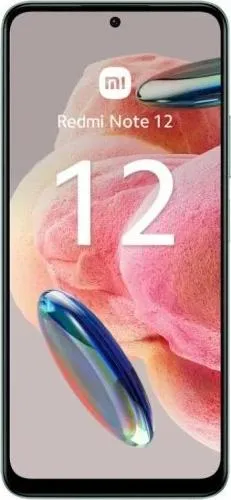
1. Specifications Comparison
| Feature | Xiaomi Redmi Note 12 4G | realme 8 | Practical Impact |
|---|---|---|---|
| Design | |||
| Dimensions (mm) | 165.7 x 76 x 7.9 | 162 x 75.1 x 8.7 | Realme 8 is slightly shorter and narrower, but thicker. Negligible difference in everyday use. |
| Weight (g) | 183.5 | 191 | Redmi Note 12 is noticeably lighter, reducing hand fatigue during extended use. |
| Fingerprint Sensor | Side-mounted | Under-display | Preference-based, both reliable. Under-display often perceived as more premium. |
| Display | |||
| Display Size (inches) | 6.67 | 6.78 | Realme 8 offers a slightly larger screen for more immersive content consumption. |
| Resolution | 1080 x 2400 | 1264 x 2780 | Realme 8 has a sharper display with higher pixel density (450 vs 395 ppi), resulting in crisper text and images. |
| Refresh Rate | 120Hz | 120Hz | Both offer smooth scrolling and animations thanks to the high refresh rate. |
| Display Type | AMOLED | LTPO AMOLED | Realme 8's LTPO AMOLED allows for dynamic refresh rate adjustment, potentially saving battery life. Realme also boasts significantly higher peak brightness. |
| Performance | |||
| Chipset | Snapdragon 685 (6nm) | Snapdragon 7+ Gen 3 (4nm) | Realme 8 has a significantly more powerful and efficient processor, leading to much better performance in demanding tasks and games. |
| CPU | Octa-core (4x2.8 GHz A73 & 4x1.9 GHz A53) | Octa-core (1x2.8 GHz X4 & 4x2.6 GHz A720 & 3x1.9 GHz A520) | Realme 8's newer CPU architecture provides a substantial performance advantage. |
| GPU | Adreno 610 | Adreno 732 | Realme 8 offers drastically improved graphics performance for gaming and visually intensive applications. |
| RAM | 4/6/8GB | 12GB | Realme 8 offers substantially more RAM, enabling superior multitasking and app switching without performance slowdown. |
| Camera | |||
| Rear Camera | 50MP main, 8MP ultrawide, 2MP macro | Missing information | Cannot compare without Realme 8 camera specifications. |
| Video Recording | 1080p@30fps | 4K@30/60fps, 1080p@30/60/120fps | Realme 8 boasts significantly better video recording capabilities with higher resolution and frame rate options including optical image stabilization. |
| Battery | |||
| Capacity | 5000 mAh | 5500 mAh | Realme 8 has a slightly larger battery, potentially offering longer usage time. |
| Charging | 33W Fast Charging | Missing information | Cannot compare charging speeds without Realme 8 specifications. |
2. Key Differences Analysis
Realme 8 Advantages:
- Significantly more powerful processor and GPU: Resulting in smoother performance for demanding tasks, gaming, and multitasking.
- Sharper and brighter display: Provides a more visually appealing experience.
- More RAM: Enables smoother multitasking and handles demanding apps with ease.
- Superior Video Recording: Offers higher resolution and frame rates.
- Larger battery: Potentially longer usage time.
Xiaomi Redmi Note 12 4G Advantages:
- Lighter: More comfortable for extended use.
- Lower Price: Offers a more budget-friendly option (based on provided pricing data).
Trade-offs:
- Performance vs. Price: Realme 8 offers superior performance but at a higher price.
- Features vs. Price: The Redmi Note 12 provides a good balance of features at a lower price point, but compromises on performance.
3. User Profiles & Recommendations
Xiaomi Redmi Note 12 4G: Budget-conscious users prioritizing basic tasks like web browsing, social media, and casual photography. Suitable for light users who don't demand high performance.
Realme 8: Users who prioritize performance, gaming, multitasking, and high-quality media consumption. Ideal for power users and mobile gamers.
4. Decision Framework
Key Questions for Buyers:
- What is your budget? The Redmi Note 12 is significantly more affordable.
- What are your primary use cases? For basic tasks, the Redmi Note 12 suffices. For demanding tasks and gaming, the Realme 8 is necessary.
- How important is battery life and screen quality? While both have large batteries and AMOLED displays, the Realme 8 likely has an edge in both areas based on the limited information available.
Scenario-Based Recommendations:
- Limited budget, basic usage: Redmi Note 12 4G
- Demanding usage, gaming, prioritize performance: Realme 8
My Choice: realme 8
While lacking some specific details on the realme 8, the substantial performance advantage offered by the Snapdragon 7+ Gen 3, coupled with the sharper display, larger RAM, and superior video recording capabilities, makes it the clear winner for me. I prioritize a smooth and responsive user experience, even if it comes at a higher price. The significantly upgraded processor future-proofs the device better compared to the Redmi Note 12. The larger battery and potential for better battery life due to the LTPO display are also enticing. While the Redmi Note 12 is a solid budget option, the Realme 8's performance advantages outweigh the price difference for my usage patterns.
