
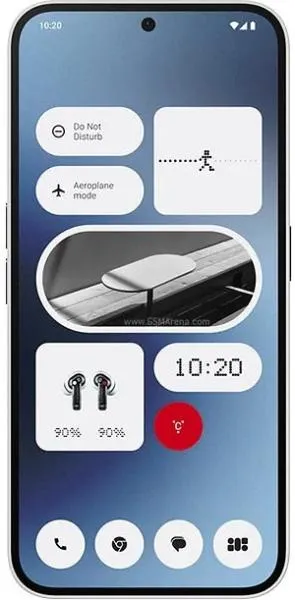
1. Specifications Comparison
| Feature | Xiaomi Redmi Note 12 4G | Nothing Phone (2a) | Practical Impact |
|---|---|---|---|
| Design | |||
| Dimensions (mm) | 165.7 x 76 x 7.9 | 161.7 x 76.3 x 8.6 | Nothing Phone (2a) is slightly shorter and thicker. Negligible difference in daily use. |
| Weight (g) | 183.5 | 190 | Redmi is slightly lighter, but the difference is minimal. |
| Fingerprint Sensor | Side-mounted | Under-display | Preference-based. Under-display is often perceived as more modern. |
| Display | |||
| Display Type | AMOLED | AMOLED | Both offer vibrant colors and deep blacks. |
| Display Size (inches) | 6.67 | 6.7 | Virtually identical screen sizes. |
| Refresh Rate (Hz) | 120 | 120 | Both offer smooth scrolling and animations. |
| Peak Brightness (nits) | 1200 | 1300 | Nothing Phone (2a) is slightly brighter, improving outdoor visibility. |
| HDR Support | No Dolby Vision, HDR10/10+ status unclear | HDR10+, HDR10 | Nothing Phone (2a) offers better HDR support for compatible content. |
| Color Depth | Not specified | 1B (10-bit) | Nothing Phone (2a) likely offers smoother color gradients due to higher color depth, though the Redmi's color depth isn't confirmed. |
| Performance | |||
| Chipset | Snapdragon 685 (6nm) | Dimensity 7200 Pro (4nm) | Nothing Phone (2a) boasts significantly better performance and efficiency due to a more powerful and newer chipset. |
| CPU | Octa-core (4x2.8 GHz Cortex-A73 & 4x1.9 GHz Cortex-A53) | Octa-core (2x2.8 GHz Cortex-A715 & 6x 2.0 Cortex-A510) | Nothing Phone (2a) offers a newer CPU architecture, resulting in better performance, especially in demanding tasks and multitasking. |
| GPU | Adreno 610 | Mali-G610 MC4 | Nothing Phone (2a) will handle gaming and graphically intensive tasks significantly better. |
| RAM | 4/6/8GB | 8/12GB | Nothing Phone (2a) offers more RAM in its base configuration, enabling smoother multitasking and better performance with demanding apps. |
| Camera | |||
| Main Camera (MP) | 50 | 50 | Comparable resolution; however, sensor size and other factors impact image quality. |
| Ultrawide (MP) | 8 | 50 | Nothing Phone (2a) offers significantly better ultrawide camera resolution and quality. |
| Macro (MP) | 2 | Included with ultrawide | Redmi has a dedicated, though low-resolution, macro lens. |
| Selfie Camera (MP) | 13 | 32 | Nothing Phone (2a) has a much higher resolution selfie camera. |
| Video Recording | 1080p@30fps | 4K@30fps with EIS | Nothing Phone (2a) offers significantly better video recording capabilities with higher resolution and Electronic Image Stabilization (EIS). |
| Battery | |||
| Capacity (mAh) | 5000 | 5000 | Identical battery capacity. |
| Fast Charging (W) | 33 | 45 | Nothing Phone (2a) supports faster charging. |
| Wireless Charging | No | No | Neither phone supports wireless charging. |
2. Key Differences Analysis
Xiaomi Redmi Note 12 4G Advantages:
- Lower Price: Significantly more affordable.
Nothing Phone (2a) Advantages:
- Significantly Better Performance: The Dimensity 7200 Pro outperforms the Snapdragon 685 in all aspects.
- Superior Camera System: Higher resolution ultrawide and selfie cameras, 4K video recording with EIS, and a larger main sensor contribute to a noticeably better camera experience.
- Faster Charging: 45W charging will top up the battery quicker than the Redmi's 33W.
- More RAM: More RAM ensures smoother multitasking and better performance.
- Longer Software Support: Newer OS with longer update commitment.
3. User Profiles & Recommendations
Xiaomi Redmi Note 12 4G: Budget-conscious users who prioritize basic functionality: calling, texting, web browsing, social media, and light gaming.
Nothing Phone (2a): Users who value performance, a better camera system, faster charging, and a longer software update cycle. Suitable for demanding tasks, mobile gaming, and photography enthusiasts.
4. Decision Framework
Key Questions for Buyers:
- What is your budget? The Redmi Note 12 4G is significantly cheaper.
- What are your performance needs? The Nothing Phone (2a) offers a substantial performance advantage.
- How important is camera quality to you? The Nothing Phone (2a) has a clearly superior camera system.
My Choice: Nothing Phone (2a)
While the Redmi Note 12 4G is a decent budget option, the Nothing Phone (2a) offers significant advantages in performance, camera quality, and future-proofing due to software updates, making it a much better value overall, despite the higher price. The improved chipset, higher RAM, superior camera system, and faster charging outweigh the price difference for me. The performance gap between the two phones will be noticeable in everyday use, especially for tasks like gaming and multitasking. Additionally, the longer software support ensures that the Nothing Phone (2a) will remain relevant and secure for a longer period.
