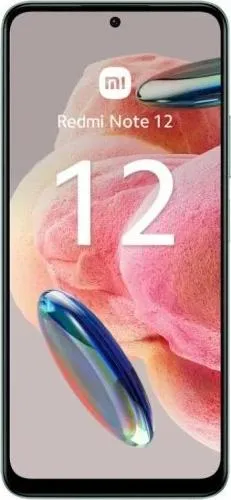
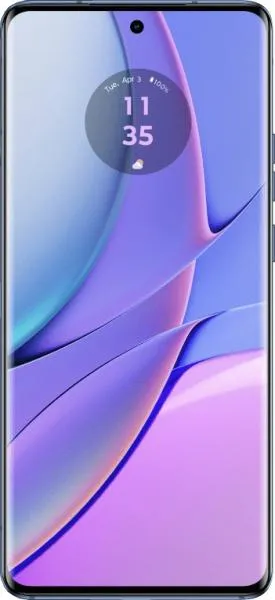
1. Specifications Comparison
| Feature | Xiaomi Redmi Note 12 4G | Motorola Edge 40 | Practical Impact |
|---|---|---|---|
| Design | |||
| Dimensions (H x W x D) | 165.7 x 76 x 7.9 mm | 158.4 x 72 x 7.6 mm | Motorola Edge 40 is noticeably smaller and thinner, making it more pocketable and comfortable for one-handed use. |
| Weight | 183.5g | 167g | The Motorola Edge 40 is significantly lighter, reducing hand fatigue during extended use. |
| Build | Unspecified | Unspecified | Build materials impact durability and premium feel. Lack of information limits comparison. |
| Display | |||
| Display Type | AMOLED, 120Hz | pOLED, 144Hz | Both offer vibrant colors and deep blacks. The Motorola's 144Hz refresh rate provides slightly smoother scrolling and animations, but the difference might be imperceptible to most users. pOLED generally consumes less power. |
| Display Size | 6.67" | 6.55" | Redmi Note 12 has slightly more screen real estate, beneficial for media consumption. |
| Resolution | 1080 x 2400 | 1080 x 2400 | Identical resolution results in similar sharpness on both devices. |
| Peak Brightness | 1200 nits | 1200 nits | Both offer excellent outdoor visibility. |
| HDR | No Dolby Vision, HDR10/10+ Unspecified | HDR10+ | Motorola Edge 40 supports HDR10+ for enhanced video playback with compatible content. Redmi's HDR capabilities are unclear. |
| Performance | |||
| Chipset | Snapdragon 685 (6nm) | Dimensity 8020 (6nm) | The Dimensity 8020 offers significantly better CPU and GPU performance, resulting in faster app loading, smoother multitasking, and improved gaming capabilities. |
| CPU | Octa-core (4x2.8 GHz Cortex-A73 & 4x1.9 GHz Cortex-A53) | Octa-core (4x2.6 GHz Cortex-A78 & 4x2.0 GHz Cortex-A55) | Motorola uses more powerful Cortex-A78 cores for demanding tasks. |
| GPU | Adreno 610 | Mali-G77 MC9 | Mali-G77 MC9 provides a significant advantage in graphics performance for gaming and visually intensive applications. |
| RAM | 4GB/6GB/8GB | 8GB | Motorola offers more RAM in this comparison, enabling better multitasking and preventing apps from closing in the background. |
| Camera | |||
| Main Camera | 50MP, f/1.8 | 50MP, f/1.4, OIS | Motorola's wider aperture (f/1.4) allows for better low-light performance. OIS significantly improves image stabilization for photos and videos. |
| Ultrawide | 8MP, f/2.2 | 13MP, f/2.2 | Motorola offers a higher resolution ultrawide camera for more detailed shots. |
| Macro | 2MP, f/2.4 | Combined with ultrawide | Dedicated macro lens on Redmi might offer slightly better close-up shots, though 2MP is low resolution. Motorola combines macro functionality with the ultrawide lens, potentially compromising quality. |
| Selfie | 13MP, f/2.45 | 32MP, f/2.4 | Motorola has a much higher resolution selfie camera. |
| Video | 1080p@30fps | 4K@30fps with HDR, EIS | Motorola offers significantly better video recording capabilities with higher resolution, HDR, and EIS. |
| Battery | |||
| Capacity | 5000mAh | 4400mAh | Redmi Note 12 has a larger battery capacity, potentially leading to longer battery life. |
| Charging | 33W Fast Charging | 68W Fast Charging | Motorola offers significantly faster charging speeds. |
2. Key Differences Analysis
Motorola Edge 40 Advantages:
- Significantly more powerful: Dimensity 8020 chipset offers a substantial performance advantage for demanding tasks and gaming.
- Superior camera system: Wider aperture main lens, OIS, higher resolution ultrawide, better video recording capabilities.
- Faster charging: 68W fast charging significantly reduces charging time.
- More compact and lighter design: Easier to handle and carry.
- Higher refresh rate display: Smoother animations and scrolling (though the difference may be subtle).
Xiaomi Redmi Note 12 4G Advantages:
- Larger battery capacity: Potentially longer battery life.
- Potentially lower price: Depending on specific configurations and regional pricing.
3. User Profiles & Recommendations
Motorola Edge 40: Users who prioritize performance, camera quality, fast charging, and a compact design. Suitable for gaming, photography enthusiasts, and those who value a smooth user experience.
Xiaomi Redmi Note 12 4G: Budget-conscious users who prioritize battery life and basic functionality. Suitable for everyday tasks like browsing, social media, and light gaming. Good for users who don't need top-tier performance or camera features.
4. Decision Framework
Key Questions for Buyers:
- What is your budget? The Motorola Edge 40 is generally more expensive.
- What are your primary use cases? Gaming, photography, or everyday tasks?
- Do you prioritize performance, camera quality, or battery life?
My Choice: Motorola Edge 40
While the Redmi Note 12 4G offers a larger battery, the Motorola Edge 40's superior performance, significantly better camera system, faster charging, and more compact design make it the clear winner for me. The Dimensity 8020 provides a substantial real-world difference in speed and responsiveness, which I value greatly. The improved camera system, particularly the addition of OIS, is another major advantage. While the smaller battery capacity might be a concern, the significantly faster 68W charging mitigates this to a large extent. The price difference is justifiable considering the significant upgrades offered by the Motorola Edge 40.
