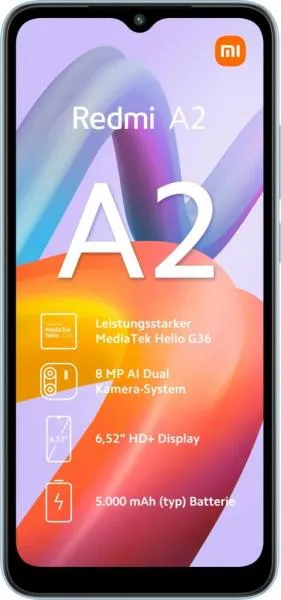

1. Specifications Comparison
| Feature | Xiaomi Redmi A2 | ZTE nubia Red Magic 9S Pro | Practical Impact |
|---|---|---|---|
| Design | |||
| Dimensions (mm) | 164.9 x 76.8 x 9.1 | 164 x 76.4 x 8.9 | Red Magic 9S Pro is slightly thinner and more compact. Negligible difference in daily use. |
| Weight (g) | 192 | 229 | Redmi A2 is significantly lighter, reducing hand fatigue during extended use. |
| Build | Unspecified | Unspecified | Material differences can impact durability and premium feel; information is lacking here. |
| Display | |||
| Display Type | IPS LCD | AMOLED | Red Magic 9S Pro offers richer colors, deeper blacks, and better power efficiency due to AMOLED technology. |
| Size (inches) | 6.52 | 6.8 | Red Magic 9S Pro provides a larger viewing area for media consumption and gaming. |
| Resolution | 720 x 1600 | 1116 x 2480 | Red Magic 9S Pro boasts a much sharper and more detailed display. |
| Refresh Rate | Unspecified | 120Hz | Red Magic 9S Pro will deliver smoother scrolling and animations due to the high refresh rate; Redmi A2's refresh rate is unknown. |
| Peak Brightness | 400 nits (typ) | 1600 nits (peak) | Red Magic 9S Pro will be significantly more visible in direct sunlight. |
| Performance | |||
| Chipset | Mediatek Helio G36 (12 nm) | Qualcomm Snapdragon 8 Gen 3 (4 nm) | Red Magic 9S Pro offers drastically superior processing power, enabling demanding gaming and multitasking. |
| CPU | Octa-core (4x2.2 GHz Cortex-A53 & 4x1.7 GHz Cortex-A53) | Octa-core (1x3.4 GHz Cortex-X4 & 3x3.2 GHz Cortex-A720 & 2x3.0 GHz Cortex-A720 & 2x2.3 GHz Cortex-A520) | Red Magic 9S Pro has a much more powerful and efficient CPU architecture. |
| GPU | PowerVR GE8320 | Adreno 750 (1 GHz) | Red Magic 9S Pro provides significantly better graphics performance for gaming and visually intensive tasks. |
| RAM | 2/3GB | 12/16GB | Red Magic 9S Pro offers vastly more RAM, allowing for seamless multitasking and app switching. |
| Camera | |||
| Rear Camera | 8MP Main, 0.3MP unspecified | 50MP Main, 50MP Wide, 2MP Macro | Red Magic 9S Pro features a significantly more versatile and higher resolution camera system. |
| Front Camera | 5MP | 16MP | Red Magic 9S Pro offers higher resolution selfies. |
| Video Recording | 1080p@30fps | 8K@30fps | Red Magic 9S Pro allows for much higher resolution video recording. |
| Battery | |||
| Capacity | 5000 mAh | 6500 mAh | Red Magic 9S Pro offers longer battery life. |
| Fast Charging | 10W | 80W | Red Magic 9S Pro charges significantly faster. |
2. Key Differences Analysis
Redmi A2 Advantages:
- Lighter and potentially more affordable: Easier to handle and potentially more budget-friendly.
Red Magic 9S Pro Advantages:
- Significantly more powerful: Superior performance for gaming, multitasking, and demanding applications.
- Higher quality display: Brighter, sharper, and more vibrant AMOLED display with a high refresh rate.
- More versatile and capable camera system: Higher resolution sensors, wider range of lenses, and better video recording capabilities.
- Faster charging and larger battery: Longer battery life and significantly reduced charging times.
- More advanced connectivity: Includes NFC, WiFi 7, Bluetooth 5.2, and USB Type-C 3.2.
3. User Profiles & Recommendations
Redmi A2: Budget-conscious users who prioritize basic communication (calls, texts, browsing) and light app usage.
Red Magic 9S Pro: Power users, gamers, and content creators who demand top-tier performance, a high-quality display, and advanced features.
4. Decision Framework
Key Questions:
- What is your budget? The Redmi A2 is a budget phone, while the Red Magic 9S Pro is a premium device.
- What are your primary use cases? Basic communication vs. demanding tasks like gaming and content creation.
- What features are most important to you? Battery life, camera quality, performance, display quality.
Scenario-Based Recommendations:
- Limited budget, basic usage: Redmi A2
- Demanding tasks, premium experience: Red Magic 9S Pro
My Choice: ZTE nubia Red Magic 9S Pro
While the Redmi A2 serves its purpose as a budget device, the Red Magic 9S Pro offers a vastly superior user experience in almost every aspect. The significant performance difference, coupled with the high refresh rate AMOLED display, versatile camera system, and fast charging make it a clear winner for me. I prioritize a smooth and responsive user experience, and the Red Magic 9S Pro delivers that in spades. Even though it's a more expensive device, the substantial upgrade in features and capabilities justifies the price difference for my needs.
