1. Specifications Comparison
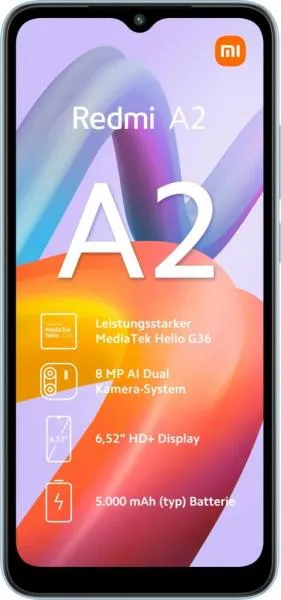
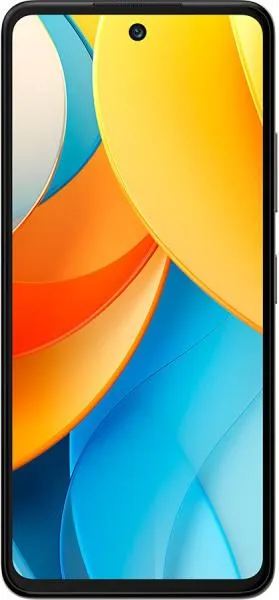
| Feature | Xiaomi Redmi A2 | ZTE Blade V60 Design | Practical Impact |
|---|---|---|---|
| Design | |||
| Dimensions (mm) | 164.9 x 76.8 x 9.1 | 164.2 x 75.3 x 8.6 | Negligible size difference in everyday use. |
| Weight (g) | 192 | 198 | Negligible weight difference. |
| Build Materials | Not specified | Not specified | Cannot compare build quality and durability. |
| Display | |||
| Display Type | IPS LCD | IPS LCD | Similar visual quality, viewing angles, and color accuracy. |
| Size (inches) | 6.52 | 6.6 | Slight difference in screen real estate, ZTE offers a marginally larger display. |
| Resolution | 720 x 1600 | 720 x 1612 | Nearly identical resolution, resulting in similar sharpness. |
| Refresh Rate | Not specified | 90Hz | ZTE's 90Hz offers smoother scrolling and animations, leading to a more fluid user experience. |
| Performance | |||
| Chipset | Mediatek Helio G36 (12 nm) | Unisoc T606 (12 nm) | Both are entry-level chipsets, but Unisoc T606 generally performs slightly better in benchmarks. |
| CPU | Octa-core (4x2.2 GHz Cortex-A53 & 4x1.7 GHz Cortex-A53) | Octa-core (2x1.6 GHz Cortex-A75 & 6x1.6 GHz Cortex-A55) | ZTE's CPU architecture is more modern and likely to offer better performance and efficiency for demanding tasks. |
| GPU | PowerVR GE8320 | Mali-G57 MP1 | Mali-G57 generally offers better gaming performance compared to PowerVR GE8320. |
| RAM | 2/3GB | 4/6GB | ZTE offers significantly more RAM, enabling better multitasking and smoother performance with multiple apps. |
| Storage | 32/64GB | 256GB | ZTE offers much larger storage capacity for apps, photos, and videos. |
| Camera | |||
| Rear Camera | 8MP Main + 0.3MP (Unspecified) | 50MP Main + 2MP Depth + 0.3MP (Unspecified) | ZTE boasts a significantly higher resolution main sensor, potentially capturing more detailed photos. The practical impact of the other sensors is unclear due to lack of specification details. |
| Front Camera | 5MP | 8MP | ZTE offers a higher resolution front camera for better selfies. |
| Battery | |||
| Capacity | 5000 mAh | 5000 mAh | Similar battery capacity, expecting comparable battery life depending on usage. |
| Charging | 10W | 22.5W | ZTE supports significantly faster charging, reducing downtime. |
| Other | |||
| NFC | No | Yes | ZTE enables contactless payments and other NFC functionalities. |
| OS | Android 12 | Android 13 | ZTE comes with a newer Android version, offering potential performance and security improvements. |
| USB | microUSB 2.0 | USB Type-C 2.0 | ZTE utilizes the more modern and versatile USB-C port. |
2. Key Differences Analysis
Xiaomi Redmi A2 Advantages:
- Potentially Lower Price: While exact prices fluctuate, the Redmi A2 is generally more affordable.
ZTE Blade V60 Design Advantages:
- Superior Performance: More RAM, a newer CPU architecture, and a better GPU contribute to significantly smoother performance.
- Better Display: 90Hz refresh rate offers a noticeably more fluid user experience.
- Enhanced Camera: Higher resolution main camera sensor potentially captures more detailed images.
- Faster Charging: 22.5W fast charging significantly reduces charging time.
- Modern Features: NFC for contactless payments, USB-C port, and newer Android OS.
3. User Profiles & Recommendations
Xiaomi Redmi A2: Budget-conscious users who prioritize basic communication and light tasks (calling, texting, browsing). Not recommended for gaming or demanding applications.
ZTE Blade V60 Design: Users who seek a more well-rounded experience with smoother performance, better media consumption, faster charging, and modern features like NFC. Suitable for moderate gaming and multitasking.
4. Decision Framework
Key Questions:
- What is your budget? The Redmi A2 is likely cheaper.
- What are your primary use cases? Basic communication vs. multitasking, gaming, media consumption.
- Which features are essential? NFC, fast charging, a modern USB port.
My Choice: ZTE Blade V60 Design
While the Xiaomi Redmi A2 offers an extremely budget-friendly option, the ZTE Blade V60 Design provides a significantly better overall user experience for a relatively small price increase. The 90Hz display, superior performance due to better CPU, GPU, and more RAM, faster charging, NFC functionality, and USB-C port make it a more compelling device for most users. The Redmi A2 is only recommended for extreme budget constraints where only the most basic functionalities are required. The ZTE's advantages in daily usability and future-proofing outweigh the price difference for me.
