1. Specifications Comparison
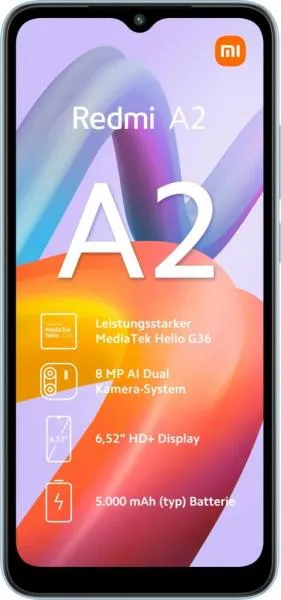
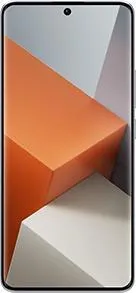
| Feature | Xiaomi Redmi A2 | Xiaomi Redmi Note 13 Pro+ | Practical Impact |
|---|---|---|---|
| Design | |||
| Dimensions (mm) | 164.9 x 76.8 x 9.1 | 161.4 x 74.2 x 8.9 | Redmi Note 13 Pro+ is slightly smaller and thinner. |
| Weight (g) | 192 | 199 | Negligible weight difference. |
| Build | Unspecified | Unspecified | Build quality comparison not possible without further information. |
| Display | |||
| Display Type | IPS LCD | AMOLED | Redmi Note 13 Pro+ offers significantly better contrast, deeper blacks, and potentially brighter colors. |
| Display Size (inches) | 6.52 | 6.67 | Redmi Note 13 Pro+ has a slightly larger display. |
| Resolution (px) | 720 x 1600 | 1220 x 2712 | Redmi Note 13 Pro+ has a much sharper display with higher pixel density (446 ppi vs 269 ppi), resulting in crisper text and images. |
| Refresh Rate (Hz) | Unspecified | 120 | Redmi Note 13 Pro+ will offer smoother scrolling and animations due to its higher refresh rate. |
| HDR | No | HDR10+, Dolby Vision | Redmi Note 13 Pro+ supports HDR content for a wider dynamic range and more vibrant visuals in compatible media. |
| Performance | |||
| Chipset | Mediatek Helio G36 (12 nm) | Mediatek Dimensity 7200 Ultra (4 nm) | Redmi Note 13 Pro+ boasts a significantly more powerful processor, resulting in much faster performance, smoother multitasking, and better gaming capabilities. |
| CPU | Octa-core (4x2.2 GHz Cortex-A53 & 4x1.7 GHz Cortex-A53) | Octa-core (2x2.8 GHz Cortex-A715 & 6x2.0 GHz Cortex-A510) | Redmi Note 13 Pro+'s CPU utilizes more powerful cores, leading to a significant performance advantage. |
| GPU | PowerVR GE8320 | Mali-G610 MC4 | Redmi Note 13 Pro+ has a more powerful GPU, resulting in improved gaming performance and graphics rendering. |
| RAM | 2/3 GB | 8/12 GB | Redmi Note 13 Pro+ offers substantially more RAM, enabling significantly better multitasking and preventing apps from closing in the background. |
| Camera | |||
| Main Camera (MP) | 8 | 200 | Redmi Note 13 Pro+ has a much higher resolution main camera sensor, potentially capturing more detailed photos. It also has a larger sensor (1/1.4") compared to Redmi A2's unspecified sensor size, enabling better low-light performance. |
| Front Camera (MP) | 5 | 16 | Redmi Note 13 Pro+ has a much higher resolution front camera, allowing for higher quality selfies. |
| Video Recording | 1080p@30fps | 4K@30fps | Redmi Note 13 Pro+ can record video at a much higher resolution. |
| Battery | |||
| Capacity (mAh) | 5000 | 5000 | Similar battery capacity. |
| Fast Charging | 10W | 120W | Redmi Note 13 Pro+ supports significantly faster charging, dramatically reducing charging times. |
2. Key Differences Analysis
Redmi A2 Advantages:
- Lower Price: Significantly more affordable.
Redmi Note 13 Pro+ Advantages:
- Superior Performance: Significantly faster processor, GPU, and more RAM.
- Better Display: Higher resolution, AMOLED technology, faster refresh rate, HDR support.
- Enhanced Camera System: Higher resolution sensors, 4K video recording, improved low-light performance.
- Faster Charging: 120W fast charging vs 10W.
- Additional Features: NFC, under-display fingerprint sensor.
3. User Profiles & Recommendations
Redmi A2: Budget-conscious users who prioritize basic communication (calls, texts, browsing) and light app usage. Not recommended for gaming or demanding tasks.
Redmi Note 13 Pro+: Users who demand high performance for gaming, multitasking, and media consumption. Suitable for photography enthusiasts due to its advanced camera system.
4. Decision Framework
Key Questions:
- What is your budget? The Redmi A2 is a budget phone, while the Redmi Note 13 Pro+ is a mid-range device.
- What are your primary use cases? Basic communication vs. demanding tasks like gaming and photography.
- How important is display and camera quality? The Redmi Note 13 Pro+ significantly outperforms the Redmi A2 in these areas.
My Choice: Xiaomi Redmi Note 13 Pro+
While the Redmi A2 offers an incredibly low price point, the Redmi Note 13 Pro+ offers a vastly superior user experience in almost every aspect. The performance difference alone is significant, making the Pro+ much more future-proof. The improved display, camera, and drastically faster charging are also major advantages. For the average user who wants a smooth, responsive phone with a good camera and long-lasting battery, the Redmi Note 13 Pro+, despite its higher price, offers much greater value in the long run. The significantly better technology justifies the price difference for a more satisfying and enjoyable user experience.
