1. Specifications Comparison
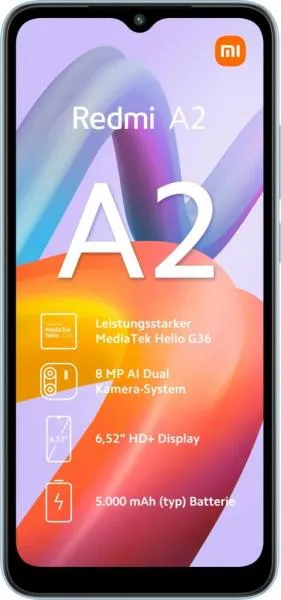
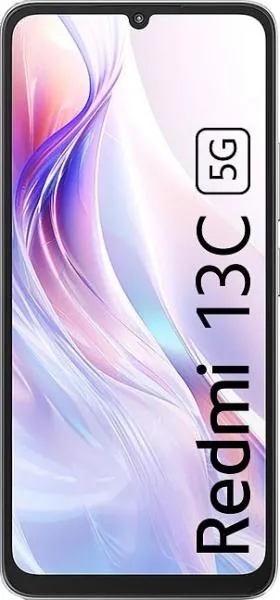
| Feature | Xiaomi Redmi A2 | Xiaomi Redmi 13C 5G | Practical Impact |
|---|---|---|---|
| Design | |||
| Dimensions (mm) | 164.9 x 76.8 x 9.1 | 168 x 78 x 8.1 | Redmi 13C is slightly larger and thinner. Negligible difference in daily use. |
| Weight (g) | 192 | 192 | Same weight. |
| Build | Unspecified | Unspecified | Material differences unknown, impacting durability and premium feel. |
| Display | |||
| Size (inches) | 6.52 | 6.74 | Redmi 13C offers a slightly larger screen for more immersive media consumption. |
| Resolution (px) | 720 x 1600 | 720 x 1600 | Same resolution, but Redmi 13C's larger size results in slightly lower pixel density (260 vs 269 ppi), potentially appearing less sharp. |
| Type | IPS LCD | IPS LCD | Both use IPS LCD, offering good color reproduction but lacking the deep blacks of OLED. |
| Refresh Rate (Hz) | Unspecified | 90 | Redmi 13C's 90Hz refresh rate provides smoother scrolling and animations, a noticeable improvement in daily use. |
| Performance | |||
| Chipset | Mediatek Helio G36 (12 nm) | Mediatek Dimensity 6100+ (6 nm) | Dimensity 6100+ is significantly more powerful and power-efficient due to the smaller 6nm process, resulting in better performance and battery life for the Redmi 13C. |
| CPU | Octa-core (4x2.2 GHz Cortex-A53 & 4x1.7 GHz Cortex-A53) | Octa-core (2x2.2 GHz Cortex-A76 & 6x2.0 GHz Cortex-A55) | Redmi 13C has a more modern and powerful CPU architecture, leading to faster app loading, smoother multitasking, and better gaming performance. |
| GPU | PowerVR GE8320 | Mali-G57 MC2 | Redmi 13C's Mali-G57 MC2 offers significantly better graphics performance for gaming and demanding visual tasks. |
| RAM | 2/3 GB | 4/6/8 GB | Redmi 13C offers more RAM, improving multitasking and overall system responsiveness. |
| Camera | |||
| Rear Camera | 8MP Main, 0.3MP Auxiliary | 50MP Main, 0.8MP Auxiliary | Redmi 13C has a vastly superior main camera with a higher resolution and larger sensor (Samsung S5KJN1, 1/2.76"), resulting in much better image quality, especially in low light. |
| Front Camera | 5MP | 5MP | Similar front camera specifications. |
| Video Recording | 1080p@30fps | 1080p@30fps, 120fps slow-mo | Redmi 13C supports slow-motion video recording. |
| Battery | |||
| Capacity (mAh) | 5000 | 5000 | Same battery capacity. |
| Charging | 10W | 18W | Redmi 13C supports faster charging, reducing downtime. |
| Other | |||
| OS | Android 12 | Android 13 | Redmi 13C comes with a newer OS version, offering potential performance and feature improvements. |
| 5G | No | Yes | Redmi 13C supports faster 5G cellular data. |
| USB | microUSB 2.0 | USB Type-C 2.0 | Redmi 13C uses the more modern and versatile USB-C port. |
| Price | Low | Medium | Redmi A2 is significantly cheaper. |
2. Key Differences Analysis
Redmi A2 Advantages:
- Lower Price: Significantly more affordable.
Redmi 13C 5G Advantages:
- Significantly Better Performance: The Dimensity 6100+ chipset, more RAM, and better GPU provide a substantially smoother and faster user experience.
- Improved Camera: The 50MP main camera with a larger sensor captures much better photos and videos.
- Faster Charging: 18W charging significantly reduces charging time compared to 10W.
- 5G Connectivity: Future-proofed with faster cellular data speeds.
- Modern Features: USB-C port, Android 13, 90Hz display refresh rate.
3. User Profiles & Recommendations
Redmi A2: Budget-conscious users who prioritize basic communication (calls, texts, browsing) and light app usage. Ideal for users who primarily need a reliable, affordable phone without demanding performance or camera quality.
Redmi 13C 5G: Users who want a good balance of performance, camera quality, and modern features at a reasonable price. Suitable for gaming, media consumption, social media, and multitasking.
4. Decision Framework
Key Questions:
- What is your budget?
- What are your primary phone usage needs?
- How important are performance, camera quality, and 5G connectivity?
Scenario-Based Recommendations:
- Tight Budget, Basic Needs: Redmi A2
- Moderate Budget, Balanced Needs: Redmi 13C 5G
- Power User, Future-Proofing: Redmi 13C 5G
My Choice: Xiaomi Redmi 13C 5G
While the Redmi A2 offers an incredibly low price, the Redmi 13C 5G provides a significantly better overall user experience for a moderately higher cost. The performance difference between the Helio G36 and Dimensity 6100+ is substantial, impacting daily tasks, app loading times, and especially gaming. The vastly improved camera, faster charging, 5G connectivity, 90Hz display, and USB-C port make the Redmi 13C 5G a much more compelling device for long-term use. The price difference is justified by the substantial upgrades, making the 13C a better value proposition for most users. Unless budget is extremely constrained, the 13C's modern features and superior performance offer a far more enjoyable and future-proof smartphone experience.
