1. Specifications Comparison
| Feature | Xiaomi Redmi A2 | Xiaomi Redmi 13 | Practical Impact |
|---|---|---|---|
| Design | |||
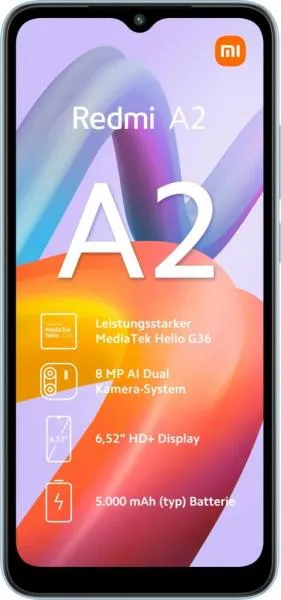
| Dimensions (mm) | 164.9 x 76.8 x 9.1 | 168.6 x 76.3 x 8.3 | Redmi 13 is slightly larger but thinner. Negligible difference in daily use. |
| Weight (g) | 192 | 205 | Redmi 13 is slightly heavier, but the difference is minimal. |
| Build Material | Not specified | Not specified | Cannot compare build quality without more information. |
| Display | |||
| Display Type | IPS LCD | IPS LCD | Both offer good color reproduction but limited viewing angles compared to OLED. |
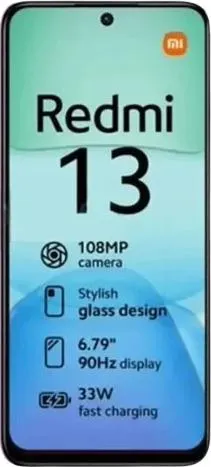
| Display Size (inches) | 6.52 | 6.79 | Redmi 13 offers a larger screen for more immersive media consumption. |
| Resolution | 720 x 1600 | 1080 x 2460 | Redmi 13 has significantly sharper visuals due to higher resolution. |
| Refresh Rate (Hz) | Not specified | 90 | Redmi 13's 90Hz refresh rate provides smoother scrolling and animations. |
| PPI | 269 | 396 | Redmi 13 has a much higher pixel density, resulting in crisper text and images. |
| Performance | |||
| Chipset | Mediatek Helio G36 (12 nm) | Mediatek Helio G91 Ultra (12 nm) | Redmi 13 boasts a more powerful chipset, enabling smoother multitasking and better gaming performance. |
| CPU | Octa-core (4x2.2 GHz Cortex-A53 & 4x1.7 GHz Cortex-A53) | Octa-core (2x2.0 GHz Cortex-A75 & 6x1.8 GHz Cortex-A55) | Redmi 13 has a more modern CPU architecture, leading to improved performance and efficiency. |
| GPU | PowerVR GE8320 | Mali-G52 MC2 | Redmi 13's GPU is significantly more powerful, allowing for better gaming and graphics-intensive tasks. |
| RAM | 2/3GB | 6/8GB | Redmi 13 offers considerably more RAM, enabling significantly better multitasking and app performance. |
| Camera | |||
| Rear Camera | 8MP Main, 0.3MP Auxiliary | 108MP Main, 2MP Depth | Redmi 13 has a vastly superior main camera with much higher resolution and likely better low-light performance. |
| Front Camera | 5MP | 13MP | Redmi 13 offers a higher resolution front camera for better selfies. |
| Video Recording | 1080p@30fps | 1080p@30fps (mentions 120fps slow-mo, unclear if for 1080p) | Video recording capabilities appear similar on paper, but Redmi 13 might offer better slow-motion options based on unclear specification. |
| Battery | |||
| Capacity (mAh) | 5000 | 5030 | Negligible difference in battery capacity. |
| Charging | 10W Fast Charging | 33W Fast Charging | Redmi 13 charges significantly faster. |
2. Key Differences Analysis
Redmi A2 Advantages:
- Lower Price: Significantly cheaper, making it accessible for budget-conscious buyers.
Redmi 13 Advantages:
- Superior Performance: Significantly faster processor, GPU, and more RAM for a smoother user experience.
- Better Display: Larger, sharper display with a higher refresh rate.
- Enhanced Camera: Much higher resolution main camera.
- Faster Charging: 33W fast charging significantly reduces charging time.
- NFC: Enables contactless payments and other NFC functionalities.
- More Modern OS: Ships with Android 14, offering newer features and potentially longer software support.
Trade-offs:
- Price: The Redmi 13's improved features come at a higher price.
3. User Profiles & Recommendations
Redmi A2: Ideal for users with basic needs like calling, texting, and light web browsing. Good for budget-conscious users or as a secondary device.
Redmi 13: Suitable for users who demand better performance for gaming, multitasking, and media consumption. Excellent for photography enthusiasts due to the improved camera.
4. Decision Framework
Key Questions:
- What is your budget? The Redmi A2 is a budget-friendly option, while the Redmi 13 offers more value for a higher price.
- What are your primary use cases? Basic tasks vs. demanding applications like gaming or photography.
- How important are display quality and performance? The Redmi 13 excels in these areas.
Scenario-Based Recommendations:
- Limited Budget, Basic Needs: Redmi A2
- Balanced Performance and Price: Redmi 13 (base model)
- Best Possible Performance: Redmi 13 (highest RAM/storage configuration)
My Choice: Xiaomi Redmi 13
While the Redmi A2 offers excellent value for its low price, the Redmi 13's superior performance, display, camera, and faster charging make it a much more compelling device for a slightly higher investment. The improved user experience offered by the 90Hz display, powerful chipset, and ample RAM justifies the price difference for most users. The inclusion of NFC further enhances its practicality for modern usage scenarios. The Redmi A2 is a good option for extremely tight budgets and basic needs, but the Redmi 13 provides a significantly better overall experience.
