1. Specifications Comparison
| Feature | Xiaomi Redmi A2 | Xiaomi Redmi 12 5G | Practical Impact |
|---|---|---|---|
| Design | |||
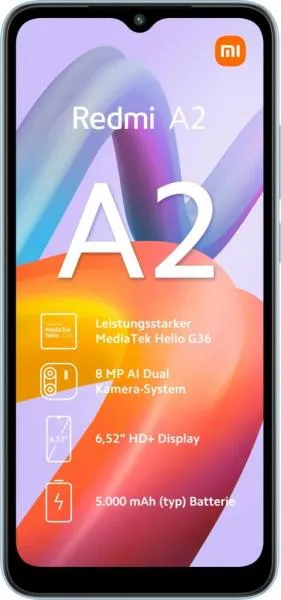
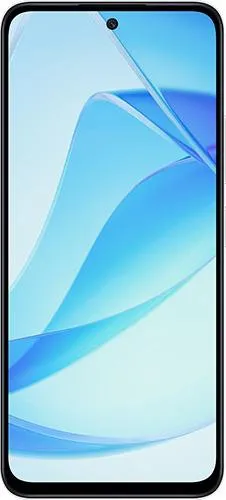
| Dimensions (mm) | 164.9 x 76.8 x 9.1 | 168.6 x 76.3 x 8.2 | Redmi 12 5G is slightly larger but thinner. |
| Weight (g) | 192 | 199 | Negligible weight difference in practical use. |
| Build Materials | Unspecified | Unspecified | Material differences could impact durability and feel, but we lack data. |
| Display | |||
| Display Type | IPS LCD | IPS LCD | Both offer good color reproduction but may lack deep blacks compared to OLED. |
| Display Size (inches) | 6.52 | 6.79 | Redmi 12 5G offers a larger screen for more immersive media consumption. |
| Resolution | 720 x 1600 | 1080 x 2460 | Redmi 12 5G has a significantly sharper display, resulting in clearer text and images. |
| Refresh Rate | Unspecified | 90Hz | The 90Hz refresh rate on the Redmi 12 5G provides smoother scrolling and animations. |
| Performance | |||
| Chipset | Mediatek Helio G36 (12 nm) | Qualcomm Snapdragon 4 Gen 2 (4 nm) | Redmi 12 5G's chipset is built on a smaller process node, likely leading to better power efficiency and performance. |
| CPU | Octa-core (4x2.2 GHz Cortex-A53 & 4x1.7 GHz Cortex-A53) | Octa-core (2x2.2 GHz Cortex-A78 & 6x1.95 GHz Cortex-A55) | Redmi 12 5G utilizes more powerful Cortex-A78 cores, delivering noticeably better performance for demanding tasks. |
| GPU | PowerVR GE8320 | Adreno 613 | Redmi 12 5G likely has a more capable GPU, offering smoother gaming and faster graphics rendering. |
| RAM | 2/3GB | 4/6/8GB | Redmi 12 5G offers more RAM options, enabling better multitasking and app performance. |
| Camera | |||
| Main Camera | 8MP | 50MP | Redmi 12 5G boasts significantly higher resolution for detailed photos. |
| Secondary Camera | 0.3MP (Unspecified purpose) | 2MP (Depth Sensor) | Redmi 12 5G's depth sensor assists in portrait mode for better bokeh effects. |
| Video Recording | 1080p@30fps | 1080p@30fps | Equivalent video resolution, though the Redmi 12 5G might offer better quality due to its superior processing capabilities. |
| Battery | |||
| Capacity | 5000 mAh | 5000 mAh | Similar battery capacity suggests comparable battery life. |
| Fast Charging | 10W | 18W | Redmi 12 5G supports faster charging, reducing downtime. |
2. Key Differences Analysis
Redmi A2 Advantages:
- Lower Price: Significantly more affordable.
Redmi 12 5G Advantages:
- Superior Performance: Faster processor, more RAM, and a more modern chipset.
- Better Display: Higher resolution, larger screen size, and a smoother 90Hz refresh rate.
- Improved Camera: Higher resolution main camera and a dedicated depth sensor.
- Faster Charging: 18W fast charging significantly reduces charging time.
- 5G Connectivity: Future-proofed with 5G network support.
Trade-offs:
- The Redmi A2 sacrifices performance, display quality, and features for affordability.
- The Redmi 12 5G comes at a higher price point.
3. User Profiles & Recommendations
Redmi A2:
- Ideal User: Budget-conscious users who primarily use their phone for basic tasks like calling, texting, and browsing.
- Use Cases: Simple web browsing, social media, casual photography.
Redmi 12 5G:
- Ideal User: Users who want a well-rounded phone with good performance, a nice display, and decent camera capabilities.
- Use Cases: Mobile gaming, media consumption, multitasking, photography enthusiasts.
4. Decision Framework
Key Questions for Buyers:
- What is your budget? The Redmi A2 is a great option for extremely tight budgets.
- What are your primary phone usage patterns? For basic use, the A2 suffices; for demanding tasks, the 12 5G is necessary.
- How important are features like a high-quality display and camera? The 12 5G excels in these areas.
Scenario-Based Recommendations:
- Student on a tight budget: Redmi A2
- Casual user who prioritizes value: Redmi 12 5G
- Mobile gamer: Redmi 12 5G
My Choice: Redmi 12 5G
While the Redmi A2 offers incredible value for its price, the Redmi 12 5G is the better overall phone. The improved performance, sharper display, better camera, faster charging, and 5G connectivity make it a much more capable device for a wider range of users. The price difference is justifiable considering the substantial upgrades. Even though specific build materials and detailed GPU frequencies are missing, the available data strongly favors the Redmi 12 5G for its tangible benefits in everyday usage. The smoother refresh rate alone significantly enhances the user experience. For a relatively small price increase, the Redmi 12 5G provides a significant leap in usability and longevity.
