1. Specifications Comparison
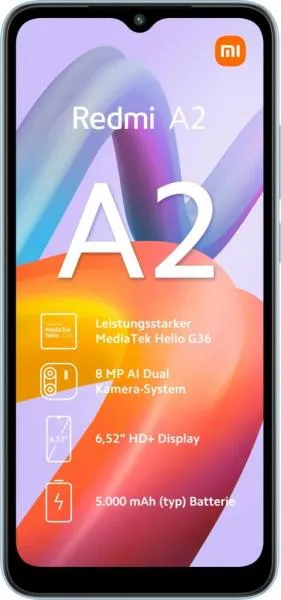
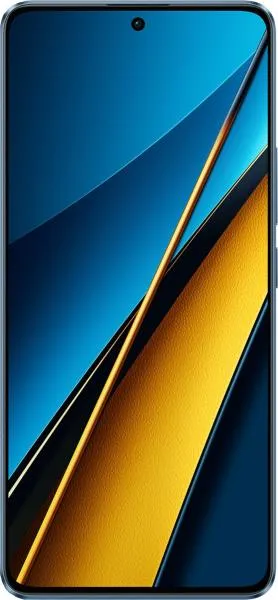
| Feature | Xiaomi Redmi A2 | Xiaomi Poco X6 | Practical Impact |
|---|---|---|---|
| Design | |||
| Dimensions (mm) | 164.9 x 76.8 x 9.1 | 161.2 x 74.3 x 8 | Poco X6 is slightly smaller and thinner. |
| Weight (g) | 192 | 181 | Poco X6 is noticeably lighter, improving one-handed use. |
| Build | Unspecified | Unspecified | Build quality cannot be compared due to lack of information. |
| Display | |||
| Display Type | IPS LCD | AMOLED | Poco X6 offers richer colors, deeper blacks, and better power efficiency. |
| Display Size (inches) | 6.52 | 6.67 | Poco X6 has a slightly larger screen. |
| Resolution | 720 x 1600 | 1220 x 2712 | Poco X6 has significantly higher resolution, resulting in sharper text and images. |
| Refresh Rate | Unspecified | 120Hz | Poco X6's 120Hz refresh rate provides smoother scrolling and animations. |
| Peak Brightness | 400 nits (typ) | 1800 nits (peak) | Poco X6 is much brighter, improving outdoor visibility. |
| Performance | |||
| Chipset | Mediatek Helio G36 (12 nm) | Qualcomm Snapdragon 7s Gen 2 (4 nm) | Poco X6 offers significantly better performance and efficiency. |
| CPU | Octa-core (4x2.2 GHz Cortex-A53 & 4x1.7 GHz Cortex-A53) | Octa-core (4x2.4 GHz Cortex-A78 & 4x1.95 GHz Cortex-A55) | Poco X6 has a more powerful and modern CPU architecture. |
| GPU | PowerVR GE8320 | Adreno 710 | Poco X6 provides a much better gaming and graphics experience. |
| RAM | 2/3/4GB | 8/12GB | Poco X6 has substantially more RAM, enabling better multitasking. |
| Storage | 32/64GB | 256/512GB | Poco X6 offers significantly more storage. |
| Camera | |||
| Main Camera | 8MP | 64MP (Omnivision OV64B) | Poco X6 offers vastly superior image quality and detail. |
| Ultrawide | No | 8MP | Poco X6 has an ultrawide lens for wider shots. |
| Macro | 0.3MP | 2MP | Poco X6 has a dedicated macro lens for better close-up shots. |
| Selfie Camera | 5MP | 16MP | Poco X6's selfie camera offers much better resolution and likely image quality. |
| Video Recording | 1080p@30fps | 4K@30fps | Poco X6 can record video at a much higher resolution. |
| Battery | |||
| Capacity | 5000 mAh | 5100 mAh | Similar battery capacities, but real-world battery life will depend on usage and efficiency. |
| Fast Charging | 10W | 67W | Poco X6 charges significantly faster. |
2. Key Differences Analysis
Xiaomi Redmi A2 Advantages:
- Lower Price: Significantly more affordable.
Xiaomi Poco X6 Advantages:
- Superior Performance: Significantly faster processor, more RAM, and better GPU for smooth multitasking and gaming.
- Better Display: AMOLED with higher resolution, refresh rate, and brightness for a superior visual experience.
- Enhanced Camera System: Higher resolution sensors, ultrawide and macro lenses, and 4K video recording capabilities.
- Faster Charging: 67W fast charging significantly reduces charging time.
- More Storage: Offers much more storage for apps, photos, and videos.
- NFC: Enables contactless payments and other NFC functionalities.
- More up-to-date software Starts with Android 13 vs. Android 12 with further updates promised
Trade-offs:
- The Redmi A2 sacrifices performance, features, and build quality for affordability.
- The Poco X6 comes at a significantly higher price.
3. User Profiles & Recommendations
Xiaomi Redmi A2: Budget-conscious users who prioritize basic communication and light usage. Ideal for:
- Calling and texting
- Basic web browsing
- Social media usage (with limitations)
Xiaomi Poco X6: Users who demand performance, a great display, a versatile camera, and fast charging. Ideal for:
- Gaming
- Media consumption (videos, photos)
- Demanding multitasking
- Photography enthusiasts
4. Decision Framework
Key Questions for Buyers:
- What is your budget? The Redmi A2 is a budget option, while the Poco X6 is a mid-range device.
- What are your primary smartphone usage patterns? Basic communication vs. demanding tasks like gaming and photography.
- Which features are most important to you? Performance, display quality, camera capabilities, battery life, or price.
Scenario-Based Recommendations:
- Tight Budget, Basic Usage: Redmi A2
- Balanced Needs, Value for Money: Poco X6
- Performance and Features Focused: Poco X6
My Choice: Xiaomi Poco X6
While the Redmi A2 offers an extremely budget-friendly option, the Poco X6 provides a significantly better overall user experience. The superior performance, display, camera, and fast charging capabilities justify the higher price for most users beyond those with the most basic needs and tightest budgets. The modern features like NFC, a more powerful processor, and more RAM ensure a future-proof device capable of handling demanding tasks and providing a smooth user experience for years to come. The leap in technology and user experience offered by the Poco X6 significantly outweighs the price difference.
