1. Specifications Comparison
| Feature | Xiaomi Redmi A2 | Xiaomi Poco M6 Pro | Practical Impact |
|---|---|---|---|
| Design | |||
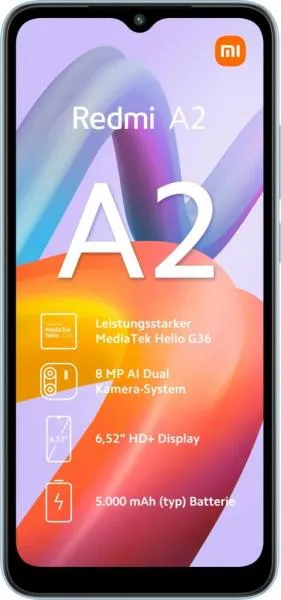
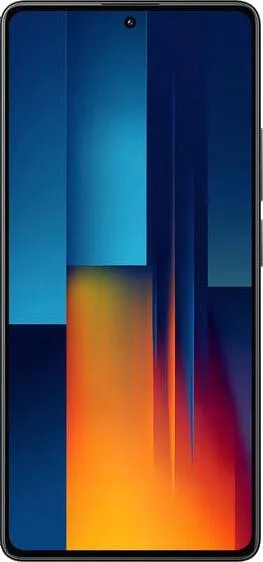
| Dimensions (mm) | 164.9 x 76.8 x 9.1 | 161.1 x 75 x 8 | Poco M6 Pro is slightly smaller and thinner. |
| Weight (g) | 192 | 179 | Poco M6 Pro is noticeably lighter. |
| Build Material | Not specified | Not specified | Cannot compare build quality and durability. |
| Display | |||
| Display Type | IPS LCD | AMOLED | Poco M6 Pro offers richer colors, deeper blacks, and better power efficiency due to AMOLED technology. |
| Display Size (inches) | 6.52 | 6.67 | Poco M6 Pro has a slightly larger screen. |
| Resolution | 720 x 1600 | 1080 x 2400 | Poco M6 Pro has a significantly sharper and more detailed display. |
| Refresh Rate | Not specified | 120Hz | Poco M6 Pro provides smoother scrolling and animations thanks to the higher refresh rate. |
| Peak Brightness | 400 nits (typ) | 1300 nits (peak) | Poco M6 Pro will be much more visible in direct sunlight. |
| Performance | |||
| Chipset | Mediatek Helio G36 (12 nm) | Mediatek Helio G99 Ultra | Poco M6 Pro offers significantly better CPU and GPU performance, leading to faster app loading, smoother multitasking, and better gaming capabilities. |
| CPU | Octa-core (4x2.2 GHz Cortex-A53 & 4x1.7 GHz Cortex-A53) | Octa-core (2x2.2 GHz Cortex-A76 & 6x2.0 GHz Cortex-A55) | Poco M6 Pro utilizes more powerful core architecture resulting in a noticeable performance difference. |
| GPU | PowerVR GE8320 | Mali-G57 MC2 | Poco M6 Pro offers significantly improved graphics performance for demanding games and applications. |
| RAM | 2/3GB | 6/8/12GB | Poco M6 Pro offers substantially more RAM, enabling superior multitasking and preventing app closures. |
| Storage | 32/64GB | 128/256/512GB | Poco M6 Pro provides significantly more storage space for apps, photos, and videos. |
| Camera | |||
| Rear Camera | 8MP + 0.3MP | 64MP + 8MP + 2MP | Poco M6 Pro boasts higher resolution sensors, potentially capturing more detailed photos and offering more versatile photography options with its triple-camera setup. |
| Front Camera | 5MP | 16MP | Poco M6 Pro's front camera has a much higher resolution for better selfies. |
| Camera Features | Basic | OIS, Slow Motion Video (240fps), 4K video | Poco M6 Pro offers significantly more advanced camera features enabling higher quality video recording and more stable footage. |
| Battery | |||
| Capacity | 5000 mAh | 5000 mAh | Similar battery capacity. |
| Charging | 10W | 67W | Poco M6 Pro charges dramatically faster. |
2. Key Differences Analysis
Xiaomi Redmi A2 Advantages:
- Lower Price: Significantly more affordable.
Xiaomi Poco M6 Pro Advantages:
- Superior Performance: Much faster processor, more RAM, and better GPU.
- Better Display: AMOLED with higher resolution, refresh rate, and peak brightness.
- Enhanced Camera: Higher resolution sensors, OIS, 4K video recording, and more features.
- Faster Charging: Significantly faster charging speeds.
- NFC: Supports contactless payments and data transfer.
- More Modern Connectivity: Bluetooth 5.2 and Wi-Fi 6 support
3. User Profiles & Recommendations
Xiaomi Redmi A2:
- Budget-conscious users: Ideal for those seeking a basic smartphone for calls, texting, and light web browsing.
- Elderly users or children: Simple interface and ease of use make it suitable for less tech-savvy individuals.
Xiaomi Poco M6 Pro:
- Performance-focused users: Gamers, power users, and those who demand smooth multitasking.
- Photography enthusiasts: Users who prioritize camera quality and features.
- Content consumers: Large, high-quality display ideal for video streaming and gaming.
4. Decision Framework
Key Questions for Buyers:
- What is your budget? The Redmi A2 is a budget phone, while the Poco M6 Pro is mid-range.
- What are your primary use cases? Basic communication vs. demanding tasks like gaming and photography.
- How important are features like display quality, camera performance, and charging speed?
Scenario-Based Recommendations:
- Limited budget, basic needs: Redmi A2
- Balanced performance and price: Poco M6 Pro (base model)
- Best possible performance and features: Poco M6 Pro (higher storage/RAM variant)
My Choice: Xiaomi Poco M6 Pro
While the Redmi A2 offers excellent value for its incredibly low price, the Poco M6 Pro is the clear winner for me. The significantly improved performance, superior AMOLED display, versatile camera system with OIS and 4K video, drastically faster charging, and NFC functionality make it a much more compelling device. The price difference is justified by the substantial upgrade in user experience. Even the base model of the Poco M6 Pro offers a far better long-term investment due to its superior hardware. I value a smooth and responsive user experience, a good quality display for media consumption, and a capable camera, making the Poco M6 Pro the better choice for my needs.
