1. Specifications Comparison
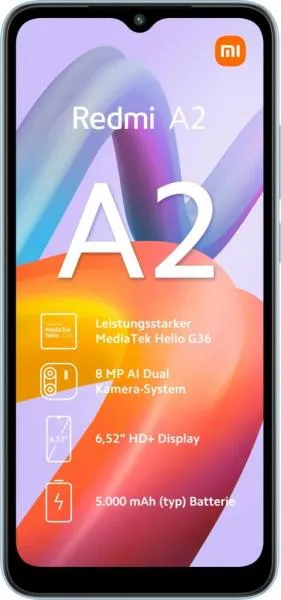
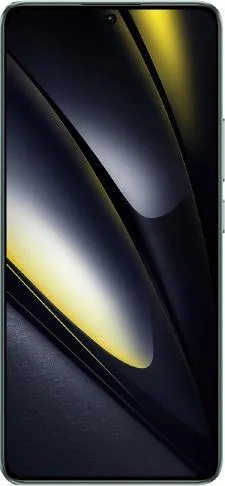
| Feature | Xiaomi Redmi A2 | Xiaomi Poco F6 | Practical Impact |
|---|---|---|---|
| Design | |||
| Dimensions (mm) | 164.9 x 76.8 x 9.1 | 160.5 x 74.5 x 8 | Poco F6 is slightly smaller and thinner. |
| Weight (g) | 192 | 179 | Poco F6 is noticeably lighter, improving one-handed use. |
| Build | Unspecified | Unspecified | Build material impacts durability and feel; information lacking. |
| Display | |||
| Size (inches) | 6.52 | 6.67 | Poco F6 offers a slightly larger screen for more immersive content. |
| Resolution | 720 x 1600 | 1220 x 2712 | Poco F6 has a significantly sharper display, resulting in clearer text and images. |
| Type | IPS LCD | AMOLED | Poco F6's AMOLED provides richer colors, deeper blacks, and better power efficiency. |
| Refresh Rate | Unspecified | 120Hz | Poco F6's 120Hz refresh rate delivers smoother scrolling and animations. |
| HDR | No | HDR10+, Dolby Vision | Poco F6 supports HDR for improved video quality with compatible content. |
| Performance | |||
| Chipset | Mediatek Helio G36 (12 nm) | Qualcomm SM8635 Snapdragon 8s Gen 3 (4 nm) | Poco F6 boasts a vastly more powerful processor, enabling seamless multitasking and demanding gaming. |
| CPU | Octa-core (4x2.2 GHz Cortex-A53 & 4x1.7 GHz Cortex-A53) | Octa-core (1x3.0 GHz Cortex-X4 & 4x2.8 GHz Cortex-A720 & 3x2.0 GHz Cortex-A520) | Significant performance difference; Poco F6 handles tasks much faster. |
| GPU | PowerVR GE8320 | Adreno 735 | Poco F6 has a considerably more powerful GPU for superior gaming and graphics performance. |
| RAM | 2/3/4GB | 8/12GB | Poco F6 offers significantly more RAM for smoother multitasking and app switching. |
| Camera | |||
| Rear Camera | 8MP main, 0.3MP unspecified | 50MP main (Sony IMX882), 8MP wide | Poco F6 provides a significantly better camera setup with higher resolution, wider angle lens, and a better sensor. |
| Front Camera | 5MP | 20MP | Poco F6's front camera has much higher resolution for better selfies. |
| Video Recording | 1080p@30fps | Up to 4K@60fps with EIS | Poco F6 offers superior video recording capabilities with higher resolution and stabilization. |
| Battery | |||
| Capacity | 5000 mAh | 5000 mAh | Similar battery capacity. |
| Charging | 10W Fast Charging | 90W Fast Charging | Poco F6 charges significantly faster. |
2. Key Differences Analysis
Xiaomi Redmi A2 Advantages:
- Lower Price: Significantly more affordable.
Xiaomi Poco F6 Advantages:
- Superior Performance: Much faster processor, more RAM, and a better GPU for a smooth and responsive experience.
- High-Quality Display: AMOLED with higher resolution, refresh rate, and HDR support for a vibrant and immersive visual experience.
- Better Cameras: Higher resolution sensors, wider lens options, and advanced features like OIS for superior photo and video quality.
- Faster Charging: 90W fast charging drastically reduces charging time.
- NFC: Enables contactless payments and other NFC functionalities.
3. User Profiles & Recommendations
Xiaomi Redmi A2: Budget-conscious users who prioritize basic communication and light web browsing. Ideal for:
- First-time smartphone users: Simple and easy to use.
- Users on a tight budget: Offers essential features at a low price.
- Secondary phone: For calls and texts only.
Xiaomi Poco F6: Users who demand high performance, a great display, and excellent camera capabilities. Ideal for:
- Mobile gamers: Powerful hardware for demanding games.
- Content creators: Excellent cameras and a large, high-quality display.
- Power users: Seamless multitasking and demanding applications.
4. Decision Framework
Key Questions:
- What is your budget? The Redmi A2 is significantly cheaper.
- What are your primary use cases? Basic tasks vs. demanding applications, gaming, and content creation.
- How important is display and camera quality? The Poco F6 significantly outperforms the Redmi A2 in these areas.
Scenario-Based Recommendations:
- Limited Budget: Redmi A2
- Balanced Needs: Consider other mid-range options that offer a better balance between price and performance.
- Performance and Features: Poco F6
My Choice: Xiaomi Poco F6
While the Redmi A2 is an attractive option for its price, the Poco F6 offers a vastly superior overall experience. The performance difference is significant, making the Poco F6 much more future-proof and capable of handling demanding tasks. The AMOLED display, higher refresh rate, and HDR support significantly enhance the visual experience. Finally, the improved camera system and drastically faster charging are compelling advantages. The price difference is justified by the significant leap in features and performance. I value a smooth, responsive experience, a good display, and a capable camera, making the Poco F6 the clear winner for me.
