1. Specifications Comparison
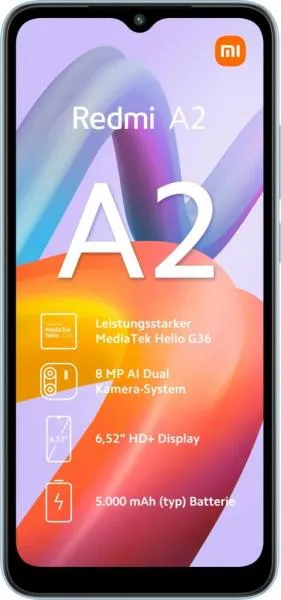
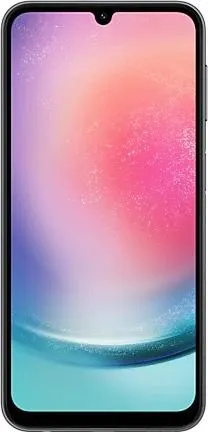
| Feature | Xiaomi Redmi A2 | Samsung Galaxy A24 4G | Practical Impact | |
|---|---|---|---|---|
| Design | ||||
| Dimensions (mm) | 164.9 x 76.8 x 9.1 | 162.1 x 77.6 x 8.3 | A24 slightly shorter, narrower, and thinner. Negligible difference in hand feel. | |
| Weight (g) | 192 | 195 | Virtually identical weight. | |
| Build | Unspecified | Unspecified | Build quality and materials unknown for both, limiting comparison. | |
| Display | ||||
| Display Type | IPS LCD | Super AMOLED | A24 offers significantly better contrast, colors, and viewing angles with AMOLED. | |
| Display Size (inches) | 6.52 | 6.5 | Negligible size difference. | |
| Resolution | 720 x 1600 | 1080 x 2340 | A24 has a much sharper display with higher pixel density (396 ppi vs 269 ppi), resulting in clearer text and images. | |
| Refresh Rate | Unspecified | 90Hz | A24's 90Hz refresh rate provides smoother scrolling and animations. | |
| Peak Brightness | 400 nits (typ) | 1000 nits (peak) | A24 will be significantly more readable in sunlight. | |
| Performance | ||||
| Chipset | Mediatek Helio G36 (12 nm) | Mediatek Helio G99 (6 nm) | G99 offers significantly better performance and efficiency due to smaller process node and superior CPU architecture. | |
| CPU | Octa-core (4x2.2 GHz Cortex-A53 & 4x1.7 GHz Cortex-A53) | Octa-core (2x2.2 GHz Cortex-A76 & 6x2.0 GHz Cortex-A55) | A24 boasts more powerful cores (Cortex-A76) for demanding tasks. Redmi A2 relies on older, less efficient Cortex-A53 cores. | |
| GPU | PowerVR GE8320 | Mali-G57 MC2 | A24 has a more powerful GPU, enabling smoother gaming and faster graphics rendering. | |
| RAM | 2/3GB | 4/6/8GB | A24 offers more RAM options, with higher capacities enabling better multitasking and app performance. | |
| OS | Android 12 | Android 13 | A24 comes with a newer Android version, potentially offering more features and longer software support. | |
| Camera | ||||
| Rear Camera | 8MP Main, 0.3MP Auxiliary | 50MP Main, 5MP Ultrawide, 2MP Macro | A24 offers a significantly more versatile and higher resolution camera system with ultrawide and macro capabilities. | |
| Front Camera | 5MP | 13MP | A24 provides higher resolution for selfies. | |
| Video Recording | 1080p@30fps | 1080p@30fps with EIS | Both record at 1080p, but A24 features Electronic Image Stabilization (EIS) for smoother videos. | |
| Battery | ||||
| Capacity | 5000 mAh | 5000 mAh | Identical battery capacity. | |
| Charging | 10W | 25W | A24 supports significantly faster charging. |
2. Key Differences Analysis
Xiaomi Redmi A2 Advantages:
- Lower Price: Significantly more affordable.
Samsung Galaxy A24 4G Advantages:
- Superior Display: AMOLED technology, higher resolution, 90Hz refresh rate, and higher brightness deliver a vastly improved visual experience.
- Significantly Better Performance: More powerful chipset, CPU, and GPU result in smoother multitasking, faster app loading, and better gaming capabilities.
- More Versatile Camera: Higher resolution main sensor, ultrawide and macro lenses offer greater flexibility for photography.
- Faster Charging: 25W charging significantly reduces downtime.
- NFC: Enables contactless payments and other NFC functionalities.
- Newer OS: Android 13 with potentially longer software updates.
3. User Profiles & Recommendations
Xiaomi Redmi A2: Budget-conscious users who prioritize basic communication and light web browsing. Ideal for:
- Basic phone users: Calling, texting, and occasional internet use.
- Secondary phone: For specific tasks or as a backup device.
Samsung Galaxy A24 4G: Users who value a well-rounded experience with a good display, performance, and camera. Ideal for:
- Everyday users: Social media, web browsing, multimedia consumption, casual gaming, and photography.
- Users seeking long-term value: Newer OS and hardware suggest longer usability.
4. Decision Framework
Key Questions:
- What is your budget? The Redmi A2 is significantly cheaper.
- What are your primary phone usage patterns? Basic communication vs. multimedia consumption, gaming, photography.
- How important are display quality, performance, and camera capabilities? A24 excels in these areas.
My Choice: Samsung Galaxy A24 4G
While the Redmi A2 offers an extremely low price point, the Galaxy A24 provides a significantly better overall user experience. The superior display, performance, camera, and faster charging outweigh the price difference for most users. The A24 represents a much better long-term investment due to its more modern hardware and software, promising a longer lifespan and better usability. The inclusion of NFC further enhances its practicality for everyday use. The Redmi A2 is only justifiable for extremely budget-constrained users who prioritize basic functionality above all else.
