1. Specifications Comparison
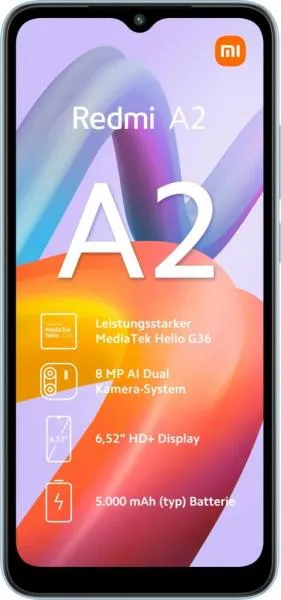
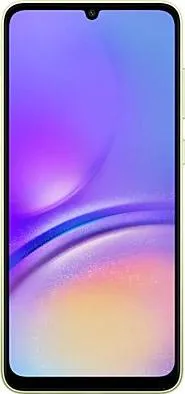
| Feature | Xiaomi Redmi A2 | Samsung Galaxy A05 | Practical Impact |
|---|---|---|---|
| Design | |||
| Dimensions (mm) | 164.9 x 76.8 x 9.1 | 168.8 x 78.2 x 8.8 | A05 slightly larger, but thinner. Negligible difference in daily use. |
| Weight (g) | 192 | 195 | Virtually identical weight. |
| Build Material | Unspecified | Unspecified | Material impacts durability and premium feel. Lack of information limits comparison. |
| Display | |||
| Size (inches) | 6.52 | 6.7 | A05 has a slightly larger screen, providing more immersive content consumption. |
| Resolution (px) | 720 x 1600 | 720 x 1600 | Identical resolution. Sharpness will be similar, but slightly lower pixel density on the A05 due to the larger screen size. |
| Display Type | IPS LCD | PLS LCD | Both are LCD panels. PLS LCD generally offers slightly better color reproduction and viewing angles compared to standard IPS. |
| Refresh Rate (Hz) | Unspecified | Unspecified | Impacts smoothness of scrolling and animations. Lack of information limits comparison. |
| Performance | |||
| Chipset | Mediatek Helio G36 (12 nm) | Mediatek Helio G85 (12 nm) | G85 is more powerful, resulting in smoother multitasking, faster app loading, and better gaming performance. |
| CPU | Octa-core (4x2.2 GHz Cortex-A53 & 4x1.7 GHz Cortex-A53) | Octa-core (2x2.0 GHz Cortex-A75 & 6x1.8 GHz Cortex-A55) | A05's CPU architecture is more modern and efficient, providing a noticeable performance boost. |
| GPU | PowerVR GE8320 | Mali-G52 MC2 | A05's GPU is significantly more powerful, enabling better gaming and graphics performance. |
| RAM | 2/3GB | 4/6GB | A05 offers more RAM options, improving multitasking and overall responsiveness. More RAM is crucial for demanding tasks and future-proofing. |
| Camera | |||
| Rear Camera | 8MP Main, 0.3MP Auxiliary | 50MP Main, 2MP Depth | A05 boasts a significantly higher resolution main camera, potentially capturing more detailed photos. The depth sensor aids in portrait mode. |
| Front Camera | 5MP | 8MP | A05 has a higher resolution selfie camera. |
| Video Recording | 1080p@30fps | 1080p@30/60fps | A05 offers 60fps recording, resulting in smoother videos. |
| Battery | |||
| Capacity (mAh) | 5000 | 5000 | Identical battery capacity. Actual battery life depends on usage and optimization. |
| Fast Charging | 10W | 25W | A05 supports significantly faster charging, minimizing downtime. |
2. Key Differences Analysis
Xiaomi Redmi A2 Advantages:
- Potentially Lower Price: Based on the provided price data, the Redmi A2 starts at a lower price point.
Samsung Galaxy A05 Advantages:
- Significantly Better Performance: The Helio G85 chipset, coupled with more RAM, delivers a much smoother and responsive user experience.
- Improved Camera: The 50MP main camera and higher resolution front camera will likely produce superior photos and videos.
- Faster Charging: 25W fast charging significantly reduces charging time compared to the Redmi A2's 10W.
- USB Type-C: While both have 2.0 speeds, USB-C is a more modern and versatile connector.
- More Up-to-Date OS: Launching with Android 13 provides a newer user experience and potentially longer software support.
Trade-offs:
- The Samsung Galaxy A05 likely comes at a higher price, though specific pricing varies by region and configuration.
3. User Profiles & Recommendations
Xiaomi Redmi A2: Budget-conscious users who prioritize basic communication and light usage (calls, texts, browsing). Best for users who are extremely price-sensitive and don't demand high performance.
Samsung Galaxy A05: Users who want a more responsive and versatile phone for everyday tasks, including social media, light gaming, and photography. Better suited for users who value performance, camera quality, and faster charging.
4. Decision Framework
Key Questions for Buyers:
- What is your budget? The Redmi A2 is for the most budget-conscious, while the A05 requires a larger investment.
- What are your primary phone usage patterns? For basic usage, the Redmi A2 suffices. For more demanding tasks and entertainment, the A05 is superior.
- How important is camera quality and charging speed? The A05 offers significant advantages in these areas.
My Choice: Samsung Galaxy A05
While the Redmi A2 offers extreme affordability, the Samsung Galaxy A05 provides a significantly better overall user experience due to its superior performance, camera, charging speed, and more modern USB-C port. The relatively small price difference is easily justified by these tangible improvements in daily usage. Even for a budget-conscious buyer, the long-term frustration of a sluggish phone outweighs the initial price savings. The A05's better performance and features will provide a more enjoyable and longer-lasting experience.
