1. Specifications Comparison
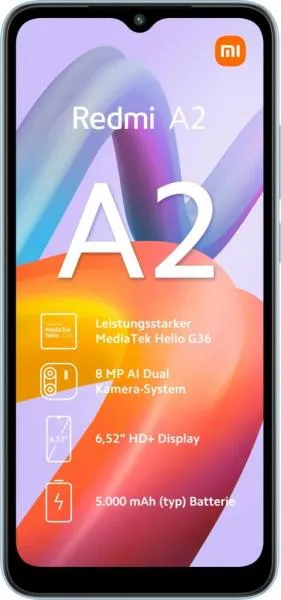
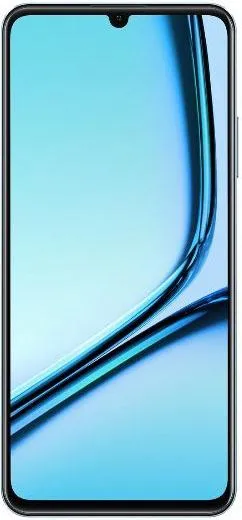
| Feature | Xiaomi Redmi A2 | Realme Note 50 | Practical Impact |
|---|---|---|---|
| Design | |||
| Dimensions (mm) | 164.9 x 76.8 x 9.1 | 167.2 x 76.7 x 8 | Realme Note 50 is slightly larger but thinner. Negligible difference in daily use. |
| Weight (g) | 192 | 186 | Realme Note 50 is slightly lighter. Negligible difference in daily use. |
| USB Type | microUSB 2.0 | USB Type-C 2.0 | Significant advantage for Realme: USB-C offers faster data transfer and more versatile charging options. |
| Display | |||
| Size (inches) | 6.52 | 6.74 | Realme Note 50 has a slightly larger screen, providing more immersive content consumption. |
| Resolution (pixels) | 720 x 1600 | 720 x 1600 | Same resolution, but due to larger screen size, the Realme Note 50 has a lower pixel density (260 ppi vs 269 ppi). This may result in slightly less sharp text and images on the Realme. |
| Refresh Rate (Hz) | Not specified | 90 | Advantage for Realme: 90Hz refresh rate delivers smoother scrolling and animations, resulting in a more fluid user experience. |
| Display Type | IPS LCD | IPS LCD | Both use IPS LCD technology, offering decent color reproduction and viewing angles. |
| Performance | |||
| Chipset | Mediatek Helio G36 (12 nm) | Unisoc Tiger T612 (12 nm) | Both are entry-level chipsets. Performance differences are likely minimal for basic tasks. Benchmarking scores would be needed for a definitive comparison. |
| CPU | Octa-core (4x2.2 GHz Cortex-A53 & 4x1.7 GHz Cortex-A53) | Octa-core (2x1.8 GHz Cortex-A75 & 6x1.8 GHz Cortex-A55) | Realme Note 50 uses a slightly more modern CPU architecture (Cortex-A75). Performance difference likely negligible for everyday use, but Realme might handle demanding tasks slightly better. |
| GPU | PowerVR GE8320 | Mali-G57 | Difficult to compare without specific benchmark data. Both are entry-level GPUs, suitable for casual gaming. |
| RAM | 2/3GB | 4GB | Advantage for Realme: More RAM enables better multitasking and smoother performance with multiple apps open. |
| Camera | |||
| Rear Camera | 8MP main, 0.3MP unspecified | 13MP main, 2MP B&W | Advantage for Realme: Higher resolution main camera likely captures more detailed photos. The B&W sensor's practical benefit is questionable without further details. |
| Front Camera | 5MP | 5MP | Same resolution front camera. Image quality would depend on sensor and software processing, which are not fully detailed. |
| Battery | |||
| Capacity (mAh) | 5000 | 5000 | Same battery capacity. Actual battery life depends on software optimization and usage patterns. |
| Charging | 10W Fast Charging | 10W Fast Charging | Both offer the same charging speed. |
2. Key Differences Analysis
Xiaomi Redmi A2 Advantages:
- Potentially Lower Price: Based on available price data, the Redmi A2 seems to be available at lower price points than the Realme Note 50.
Realme Note 50 Advantages:
- Modern USB-C Port: Enables faster data transfer and more versatile charging compatibility.
- Smoother Display: 90Hz refresh rate offers a more fluid user experience.
- More RAM: 4GB RAM ensures better multitasking and smoother performance.
- Potentially Better Camera: Higher resolution main camera likely captures more detail.
Trade-offs:
- Realme Note 50's Lower Pixel Density: While negligible, the slightly lower pixel density on the Realme Note 50 might result in slightly less sharp visuals compared to the Redmi A2.
3. User Profiles & Recommendations
Xiaomi Redmi A2: Ideal for budget-conscious users who prioritize basic communication and light usage (calls, messaging, browsing). Best for:
- Users on a tight budget.
- Elderly users or those seeking a simple smartphone experience.
- Secondary phone for specific tasks.
Realme Note 50: Suitable for users who want a more fluid user experience and slightly better performance, particularly for multitasking and media consumption. Best for:
- Budget-conscious users who prioritize a smooth display.
- Light gamers or users who consume a lot of media.
4. Decision Framework
Key Questions for Buyers:
- What is your budget? The Redmi A2 is likely the more affordable option.
- How important is a smooth display? The Realme Note 50's 90Hz refresh rate offers a noticeable improvement in fluidity.
- What type of tasks will you primarily use the phone for? For basic tasks, both phones will suffice. For multitasking and media consumption, the Realme Note 50 is a better choice.
Scenario-Based Recommendations:
- Extremely tight budget: Redmi A2
- Prioritize smooth scrolling and modern charging: Realme Note 50
My Choice: Realme Note 50
While the price difference might be significant, the Realme Note 50 offers key advantages that enhance the overall user experience. The 90Hz refresh rate is a significant differentiator, providing noticeably smoother scrolling and animations. The modern USB-C port is essential for future-proofing and convenient charging. The extra RAM in the Realme Note 50 is also crucial for smoother multitasking. While the camera improvements might be marginal in practice, the combination of these factors makes the Realme Note 50 a more compelling choice for a slightly higher price. The microUSB port on the Redmi A2 is a significant drawback in today's market.
