1. Specifications Comparison
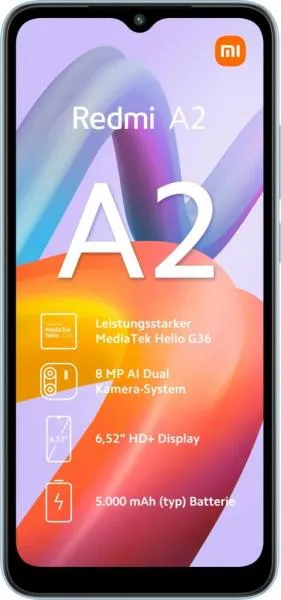
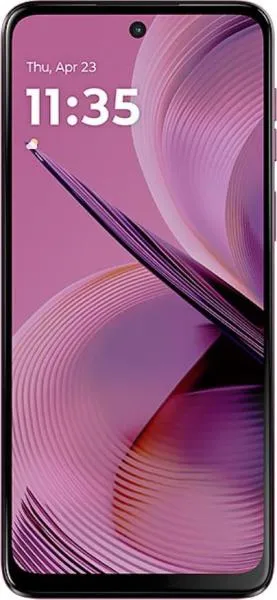
| Feature | Xiaomi Redmi A2 | Motorola Moto G55 | Practical Impact |
|---|---|---|---|
| Design | |||
| Dimensions (mm) | 164.9 x 76.8 x 9.1 | 161.6 x 73.8 x 8.1 | Moto G55 is slightly smaller and thinner. |
| Weight (g) | 192 | 179 | Moto G55 is noticeably lighter. |
| Build | Not specified | Not specified | Build quality comparison not possible without further information. |
| Display | |||
| Display Type | IPS LCD | IPS LCD | Both offer good color reproduction, but viewing angles might be limited compared to OLED. |
| Size (inches) | 6.52 | 6.49 | Negligible size difference. |
| Resolution | 720 x 1600 | 1080 x 2400 | Moto G55 has a significantly sharper display, resulting in clearer text and images. |
| Refresh Rate | Not specified | 120Hz | Moto G55's 120Hz offers smoother scrolling and animations, enhancing the user experience. |
| PPI | 269 | 405 | Moto G55 has a much higher pixel density, leading to a crisper and more detailed display. |
| Performance | |||
| Chipset | Mediatek Helio G36 (12 nm) | Mediatek Dimensity 7025 (6 nm) | Moto G55 boasts a significantly more powerful and efficient processor, enabling smoother multitasking and better gaming performance. |
| CPU | Octa-core (4x2.2 GHz Cortex-A53 & 4x1.7 GHz Cortex-A53) | Octa-core (2x2.5 GHz Cortex-A78 & 6x2.0 GHz Cortex-A55) | Moto G55's CPU architecture is newer and more powerful, resulting in a substantial performance advantage. |
| GPU | PowerVR GE8320 | IMG BXM-8-256 | Moto G55 offers a more capable GPU, providing a smoother gaming and graphics-intensive application experience. |
| RAM | 2/3GB | 8GB | Moto G55 offers significantly more RAM enabling smoother multitasking and better performance with demanding apps. |
| Camera | |||
| Rear Camera | 8MP Main, 0.3MP unspecified | 50MP Main, 8MP Wide Angle | Moto G55 offers much higher resolution and a wider field of view for versatile photography. |
| Front Camera | 5MP | 16MP | Moto G55 has a significantly better selfie camera with higher resolution. |
| Video Recording | 1080p@30fps | 1080p@30/60fps | Moto G55 offers more video recording options, including 60fps for smoother footage. |
| Battery | |||
| Capacity | 5000 mAh | 5000 mAh | Similar battery capacity on both phones. |
| Charging | 10W | 30W | Moto G55 charges significantly faster. |
2. Key Differences Analysis
Xiaomi Redmi A2 Advantages:
- Lower Price: Significantly more affordable.
Motorola Moto G55 Advantages:
- Superior Performance: Significantly faster processor, more RAM, and a better GPU provide a smoother and more responsive experience.
- Better Display: Higher resolution, refresh rate, and pixel density deliver a significantly sharper and smoother visual experience.
- Enhanced Camera: Higher resolution cameras, wide-angle lens, and improved video recording capabilities.
- Faster Charging: 30W fast charging significantly reduces charging time.
- NFC: Enables contactless payments and other NFC functionalities.
- More Up-to-date OS: Android 14 offers the latest features and security updates.
3. User Profiles & Recommendations
Xiaomi Redmi A2: Budget-conscious users who prioritize basic communication and light usage. Ideal for:
- Calling and texting
- Basic web browsing
- Social media usage (with limitations)
Motorola Moto G55: Users who value performance, a good display, and a capable camera. Ideal for:
- Gaming
- Media consumption (videos, photos)
- Multitasking
- Mobile photography
4. Decision Framework
Key Questions for Buyers:
- What is your budget? The Redmi A2 is significantly cheaper.
- What are your primary use cases? For basic tasks, the Redmi A2 might suffice. For demanding tasks, the Moto G55 is much better.
- How important are performance, display quality, and camera capabilities? The Moto G55 significantly outperforms the Redmi A2 in these areas.
My Choice: Motorola Moto G55
While the Redmi A2 offers an extremely budget-friendly option, the Moto G55 provides significantly better value for the price difference. The superior performance, display, camera, and faster charging make it a much more enjoyable and versatile device for everyday use. The improved user experience offered by the Moto G55 outweighs the cost savings of the Redmi A2, unless budget is the absolute top priority and usage is limited to very basic tasks. Having a smooth 120Hz display, a capable camera, and a powerful processor drastically improves daily interactions with the phone. The longer software support provided by a newer Android version also contributes to the longevity of the device.
