1. Specifications Comparison
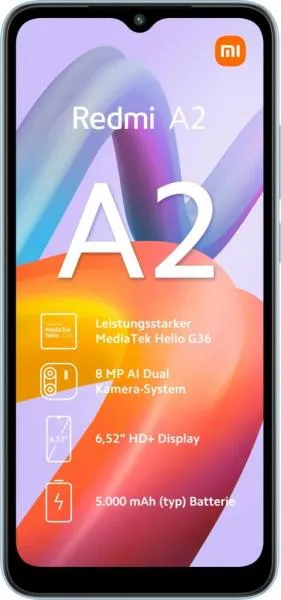
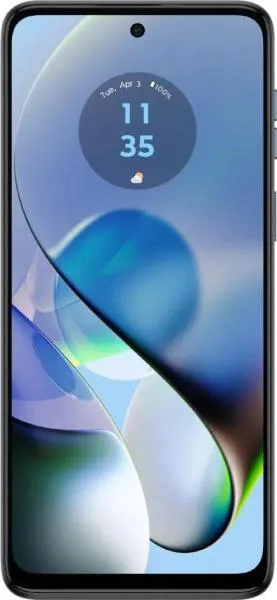
| Feature | Xiaomi Redmi A2 | Motorola Moto G54 | Practical Impact |
|---|---|---|---|
| Design | |||
| Dimensions (mm) | 164.9 x 76.8 x 9.1 | 161.6 x 73.8 x 8.0 | Moto G54 is slightly smaller and thinner. |
| Weight (g) | 192 | 177 | Moto G54 is noticeably lighter, improving one-handed use. |
| Build | Unspecified | Unspecified | Build quality comparison is impossible without material information. |
| Display | |||
| Size (inches) | 6.52 | 6.5 | Negligible size difference. |
| Resolution | 720 x 1600 | 1080 x 2400 | Moto G54 has a significantly sharper display, resulting in clearer text and images. |
| PPI | 269 | 405 | Moto G54's higher pixel density provides a much crisper visual experience. |
| Type | IPS LCD | IPS LCD | Both use IPS LCD technology, offering good color reproduction but potentially limited viewing angles compared to OLED. |
| Refresh Rate | Unspecified | 120Hz | Moto G54's 120Hz refresh rate delivers smoother animations and scrolling. |
| Performance | |||
| Chipset | Mediatek Helio G36 (12nm) | Mediatek Dimensity 7020 (6nm) | Moto G54's 6nm chipset offers significantly better performance and power efficiency. |
| CPU | Octa-core (4x2.2 GHz Cortex-A53 & 4x1.7 GHz Cortex-A53) | Octa-core (2x2.2 GHz Cortex-A78 & 6x2.0 GHz Cortex-A55) | Moto G54 has a more powerful CPU architecture, enabling faster app loading and multitasking. |
| GPU | PowerVR GE8320 | IMG BXM-8-256 | Moto G54 boasts a superior GPU, leading to smoother gaming and graphics performance. |
| RAM | 2GB/3GB | 8GB | Moto G54 offers significantly more RAM, enabling better multitasking and preventing app closures in the background. |
| Camera | |||
| Rear Camera | 8MP Main, 0.3MP unspecified | 50MP Main, 2MP Macro | Moto G54's 50MP main camera should offer significantly better image quality and detail. The 2MP macro lens on the G54 allows for close-up shots, while the purpose of Redmi A2's 0.3MP lens is unclear. |
| Front Camera | 5MP | 16MP | Moto G54's 16MP front camera will likely produce higher resolution selfies. |
| Video | 1080p@30fps | 1080p@30/60fps | Moto G54 can record videos at a higher frame rate (60fps), resulting in smoother footage. |
| Battery | |||
| Capacity | 5000 mAh | 5000 mAh | Both phones have the same battery capacity. |
| Charging | 10W | 15W | Moto G54 supports faster charging. |
| Type | Li-Ion | Li-Polymer | Li-Polymer batteries generally degrade slower than Li-Ion. |
2. Key Differences Analysis
Motorola Moto G54 Advantages:
- Significantly better performance: The Dimensity 7020 chipset, more RAM, and powerful GPU offer a much smoother and faster user experience.
- Sharper display: Higher resolution and 120Hz refresh rate make for a more enjoyable viewing experience.
- Superior camera: The 50MP main camera and 16MP selfie camera provide much better image quality.
- Faster Charging: 15W charging will top up the battery quicker than the Redmi A2's 10W.
- NFC: Enables contactless payments and data transfer.
- More updated OS and Bluetooth: Android 13 and Bluetooth 5.3 offer potential feature and performance improvements.
Xiaomi Redmi A2 Advantages:
- Lower Price: Significantly cheaper, making it accessible to budget-conscious users.
Trade-offs:
- Redmi A2 sacrifices performance, display quality, and camera capabilities for affordability.
- Moto G54 comes at a higher price but offers a substantially improved overall user experience.
3. User Profiles & Recommendations
Xiaomi Redmi A2: Users with extremely tight budgets who prioritize basic communication (calls, texts, light web browsing) over performance or advanced features.
Motorola Moto G54: Users who want a smooth and responsive phone for everyday tasks, including social media, web browsing, casual gaming, and photography.
4. Decision Framework
Key Questions:
- What is your budget?
- What are your primary smartphone usage patterns?
- Which features are most important to you (performance, camera, display)?
Scenario-Based Recommendations:
- Tight budget, basic usage: Redmi A2.
- Balanced budget, everyday use with some gaming and photography: Moto G54.
My Choice: Motorola Moto G54
While the Redmi A2 offers an extremely low price point, the Moto G54's significant advantages in performance, display, camera, and features make it the clear winner for me. The difference in user experience would be substantial, and the higher price of the G54 is justified by the significant upgrades. I value a smooth and responsive phone with a good camera and display, and the Moto G54 delivers on those fronts. The inclusion of NFC for contactless payments is also a significant plus. Even though the specific build materials are unknown, the lighter weight of the Moto G54 contributes significantly to better handling. Unless budget is an absolute constraint, the Moto G54 offers a far superior overall package.
