1. Specifications Comparison
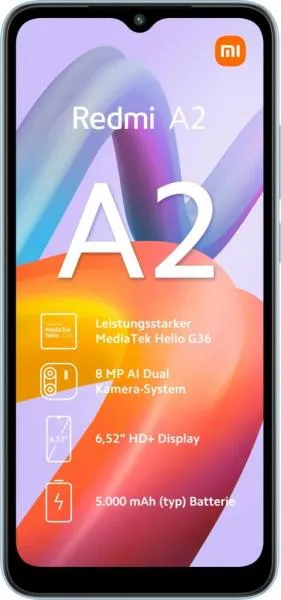
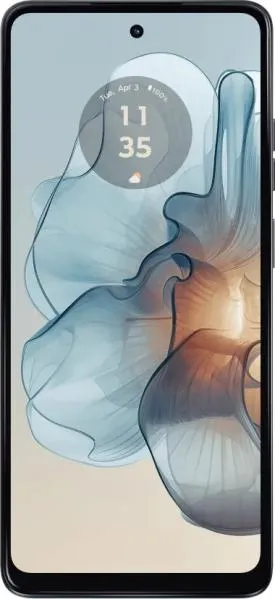
| Feature | Xiaomi Redmi A2 | Motorola Moto G24 Power | Practical Impact |
|---|---|---|---|
| Design | |||
| Dimensions (mm) | 164.9 x 76.8 x 9.1 | 163.5 x 74.5 x 9.0 | Virtually identical in size and thickness. |
| Weight (g) | 192 | 197 | Negligible weight difference in hand. |
| Build Material | Not specified | Not specified | Cannot compare build quality and durability. |
| Display | |||
| Display Size (inches) | 6.52 | 6.56 | Moto G24 Power offers marginally larger screen real estate. |
| Resolution (pixels) | 720 x 1600 | 720 x 1612 | Nearly identical resolution; expect similar sharpness. |
| Display Type | IPS LCD | IPS LCD | Both use IPS LCD technology, offering good color reproduction at the expense of contrast compared to OLED. |
| Refresh Rate (Hz) | Not specified | 90 | The 90Hz refresh rate on the Moto G24 Power will provide a smoother user experience, especially for scrolling and gaming. |
| Peak Brightness (nits) | 400 (typ) | 537 (peak) | Moto G24 Power should offer better visibility in direct sunlight. |
| Performance | |||
| Chipset | Mediatek Helio G36 (12 nm) | Mediatek Helio G85 (12 nm) | G85 offers better CPU and GPU performance than G36, translating to faster app loading, smoother multitasking, and better gaming capabilities. |
| CPU | Octa-core (4x2.2 GHz Cortex-A53 & 4x1.7 GHz Cortex-A53) | Octa-core (2x2.0 GHz Cortex-A75 & 6x1.7 GHz Cortex-A55) | Moto G24 Power's CPU architecture is more modern and powerful. |
| GPU | PowerVR GE8320 | Mali-G52 MC2 | Moto G24 Power has a significantly more capable GPU, leading to a noticeable difference in gaming and graphically intensive tasks. |
| RAM (GB) | 2/3 | 8 | The 8GB RAM in the Moto G24 Power allows for significantly better multitasking and reduces app closures in the background. |
| Storage (GB) | 32/64 | 128 | Moto G24 Power provides much more storage for apps, photos, and videos. |
| Camera | |||
| Rear Camera (MP) | 8 MP Main + 0.3 MP Auxiliary | 50 MP Main + 2 MP Wide + 2MP Macro | Moto G24 Power boasts a higher resolution main sensor and dedicated wide and macro lenses for more versatile photography. |
| Front Camera (MP) | 5 MP | 8 MP | Moto G24 Power offers a higher resolution selfie camera. |
| Video Recording | 1080p@30fps | 1080p@30fps, 120fps slow-mo | Moto G24 Power offers slow-motion video recording. |
| Battery | |||
| Capacity (mAh) | 5000 | 6000 | Moto G24 Power has significantly larger battery capacity, resulting in longer usage time. |
| Charging Speed | 10W | 33W | Moto G24 Power supports much faster charging, minimizing downtime. |
| Other | |||
| NFC | No | Yes | Moto G24 Power supports contactless payments and other NFC functionalities. |
| OS | Android 12 | Android 14 | Moto G24 Power runs a newer version of Android with updated features and security patches. |
| USB | microUSB 2.0 | USB Type-C 2.0 | Moto G24 Power uses the more modern and reversible USB-C port. |
2. Key Differences Analysis
Motorola Moto G24 Power Advantages:
- Superior Performance: Significantly faster processor, GPU, and more RAM for smoother multitasking and gaming.
- Larger Battery and Faster Charging: Longer battery life and reduced charging times.
- Modern Features: NFC for contactless payments, USB-C port, newer Android version.
- Better Camera System: Higher resolution main sensor, dedicated wide and macro lenses, slow-motion video.
- Smoother Display: 90Hz refresh rate provides a more fluid user experience.
Xiaomi Redmi A2 Advantages:
- Potentially Lower Price: While exact pricing wasn't compared, Redmi A series typically targets a lower price point.
3. User Profiles & Recommendations
Xiaomi Redmi A2: Users on a tight budget who prioritize basic functionality like calling, texting, and light web browsing.
Motorola Moto G24 Power: Users who need a reliable phone with good performance, long battery life, a decent camera, and modern features like NFC and a fast refresh rate display. Suitable for moderate gaming, multitasking, and content consumption.
4. Decision Framework
Key Questions:
- What is your budget? The Redmi A2 will likely be cheaper.
- What are your primary use cases? Basic communication vs. gaming, multitasking, and media consumption.
- How important are features like NFC, fast charging, and a smooth display? These are key advantages of the Moto G24 Power.
My Choice: Motorola Moto G24 Power
While the Redmi A2 offers a budget-friendly option, the Moto G24 Power provides a significantly better overall user experience for a relatively small price increase. The performance difference, larger battery with faster charging, modern features like NFC and USB-C, and the smoother display make it a more compelling choice for most users. The improved camera system also adds value. Unless budget is extremely tight, the Moto G24 Power offers a much better value proposition in the long run.
