1. Specifications Comparison
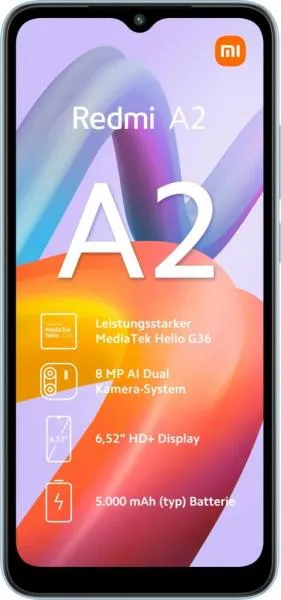
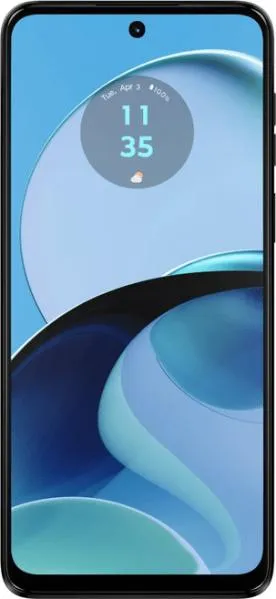
| Feature | Xiaomi Redmi A2 | Motorola Moto G14 | Practical Impact |
|---|---|---|---|
| Design | |||
| Dimensions (mm) | 164.9 x 76.8 x 9.1 | 161.5 x 73.8 x 8 | Moto G14 is slightly smaller and thinner. |
| Weight (g) | 192 | 177 | Moto G14 is noticeably lighter, improving one-handed use. |
| Build | Unspecified | Unspecified | Build quality and materials cannot be compared without further data. |
| Display | |||
| Size (inches) | 6.52 | 6.5 | Negligible size difference. |
| Resolution | 720 x 1600 | 1080 x 2400 | Moto G14 has a significantly sharper display, resulting in clearer text and images. |
| Pixel Density (PPI) | 269 | 405 | Moto G14 offers a much crisper viewing experience. |
| Display Type | IPS LCD | IPS LCD | Both use IPS LCD technology, offering decent viewing angles but potentially lacking vibrant colors compared to AMOLED. |
| Refresh Rate | Unspecified | Unspecified | Refresh rate impact on smoothness cannot be compared without specific data. |
| Performance | |||
| Chipset | Mediatek Helio G36 (12 nm) | Unisoc Tiger T616 (12 nm) | Both are entry-level chipsets, but the Unisoc T616 generally performs better in benchmarks, indicating smoother multitasking and potentially better gaming performance. |
| CPU | Octa-core (4x2.2 GHz Cortex-A53 & 4x1.7 GHz Cortex-A53) | Octa-core (2x2.0 GHz Cortex-A75 & 6x1.8 GHz Cortex-A55) | Moto G14's CPU architecture is more modern and efficient. |
| GPU | PowerVR GE8320 | Mali-G57 MP1 | Moto G14's GPU is generally considered more capable for gaming and graphics-intensive tasks. |
| RAM | 2/3 GB | 4/8GB | Moto G14 offers significantly more RAM, leading to better multitasking and app performance. |
| Storage | 32/64 GB | 64/128/256GB | Moto G14 offers larger storage options, crucial for storing media and apps. |
| Camera | |||
| Rear Camera | 8MP Main, 0.3MP Auxiliary | 50MP Main, 2MP Macro | Moto G14 has a vastly superior main camera with higher resolution and a dedicated macro lens for close-up shots. |
| Front Camera | 5MP | 8MP | Moto G14 has a better selfie camera. |
| Video Recording | 1080p@30fps | 1080p@30fps | Both offer basic video recording capabilities. Moto G14 lists 120fps slow-motion, but resolution at this framerate is unlisted. |
| Battery | |||
| Capacity | 5000 mAh | 5000 mAh | Similar battery capacity, suggesting comparable battery life. Real-world usage may vary. |
| Charging | 10W | 15W | Moto G14 supports faster charging. |
| Other | |||
| NFC | No | Yes | Moto G14 supports contactless payments and data transfer via NFC. |
| OS | Android 12 | Android 13 | Moto G14 ships with a newer Android version, offering potential performance and feature advantages. |
| USB | microUSB 2.0 | USB Type-C 2.0 | Moto G14 uses the more modern and versatile USB-C port. |
2. Key Differences Analysis
Moto G14 Advantages:
- Sharper Display: Significantly higher resolution and pixel density.
- Better Performance: More powerful chipset, CPU, GPU, and more RAM.
- Superior Camera: Higher resolution main camera, dedicated macro lens, better selfie camera.
- Faster Charging: 15W vs. 10W.
- NFC: Supports contactless payments.
- Newer OS: Android 13.
- USB-C: Modern and reversible port.
Redmi A2 Advantages:
- Potentially Lower Price: Redmi phones are generally known for aggressive pricing. However, specific price comparison is needed as RAM/Storage configurations vary.
3. User Profiles & Recommendations
Redmi A2: Budget-conscious users who prioritize basic functionality (calling, texting, web browsing) and long battery life over performance and advanced features.
Moto G14: Users seeking a well-rounded smartphone with a good display, decent performance, capable camera, and modern features like NFC and USB-C, all at an affordable price. Suitable for light gaming, social media, and content consumption.
4. Decision Framework
Key Questions:
- What is your budget? The Redmi A2 is likely cheaper, but consider the RAM/storage configuration.
- What are your primary smartphone uses? Basic communication vs. multimedia consumption, gaming, photography.
- Which features are essential? NFC, high-resolution display, camera quality.
My Choice: Motorola Moto G14
While the Redmi A2 likely holds a price advantage in its lowest configurations, the Moto G14 offers a significantly better overall package. The superior display, performance, camera, NFC functionality, and more modern USB-C port make it a much more versatile and future-proof device. The improvements in user experience offered by the Moto G14 outweigh the potential price difference for most users. Even if the Moto G14 were slightly more expensive, the value proposition is significantly stronger. The Redmi A2 only makes sense for the most extremely budget-constrained users who only need the absolute basics.
