1. Specifications Comparison
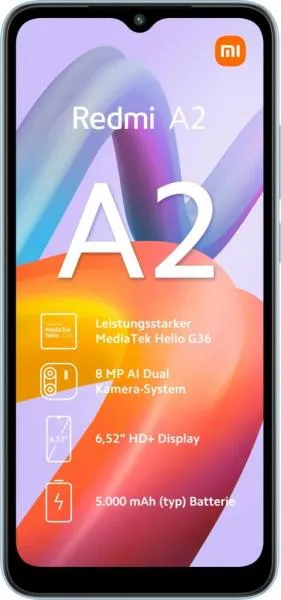
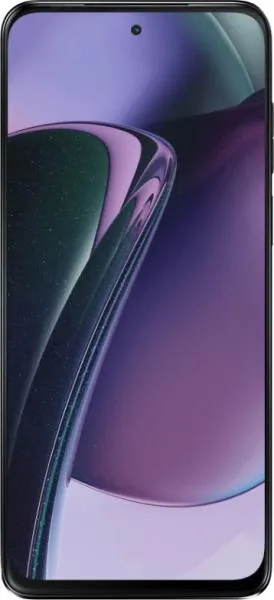
| Feature | Xiaomi Redmi A2 | Motorola Moto G Stylus 5G (2023) | Practical Impact |
|---|---|---|---|
| Design | |||
| Dimensions (mm) | 164.9 x 76.8 x 9.1 | 162.8 x 73.8 x 9.2 | Virtually identical in size and thickness. |
| Weight (g) | 192 | 202 | Moto G Stylus is slightly heavier, but the difference is negligible in daily use. |
| Build Material | Unspecified | Unspecified | Build quality and durability cannot be compared without further information. |
| Display | |||
| Display Size (inches) | 6.52 | 6.6 | Negligible difference in screen real estate. |
| Resolution | 720 x 1600 | 1080 x 2400 | Moto G Stylus has a significantly sharper display, resulting in clearer text and images. |
| Display Type | IPS LCD | IPS LCD | Both use IPS LCD technology, but quality differences (brightness, color accuracy) are unknown without further details. |
| Refresh Rate | Unspecified | 120Hz | Moto G Stylus's 120Hz refresh rate provides smoother scrolling and animations, leading to a more responsive feel. |
| Performance | |||
| Chipset | Mediatek Helio G36 (12 nm) | Qualcomm Snapdragon 6 Gen 1 (4 nm) | Snapdragon 6 Gen 1 is significantly more powerful, enabling smoother multitasking, faster app loading, and better gaming performance. The 4nm process also means better power efficiency. |
| CPU | Octa-core (4x2.2 GHz Cortex-A53 & 4x1.7 GHz Cortex-A53) | Octa-core (4x2.2 GHz Cortex-A78 & 4x1.8 GHz Cortex-A55) | Moto G Stylus utilizes more powerful Cortex-A78 cores, offering a substantial performance advantage over the Redmi A2's older Cortex-A53 cores. |
| RAM | 2/3GB | 4/6/8GB | Moto G Stylus offers more RAM options, with higher configurations enabling smoother multitasking and preventing app closures in the background. |
| Storage | 32/64GB | 128/256GB | Moto G Stylus offers significantly more storage for apps, photos, and videos. |
| Camera | |||
| Rear Camera | 8MP Main, 0.3MP Auxiliary | 50MP Main, 8MP Wide + Macro | Moto G Stylus has a vastly superior camera system with higher resolution, a dedicated wide-angle lens, and macro capabilities. |
| Front Camera | 5MP | 16MP | Moto G Stylus offers a much higher resolution selfie camera. |
| Video Recording | 1080p@30fps | 4K@30fps, 1080p@60fps | Moto G Stylus can record video at higher resolutions and frame rates. |
| Battery | |||
| Capacity | 5000 mAh | 5000 mAh | Both have the same battery capacity. |
| Charging | 10W | 20W | Moto G Stylus charges twice as fast. |
2. Key Differences Analysis
Xiaomi Redmi A2 Advantages:
- Lower Price: Significantly cheaper, making it accessible to budget-conscious buyers.
Motorola Moto G Stylus 5G (2023) Advantages:
- Significantly Better Performance: The Snapdragon 6 Gen 1 chipset, coupled with more RAM, provides a vastly smoother and more responsive user experience.
- Superior Display: Higher resolution and 120Hz refresh rate result in sharper visuals and smoother interactions.
- More Versatile Camera System: Offers higher resolution, wide-angle and macro capabilities, and better video recording options.
- Faster Charging: 20W charging significantly reduces downtime.
- 5G Connectivity: Enables faster mobile data speeds where available.
- NFC: Allows for contactless payments and other NFC-enabled features.
- Stylus Support: Offers precise input for note-taking, drawing, and other tasks (not explicitly mentioned but implied by the name).
3. User Profiles & Recommendations
Xiaomi Redmi A2: Ideal for users on a tight budget who prioritize basic communication (calls, texts, social media) and light web browsing.
Motorola Moto G Stylus 5G (2023): Suitable for users who want a well-rounded smartphone with good performance, a smooth display, a versatile camera, and 5G connectivity. Especially good for those who value note-taking or drawing with a stylus.
4. Decision Framework
Key Questions for Buyers:
- What is your budget? The Redmi A2 is a budget option, while the Moto G Stylus is a mid-range device.
- What are your primary smartphone usage patterns? For basic tasks, the Redmi A2 might suffice. For demanding apps, gaming, or media consumption, the Moto G Stylus is a better choice.
- Do you need 5G connectivity and a stylus? These are key differentiators that might sway your decision.
My Choice: Motorola Moto G Stylus 5G (2023)
While the Redmi A2 offers an incredibly low price point, the Moto G Stylus 5G provides a significantly better overall user experience. The superior performance, display, camera, and charging capabilities outweigh the price difference for me. The inclusion of 5G and a stylus further enhances its value proposition. The Redmi A2 feels like a device compromised in too many areas, whereas the Moto G Stylus offers a well-rounded package suitable for a wider range of users and tasks.
