1. Specifications Comparison
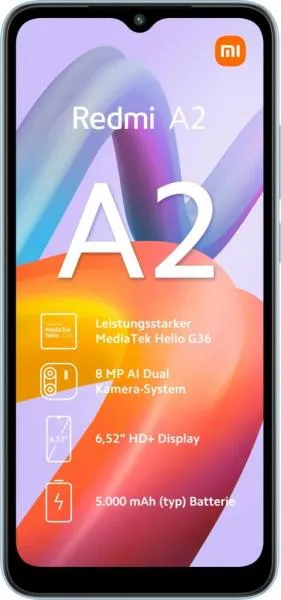
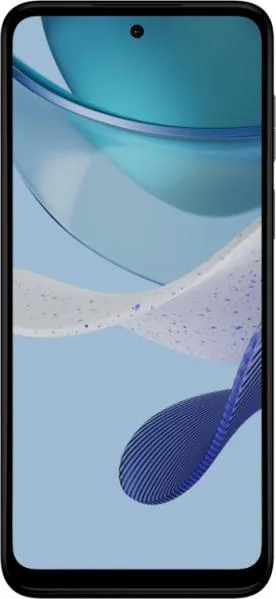
| Feature | Xiaomi Redmi A2 | Motorola Moto G (2023) | Practical Impact |
|---|---|---|---|
| Design | |||
| Dimensions (mm) | 164.9 x 76.8 x 9.1 | 164 x 75 x 8.4 | Moto G is slightly thinner and lighter, potentially more comfortable for one-handed use. |
| Weight (g) | 192 | 189 | Negligible weight difference in practical usage. |
| USB Type | microUSB 2.0 | USB Type-C 2.0 | Moto G uses the more modern, reversible USB-C port for faster data transfer and charging. |
| Display | |||
| Size (inches) | 6.52 | 6.5 | Virtually identical screen sizes. |
| Resolution | 720 x 1600 | 720 x 1600 | Identical resolution, resulting in similar sharpness. |
| Display Type | IPS LCD | IPS LCD | Both use IPS LCD, offering good color reproduction and viewing angles. |
| Refresh Rate | Not specified | 120Hz | Moto G's 120Hz refresh rate delivers smoother scrolling and animations, a noticeable improvement in daily use. |
| Performance | |||
| Chipset | Mediatek Helio G36 (12 nm) | Qualcomm Snapdragon 480+ 5G (8 nm) | Snapdragon 480+ offers significantly better performance and efficiency due to its superior architecture and 5G capability. |
| CPU | Octa-core (4x2.2 GHz Cortex-A53 & 4x1.7 GHz Cortex-A53) | Octa-core (2x2.2 GHz Kryo 460 & 6x1.8 GHz Kryo 460) | Moto G's Kryo cores are more powerful than Cortex-A53, resulting in smoother multitasking and app loading. |
| GPU | PowerVR GE8320 | Adreno 619 | Adreno 619 significantly outperforms the PowerVR GE8320, offering better gaming and graphics performance. |
| RAM | 2GB/3GB | 4GB | Moto G's 4GB RAM enables smoother multitasking and reduces app closures in the background. |
| Camera | |||
| Main Camera | 8MP | 48MP | Moto G boasts a much higher resolution main camera, potentially capturing more detail and better low-light photos. |
| Front Camera | 5MP | 8MP | Moto G's higher resolution front camera is likely to produce better quality selfies. |
| Video Recording | 1080p@30fps | 1080p@30fps | Identical video recording capabilities. |
| Battery | |||
| Capacity | 5000 mAh | 5000 mAh | Both have large batteries, likely providing all-day battery life. |
| Fast Charging | 10W | 15W | Moto G supports slightly faster charging. |
2. Key Differences Analysis
Motorola Moto G (2023) Advantages:
- Significantly better performance: The Snapdragon 480+ 5G chipset, Adreno 619 GPU, and 4GB RAM offer a vastly improved user experience compared to the Redmi A2. This translates to smoother multitasking, faster app loading, and better gaming performance.
- Higher refresh rate display: The 120Hz display makes scrolling and animations noticeably smoother.
- 5G Connectivity: Future-proofs the device for faster mobile internet speeds.
- Higher resolution cameras: Potentially captures more detailed photos and videos.
- USB-C port: Modern and reversible port allows for faster data transfer and charging.
Xiaomi Redmi A2 Advantages:
- Potentially lower price: Belongs to a lower price range, offering greater affordability.
3. User Profiles & Recommendations
Xiaomi Redmi A2: Suitable for budget-conscious users who prioritize basic functionality like calling, texting, and light web browsing. Not recommended for demanding tasks like gaming or heavy multitasking.
Motorola Moto G (2023): Ideal for users who want a smooth and responsive smartphone experience with good performance for everyday tasks, including social media, web browsing, and casual gaming. Also a good option for those who want 5G connectivity.
4. Decision Framework
Key Questions for Buyers:
- What is your budget? The Redmi A2 is significantly cheaper.
- What is your primary use case? For basic tasks, the Redmi A2 might suffice, but for a smoother and more versatile experience, the Moto G is superior.
- How important is future-proofing? The Moto G's 5G connectivity offers longevity.
Scenario-Based Recommendations:
- Tight budget and basic needs: Redmi A2
- Balanced performance and value: Moto G (2023)
My Choice: Motorola Moto G (2023)
While the Redmi A2 offers extreme affordability, the Moto G (2023) provides a significantly better overall user experience due to its superior processor, larger RAM, higher refresh rate display, and 5G connectivity. The slightly higher price is justified by the noticeable performance difference and future-proofing offered by 5G. The modern USB-C port is also a significant advantage over the outdated microUSB. For the majority of users, the Moto G's improved performance, smoother display, and faster charging will make it a more satisfying device in the long run.
