
1. Specifications Comparison
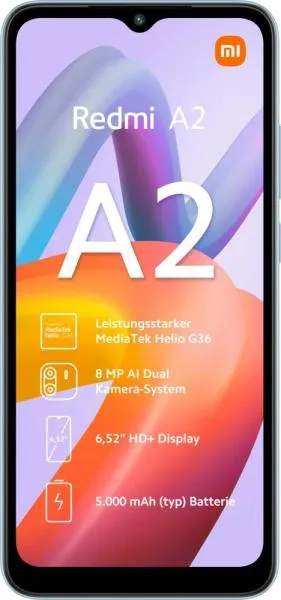
| Feature | Xiaomi Redmi A2+ | ZTE nubia Z50S Pro | Practical Impact |
|---|---|---|---|
| Design | |||
| Dimensions (mm) | 164.9 x 76.8 x 9.1 | 163.9 x 76.3 x 8.3 | Z50S Pro is slightly smaller and thinner. |
| Weight (g) | 192 | 228 | A2+ is significantly lighter, more comfortable for extended use. |
| Build | Unspecified | Unspecified | Build quality and materials unknown, impacting durability and premium feel. |
| Display | |||
| Display Type | IPS LCD | AMOLED | Z50S Pro offers richer colors, deeper blacks, and better power efficiency. |
| Display Size (inches) | 6.52 | 6.8 | Z50S Pro provides a larger viewing area. |
| Resolution | 720 x 1600 | 1260 x 2800 | Z50S Pro boasts much sharper visuals, crucial for media consumption and gaming. |
| Refresh Rate | Unspecified | 120Hz | Z50S Pro delivers smoother animations and scrolling. A2+'s refresh rate is unknown, likely 60Hz. |
| Peak Brightness | 400 nits (typ) | 1200 nits (peak) | Z50S Pro is far more visible in sunlight. |
| Performance | |||
| Chipset | Mediatek Helio G36 (12 nm) | Qualcomm Snapdragon 8+ Gen 2 (4 nm) | Z50S Pro offers vastly superior processing power for demanding tasks and gaming. |
| CPU | Octa-core (4x2.2 GHz Cortex-A53 & 4x1.7 GHz Cortex-A53) | Octa-core (1x3.36 GHz Cortex-X3 & 2x2.8 GHz Cortex-A715 & 2x2.8 GHz Cortex-A710 & 3x2.0 GHz Cortex-A510) | Z50S Pro's CPU is significantly faster and more efficient. |
| RAM | 2GB/3GB | 12GB/16GB | Z50S Pro has substantially more RAM, enabling smoother multitasking and handling heavier apps. |
| Storage | 32GB/64GB | 256GB/1TB | Z50S Pro offers significantly more storage for apps, photos, and videos. |
| Camera | |||
| Rear Camera | 8MP Main, 0.3MP unspecified | 50MP Main (OIS), 50MP Wide, 8MP Telephoto | Z50S Pro provides superior image quality, versatility with multiple lenses, and optical image stabilization. |
| Front Camera | 5MP | 16MP | Z50S Pro offers higher resolution selfies. |
| Video Recording | 1080p@30fps | Up to 8K@30fps | Z50S Pro allows for significantly higher resolution video recording. |
| Battery | |||
| Capacity | 5000 mAh | 5100 mAh | Similar battery capacities, though real-world battery life will depend on other factors like display and chipset efficiency. |
| Fast Charging | 10W | 80W | Z50S Pro charges significantly faster. |
2. Key Differences Analysis
ZTE nubia Z50S Pro Advantages:
- Significantly more powerful: The Snapdragon 8+ Gen 2 chipset, ample RAM, and high refresh rate display deliver a premium, fluid experience.
- Superior camera system: Offers versatile lenses, higher resolution, and optical image stabilization.
- Brighter and sharper display: The AMOLED display with a high resolution and refresh rate provides a vibrant visual experience.
- Faster charging: 80W fast charging significantly reduces downtime.
Xiaomi Redmi A2+ Advantages:
- Lighter and potentially more affordable: Easier to hold and potentially more budget-friendly.
3. User Profiles & Recommendations
Xiaomi Redmi A2+: Suitable for budget-conscious users who prioritize basic communication (calls, texts, browsing) and light app usage. Not recommended for gaming, demanding tasks, or media consumption.
ZTE nubia Z50S Pro: Ideal for power users, gamers, photography enthusiasts, and anyone who demands top-tier performance and features.
4. Decision Framework
Key Questions for Buyers:
- What is your budget? The A2+ is a budget phone, while the Z50S Pro is a premium device.
- What are your primary smartphone uses? Basic communication vs. demanding tasks, gaming, and media consumption.
- How important are camera quality and display quality to you?
Scenario-Based Recommendations:
- Limited Budget, Basic Use: Redmi A2+
- Prioritize Performance and Features: Z50S Pro
My Choice: ZTE nubia Z50S Pro
While the Redmi A2+ offers a budget-friendly option, the ZTE nubia Z50S Pro is the clear winner for me. The significantly improved performance, superior camera system, stunning display, and fast charging outweigh the price difference. The Z50S Pro offers a future-proof device that can handle demanding tasks and provide a premium user experience for years to come. The Redmi A2+ feels severely limited in comparison, potentially leading to frustration with slow performance and a subpar user experience in the long run.
