1. Specifications Comparison
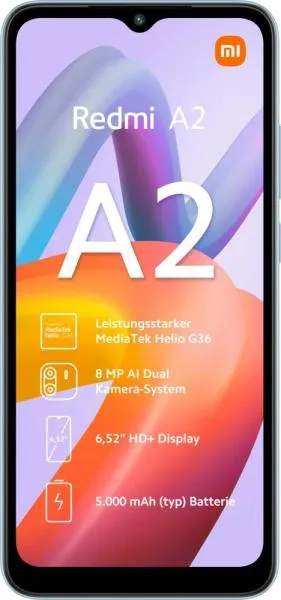
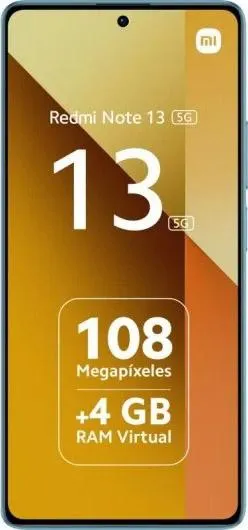
| Feature | Xiaomi Redmi A2+ | Xiaomi Redmi Note 13 | Practical Impact |
|---|---|---|---|
| Design | |||
| Dimensions (mm) | 164.9 x 76.8 x 9.1 | 161.1 x 75 x 7.6 | Redmi Note 13 is slightly smaller and noticeably thinner. |
| Weight (g) | 192 | 174.5 | Redmi Note 13 is lighter, improving one-handed use. |
| Build Material | Not specified | Not specified | Cannot compare build quality and durability. |
| Display | |||
| Display Type | IPS LCD | AMOLED | Note 13 offers significantly better contrast, deeper blacks, and potentially brighter colors. |
| Display Size (inches) | 6.52 | 6.67 | Note 13 has a slightly larger display for more immersive content consumption. |
| Resolution | 720 x 1600 | 1080 x 2400 | Note 13 has a much sharper display, resulting in clearer text and images. |
| Refresh Rate | Not specified | 120Hz | Note 13's 120Hz refresh rate delivers smoother scrolling and animations. |
| Performance | |||
| Chipset | Mediatek Helio G36 (12 nm) | Mediatek Dimensity 6080 (6 nm) | Note 13's more modern and powerful chipset offers significantly better performance for demanding tasks and gaming. |
| CPU | Octa-core (4x2.2 GHz Cortex-A53 & 4x1.7 GHz Cortex-A53) | Octa-core (2x2.4 GHz Cortex-A76 & 6x2.0 GHz Cortex-A55) | Note 13 has a more powerful CPU architecture, leading to faster processing speeds. |
| RAM | 2GB/3GB | 8GB/12GB | Note 13 offers much more RAM, enabling better multitasking and smoother performance. |
| Storage | 32GB/64GB | 128GB/256GB | Note 13 offers significantly more storage for apps, photos, and videos. |
| Camera | |||
| Main Camera | 8MP | 108MP | Note 13 has a significantly higher resolution main camera sensor, potentially capturing more detail. Practical image quality depends on sensor size and processing, which are not fully specified for the A2+. |
| Front Camera | 5MP | 16MP | Note 13 has a higher resolution front camera for better selfies. |
| Video Recording | 1080p@30fps | 1080p@30/60fps | Note 13 offers 60fps video recording for smoother footage. |
| Battery | |||
| Capacity | 5000 mAh | 5000 mAh | Similar battery capacities, though real-world battery life will depend on usage and optimization. |
| Fast Charging | 10W | 33W | Note 13 supports much faster charging, reducing downtime significantly. |
2. Key Differences Analysis
Redmi Note 13 Advantages:
- Significantly better performance: The Dimensity 6080, coupled with more RAM, delivers a much smoother and faster user experience.
- Superior display: The AMOLED display with 120Hz refresh rate offers vibrant colors, deep blacks, and smooth visuals.
- Faster charging: 33W fast charging significantly reduces charging time compared to the A2+'s 10W.
- More storage: More options for larger storage capacities cater to users with extensive media libraries.
- Higher resolution cameras: Potentially better image and video quality, although sensor specifics for the A2+ are limited.
- 5G Connectivity: Supports faster mobile data speeds.
Redmi A2+ Advantages:
- Lower price: Significantly more affordable.
- Smaller form factor (though heavier): May be preferable for some users who prioritize a smaller phone.
3. User Profiles & Recommendations
Redmi Note 13: Users who prioritize performance, display quality, faster charging, and ample storage. Ideal for gaming, media consumption, multitasking, and photography enthusiasts.
Redmi A2+: Users with a very tight budget who primarily use their phone for basic tasks like calling, texting, and light web browsing.
4. Decision Framework
Key Questions:
- What is your budget? The A2+ is significantly cheaper.
- What are your primary phone usage patterns? For demanding tasks, the Note 13 is vastly superior.
- How important is display quality and smoothness? The Note 13's AMOLED display and 120Hz refresh rate are major advantages.
My Choice: Xiaomi Redmi Note 13
While the Redmi A2+ offers an extremely budget-friendly option, the Redmi Note 13 provides a vastly superior user experience in almost every aspect. The performance difference alone is significant, making the Note 13 much more future-proof. The superior display, faster charging, and increased storage further solidify its position as the better choice for most users. The price difference is justifiable considering the substantial upgrades. Unless budget is an absolute constraint, the Redmi Note 13 is the clear winner.
