1. Specifications Comparison
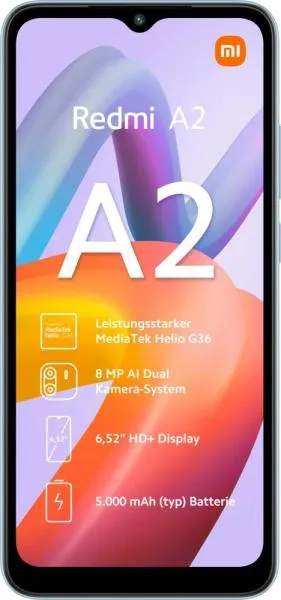
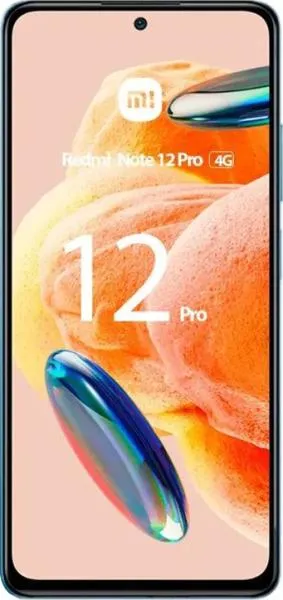
| Feature | Category | Xiaomi Redmi A2+ | Xiaomi Redmi Note 12 Pro 4G | Practical Impact |
|---|---|---|---|---|
| Dimensions (mm) | Design | 164.9 x 76.8 x 9.1 | 164.2 x 76.1 x 8.1 | Redmi Note 12 Pro 4G is slightly thinner and marginally narrower. Negligible difference in hand feel. |
| Weight (g) | Design | 192 | 201.8 | Redmi A2+ is slightly lighter but the difference is minimal. |
| Build | Design | (Missing) | (Missing) | Material information missing; cannot compare durability or premium feel. |
| Display Type | Display | IPS LCD | AMOLED | Redmi Note 12 Pro 4G offers significantly better contrast, colors, and viewing angles with its AMOLED display. |
| Display Size (inches) | Display | 6.52 | 6.67 | Redmi Note 12 Pro 4G offers a slightly larger display for more immersive content consumption. |
| Resolution (px) | Display | 720 x 1600 | 1080 x 2400 | Redmi Note 12 Pro 4G has a much sharper and more detailed display. |
| Refresh Rate (Hz) | Display | (Missing) | 120 | Redmi Note 12 Pro 4G's 120Hz refresh rate provides smoother scrolling and animations. Missing information for Redmi A2+ prevents comparison. |
| Chipset | Performance | Mediatek Helio G36 (12 nm) | Qualcomm Snapdragon 732G (8 nm) | Redmi Note 12 Pro 4G offers significantly better performance and efficiency due to a more powerful chipset built on a smaller fabrication process. |
| CPU | Performance | Octa-core (4x2.2 GHz Cortex-A53 & 4x1.7 GHz Cortex-A53) | Octa-core (2x2.2 GHz Kryo 470 Gold & 6x1.8 GHz Kryo 470 Silver) | Redmi Note 12 Pro 4G will handle demanding tasks and multitasking much better. |
| RAM (GB) | Performance | 2 | 8 | Redmi Note 12 Pro 4G offers substantially more RAM for smoother multitasking and app switching. |
| Main Camera (MP) | Camera | 8 | 108 | Redmi Note 12 Pro 4G has a significantly higher resolution main camera, potentially capturing more detail. |
| Camera Features | Camera | Basic | Advanced (Night Mode, Ultrawide, Macro) | Redmi Note 12 Pro 4G provides a more versatile camera system with dedicated lenses for different scenarios. |
| Video Recording | Camera | 1080p@30fps | 4K@30fps, 1080p@60fps | Redmi Note 12 Pro 4G allows for higher resolution and smoother video recording. |
| Battery Capacity (mAh) | Battery | 5000 | 5020 | Negligible difference in battery capacity. |
| Fast Charging (W) | Battery | 10W | 67W | Redmi Note 12 Pro 4G offers significantly faster charging speeds. |
| NFC | Connectivity | No | Yes | Redmi Note 12 Pro 4G enables contactless payments and other NFC functionalities. |
| USB Type | Connectivity | microUSB 2.0 | USB Type-C 2.0 | Redmi Note 12 Pro 4G uses the more modern and versatile USB Type-C connector. |
2. Key Differences Analysis
Redmi Note 12 Pro 4G Advantages:
- Superior Performance: Significantly faster processor, more RAM, leading to smoother multitasking and better gaming performance.
- Better Display: AMOLED technology with higher resolution, refresh rate, and peak brightness provides a vastly improved visual experience.
- Enhanced Camera System: Higher resolution main sensor, ultrawide and macro lenses, and better video recording capabilities.
- Faster Charging: 67W fast charging dramatically reduces charging time compared to the 10W of the Redmi A2+.
- NFC: Enables contactless payments and data transfer.
- Modern Connectivity: USB Type-C for faster data transfer and wider compatibility.
Redmi A2+ Advantages:
- Lower Price: Positioned in the "low price" range, making it more budget-friendly.
- Slightly Lighter: Minimally lighter, but practically insignificant.
3. User Profiles & Recommendations
Redmi A2+: Budget-conscious users who prioritize basic communication and light usage. Ideal for calls, texting, browsing, and simple apps.
Redmi Note 12 Pro 4G: Users who value performance, a high-quality display, versatile camera, and fast charging. Suitable for gaming, content consumption, photography, and demanding tasks.
4. Decision Framework
Key Questions:
- What is your budget? The Redmi A2+ is significantly cheaper.
- What are your primary smartphone usage patterns? Basic or demanding tasks?
- Which features are most important to you? Performance, display, camera, battery life, or price?
My Choice: Xiaomi Redmi Note 12 Pro 4G
While the Redmi A2+ caters to a budget-conscious audience, the Redmi Note 12 Pro 4G offers a significantly better overall user experience. The vastly superior display, performance, camera system, and fast charging outweigh the price difference for me. The inclusion of NFC and USB-C further enhances its value proposition. While I don't have specific needs for heavy gaming, the extra performance headroom ensures smooth operation for years to come and a better experience across the board. The AMOLED display alone is a huge differentiator for media consumption. The Redmi A2+ feels like a compromise in too many areas, whereas the Redmi Note 12 Pro 4G provides a well-rounded package.
