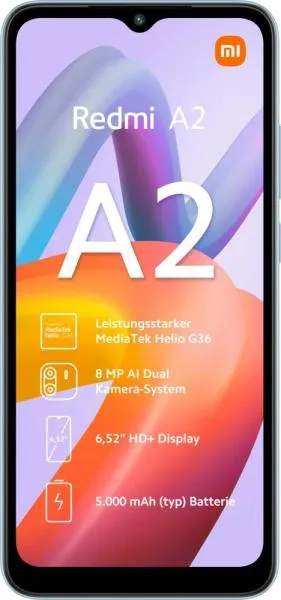
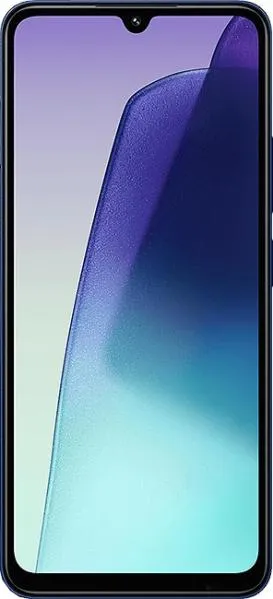
1. Specifications Comparison
| Feature | Xiaomi Redmi A2+ | Xiaomi Redmi 14C | Practical Impact |
|---|---|---|---|
| Design | |||
| Dimensions (mm) | 164.9 x 76.8 x 9.1 | 171.9 x 77.8 x 8.2 | Redmi 14C is slightly larger and thinner. |
| Weight (g) | 192 | 211 | Redmi 14C is noticeably heavier. |
| Build Material | Not specified | Not specified | Cannot compare build quality. |
| Fingerprint Sensor | Rear-mounted | Side-mounted | Preference-based, side-mounted often integrated with power button. |
| Display | |||
| Size (inches) | 6.52 | 6.88 | Redmi 14C offers a larger screen for media consumption. |
| Resolution (px) | 720 x 1600 | 720 x 1640 | Negligible difference in sharpness at this size. |
| Panel Type | IPS LCD | IPS LCD | Both offer similar color accuracy and viewing angles. |
| Refresh Rate (Hz) | Not specified | 120 | 120Hz on the 14C provides smoother scrolling and animations. |
| Peak Brightness (nits) | 400 (typ) | 450 (typ), 600 (HBM) | 14C offers a brighter display, improving outdoor visibility. |
| Performance | |||
| Chipset | Mediatek Helio G36 (12 nm) | Mediatek Helio G81 Ultra | G81 Ultra offers significantly better performance in gaming and multitasking. |
| CPU | Octa-core (4x2.2 GHz Cortex-A53 & 4x1.7 GHz Cortex-A53) | Octa-core (2x2.0 GHz Cortex-A75 & 6x1.8 GHz Cortex-A55) | 14C's CPU architecture is more modern and powerful. |
| GPU | PowerVR GE8320 | Mali-G52 MC2 | 14C's GPU provides a smoother gaming experience. |
| RAM (GB) | 2/3 | 4/6/8 | More RAM on the 14C enables better multitasking and app switching. |
| Storage (GB) | 32/64 | 128/256 | 14C offers significantly more storage for apps and media. |
| OS | Android 12 | Android 14 | 14C comes with a newer OS version, offering features and security updates. |
| Camera | |||
| Rear Camera (MP) | 8 + 0.3 | 50 + 0.8 | 14C boasts a much higher resolution main camera, likely capturing significantly better photos. |
| Front Camera (MP) | 5 | 13 | 14C's selfie camera has a higher resolution. |
| Video Recording | 1080p@30fps | 1080p@30fps, Slow Motion 120fps | Both record at 1080p, but 14C offers slow-motion recording. |
| Battery | |||
| Capacity (mAh) | 5000 | 5160 | Negligible difference in battery capacity. |
| Fast Charging | 10W | 18W | 14C charges significantly faster. |
| USB Type | microUSB 2.0 | USB Type-C 2.0 | USB-C on the 14C allows for faster data transfer (though limited by USB 2.0 speeds) and more versatile accessory compatibility. |
| NFC | No | Yes | 14C supports contactless payments and other NFC functionalities. |
2. Key Differences Analysis
Redmi A2+ Advantages:
- Lower Price: Significantly more affordable.
- Lighter Weight: More comfortable for extended use.
Redmi 14C Advantages:
- Significantly Better Performance: Smoother gaming, multitasking, and overall responsiveness.
- Larger and Brighter Display: More immersive media consumption and better outdoor visibility.
- More RAM and Storage: Handles more apps and stores more files.
- Newer Android Version: Access to latest features and security updates.
- Superior Camera: Captures higher quality photos and videos, includes slow-motion recording.
- Faster Charging: Less downtime.
- USB-C and NFC: Modern connectivity options.
3. User Profiles & Recommendations
Redmi A2+: Budget-conscious users who prioritize basic communication (calls, texts, social media) and light web browsing. Ideal for first-time smartphone users or as a secondary device.
Redmi 14C: Users who want a well-rounded smartphone experience with good performance, a large display, a decent camera, and modern features like NFC. Suitable for gaming, media consumption, and more demanding tasks.
4. Decision Framework
Key Questions for Buyers:
- What is your budget? The A2+ is a budget option, while the 14C is a mid-range device.
- What are your primary use cases? Basic communication vs. gaming, media consumption, multitasking.
- Which features are most important to you? Performance, camera quality, display size, battery life, NFC.
Scenario-Based Recommendations:
- Limited Budget, Basic Use: Redmi A2+
- Balanced Performance and Features: Redmi 14C
My Choice: Xiaomi Redmi 14C
While the Redmi A2+ offers an extremely low price point, the Redmi 14C provides significantly more value for the price difference. The performance gap, larger display, improved camera, modern conveniences like USB-C and NFC, along with the newer Android version, make the 14C a much more future-proof and enjoyable device to use in the long run. The slightly higher weight is a minor trade-off for the substantial upgrades. Even for budget-conscious users, stretching the budget for the 14C would likely be a worthwhile investment.
