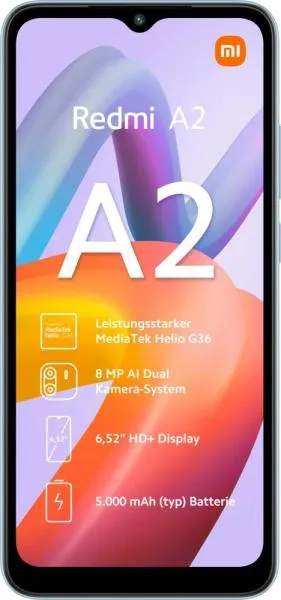
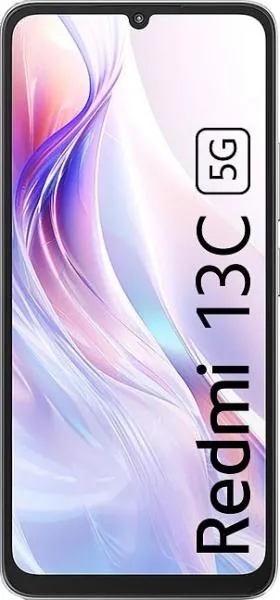
1. Specifications Comparison
| Feature | Xiaomi Redmi A2+ | Xiaomi Redmi 13C 5G | Practical Impact |
|---|---|---|---|
| Design | |||
| Dimensions (mm) | 164.9 x 76.8 x 9.1 | 168 x 78 x 8.1 | Redmi 13C 5G is slightly larger and thinner. Negligible difference in daily use. |
| Weight (g) | 192 | 192 | Same weight. |
| Display | |||
| Size (inches) | 6.52 | 6.74 | Redmi 13C 5G offers a larger screen for more immersive media consumption. |
| Resolution (px) | 720 x 1600 | 720 x 1600 | Same resolution, but Redmi 13C 5G has slightly lower PPI due to the larger screen size. |
| Type | IPS LCD | IPS LCD | Both use LCD technology, expecting similar color accuracy and viewing angles. |
| Refresh Rate (Hz) | Not specified | 90 | The 90Hz refresh rate on the Redmi 13C 5G will provide a smoother user experience, especially noticeable in scrolling and gaming. |
| Performance | |||
| Chipset | Mediatek Helio G36 (12 nm) | Mediatek Dimensity 6100+ (6 nm) | Redmi 13C 5G has a significantly more powerful and efficient processor, resulting in better performance and battery life. |
| CPU | Octa-core (4x2.2 GHz Cortex-A53 & 4x1.7 GHz Cortex-A53) | Octa-core (2x2.2 GHz Cortex-A76 & 6x2.0 GHz Cortex-A55) | Redmi 13C 5G uses more powerful CPU cores (Cortex-A76), leading to significantly faster processing for demanding tasks. |
| GPU | PowerVR GE8320 | Mali-G57 MC2 | Redmi 13C 5G's GPU is more capable, enabling smoother gaming and graphics performance. |
| RAM (GB) | 2 | 4/6/8 (Variant Dependent) | Redmi 13C 5G offers more RAM, improving multitasking and overall system responsiveness. |
| Camera | |||
| Rear Camera (MP) | 8 MP + 0.3 MP | 50 MP + 0.8MP | Redmi 13C 5G boasts a much higher resolution main sensor, promising significantly better image quality. |
| Front Camera (MP) | 5 MP | 5 MP | Same front camera resolution. |
| Video Recording | 1080p@30fps | 1080p@30fps | Similar video recording capabilities, though Redmi 13C 5G supports 120fps slow-motion. |
| Battery | |||
| Capacity (mAh) | 5000 | 5000 | Same battery capacity. |
| Charging (W) | 10W | 18W | Redmi 13C 5G supports faster charging, reducing downtime. |
| Other | |||
| OS | Android 12 | Android 13 | Redmi 13C 5G comes with a newer Android version, offering potential feature and security updates. |
| 5G Connectivity | No | Yes | Redmi 13C 5G offers faster cellular data speeds and future-proof connectivity. |
| USB | microUSB 2.0 | USB Type-C 2.0 | Redmi 13C 5G utilizes the more modern and versatile USB-C port. |
2. Key Differences Analysis
Redmi A2+ Advantages:
- Potentially Lower Price: Likely to be more budget-friendly.
Redmi 13C 5G Advantages:
- Significantly Better Performance: Dimensity 6100+ chipset and more RAM provide a much smoother user experience.
- Improved Camera: 50MP main camera offers better image quality.
- Faster Charging: 18W charging reduces downtime.
- 5G Connectivity: Future-proof network access.
- Newer Android Version: Potentially longer software support and newer features.
- 90Hz Display: Smoother scrolling and animations.
- USB Type-C: Modern and reversible connector.
Trade-offs:
- Redmi 13C 5G's higher price: For the improved features, expect to pay more.
3. User Profiles & Recommendations
Redmi A2+: Users on a very tight budget who prioritize basic communication (calls, texts, light web browsing) and long battery life. Ideal for:
- Feature phone upgraders: Transitioning to a smartphone with basic functionalities.
- Students or elderly users: Needing a simple, affordable device.
Redmi 13C 5G: Users who want a good balance of performance, features, and future-proofing. Ideal for:
- Everyday users: Engaging in social media, multimedia consumption, casual gaming.
- Budget-conscious buyers: Seeking modern features without breaking the bank.
4. Decision Framework
Key Questions for Buyers:
- What is your budget? The Redmi A2+ is significantly cheaper.
- What are your primary phone usage patterns? For demanding tasks, the Redmi 13C 5G is essential.
- How important is future-proofing (5G, newer Android)? The Redmi 13C 5G provides better long-term value.
Scenario-Based Recommendations:
- Limited Budget, Basic Usage: Redmi A2+
- Moderate Budget, Everyday Usage: Redmi 13C 5G
My Choice: Xiaomi Redmi 13C 5G
While the Redmi A2+ caters to a specific niche of extremely budget-conscious users, the Redmi 13C 5G offers significantly better value overall. The performance difference due to the chipset and RAM alone would drastically impact daily usability. The addition of 5G, a 90Hz display, faster charging, USB-C, and a vastly superior camera makes the Redmi 13C 5G a much more compelling device for a broader range of users. The price difference is justifiable for the substantial upgrades. Even if the Redmi 13C 5G was slightly more expensive, I would still choose it for the long-term benefits and overall better user experience.
