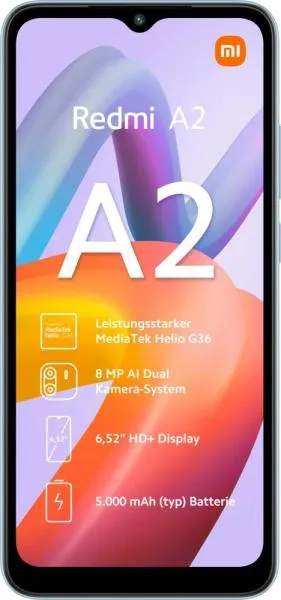
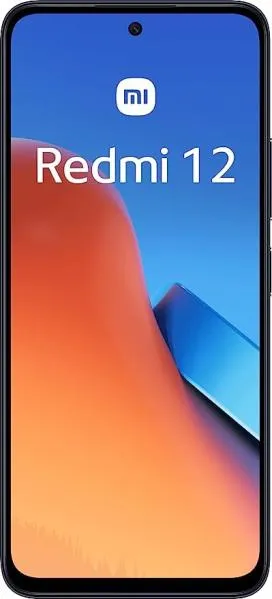
1. Specifications Comparison
| Feature | Xiaomi Redmi A2+ | Xiaomi Redmi 12 | Practical Impact |
|---|---|---|---|
| Design | |||
| Dimensions (mm) | 164.9 x 76.8 x 9.1 | 168.6 x 76.3 x 8.2 | Redmi 12 is slightly larger and thinner. Negligible difference in everyday use. |
| Weight (g) | 192 | 198.5 | Redmi 12 is slightly heavier, but the difference is minimal. |
| Build | Unspecified | Unspecified | Build quality cannot be compared without further information. |
| Display | |||
| Size (inches) | 6.52 | 6.79 | Redmi 12 offers a larger screen for more immersive media consumption. |
| Resolution (px) | 720 x 1600 | 1080 x 2460 | Redmi 12 has a significantly sharper display, resulting in clearer text and images. |
| Display Type | IPS LCD | IPS LCD | Both are LCDs, but the Redmi 12's LTPS technology might offer slightly better color accuracy and power efficiency. |
| Refresh Rate (Hz) | Unspecified | 90 | Redmi 12's 90Hz refresh rate delivers smoother scrolling and animations. |
| Performance | |||
| Chipset | Mediatek Helio G36 (12 nm) | Mediatek Helio G88 (12 nm) | Redmi 12's Helio G88 offers better CPU and GPU performance for smoother multitasking and gaming. |
| CPU | Octa-core (4x2.2 GHz Cortex-A53 & 4x1.7 GHz Cortex-A53) | Octa-core (2x2.0 GHz Cortex-A75 & 6x1.8 GHz Cortex-A55) | Redmi 12 has a more powerful CPU architecture leading to faster app loading and responsiveness. |
| GPU | PowerVR GE8320 | Mali-G52 MC2 | Redmi 12's GPU is significantly more powerful, enabling better gaming performance and graphics rendering. |
| RAM | 2GB/3GB | 4GB/8GB | Redmi 12 offers more RAM for smoother multitasking and less frequent app closures. |
| Camera | |||
| Rear Camera | 8MP + 0.3MP | 50MP + 8MP + 2MP | Redmi 12 boasts a higher resolution main sensor and additional wide-angle and macro lenses for versatile photography. |
| Front Camera | 5MP | 8MP | Redmi 12 has a higher resolution front camera for better selfies. |
| Video Recording | 1080p@30fps | 1080p@30fps | Both offer similar video recording capabilities, although the Redmi 12 supports 120fps slow-motion. |
| Battery | |||
| Capacity (mAh) | 5000 | 5000 | Both have the same battery capacity. |
| Charging | 10W Fast Charging | 18W Fast Charging | Redmi 12 supports faster charging, reducing downtime. |
| Other | |||
| NFC | No | Yes | Redmi 12 supports NFC for contactless payments and other functionalities. |
| USB | microUSB 2.0 | USB Type-C | Redmi 12 utilizes the more modern and versatile USB Type-C port. |
| OS | Android 12 | Android 13 | Redmi 12 ships with a newer Android version, offering potential performance and feature improvements. |
2. Key Differences Analysis
Redmi A2+ Advantages:
- Lower Price: This is the most significant advantage.
- Smaller Size: May be preferred by users who want a more compact phone.
Redmi 12 Advantages:
- Significantly Better Performance: The Helio G88 chipset, higher RAM options, and superior GPU offer a much smoother user experience, especially for gaming and multitasking.
- Improved Display: Higher resolution, 90Hz refresh rate, and larger screen size provide a more enjoyable viewing experience.
- More Versatile Camera System: The triple camera setup with a 50MP main sensor allows for better image quality and more creative options.
- Faster Charging: 18W fast charging significantly reduces charging time compared to the A2+'s 10W.
- Modern Features: NFC for contactless payments, USB Type-C port, and a newer Android version.
Trade-offs:
- Price: The Redmi 12 is more expensive.
- Size: The larger size might not be suitable for everyone.
3. User Profiles & Recommendations
Redmi A2+:
- Ideal User: Budget-conscious users who prioritize basic functionality for calling, texting, and light web browsing.
- Use Cases: Simple tasks, casual social media use, making calls. Not recommended for demanding applications or gaming.
Redmi 12:
- Ideal User: Users seeking a well-rounded smartphone with good performance, a nice display, a versatile camera, and modern features without breaking the bank.
- Use Cases: Gaming, media consumption, photography, multitasking, mobile payments.
4. Decision Framework
Key Questions:
- What is your budget? The Redmi A2+ is a budget option, while the Redmi 12 offers more value for a higher price.
- What are your primary smartphone uses? For basic use, the A2+ might suffice. For more demanding tasks, the Redmi 12 is significantly better.
- Which features are most important to you? Prioritize features like performance, camera quality, display, or NFC to guide your decision.
My Choice: Xiaomi Redmi 12
While the Redmi A2+ is appealing for its low price, the Redmi 12 offers significantly more value for the price difference. The improved performance, display, camera, and modern features like NFC and USB-C make it a much more versatile and future-proof device. The difference in user experience would be substantial, making the Redmi 12 a worthwhile investment for most users beyond those strictly limited by budget. The jump in performance, camera quality and display alone justifies the increased price. Even light users would benefit from the smoother user experience provided by the 90Hz display and faster processor.
