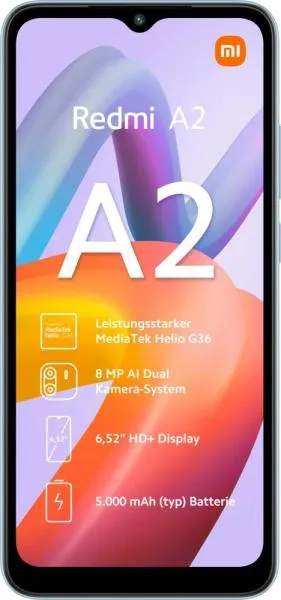
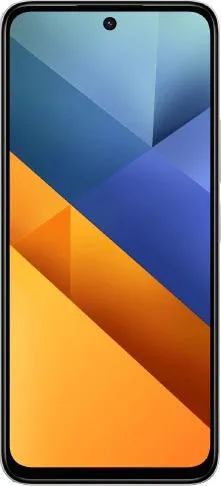
1. Specifications Comparison
| Feature | Xiaomi Redmi A2+ | Xiaomi Poco M6 4G | Practical Impact |
|---|---|---|---|
| Design | |||
| Dimensions (mm) | 164.9 x 76.8 x 9.1 | 168.6 x 76.3 x 8.3 | Poco M6 is slightly larger and thinner. Negligible difference in daily use. |
| Weight (g) | 192 | 205 | Poco M6 is slightly heavier but likely unnoticeable. |
| Build | Not specified | Not specified | Build quality impact unknown without further details. |
| Display | |||
| Display Type | IPS LCD | IPS LCD | Both offer decent color reproduction but may suffer in direct sunlight. |
| Size (inches) | 6.52 | 6.79 | Poco M6 offers a larger screen for more immersive media consumption. |
| Resolution | 720 x 1600 | 1080 x 2460 | Poco M6 has significantly sharper visuals due to higher resolution (HD+ vs FHD+). |
| Refresh Rate | Not specified | 90Hz | Poco M6's 90Hz refresh rate results in smoother scrolling and animations. |
| Performance | |||
| Chipset | Mediatek Helio G36 | Mediatek Helio G91 | Poco M6 has a more powerful processor for better performance in demanding tasks and games. |
| CPU | Octa-core (4x2.2 GHz Cortex-A53 & 4x1.7 GHz Cortex-A53) | Octa-core (2x2.0 GHz Cortex-A75 & 6x1.8 GHz Cortex-A55) | Poco M6's CPU architecture offers a performance advantage. |
| GPU | PowerVR GE8320 | Mali-G52 MC2 | Poco M6's GPU is more capable for gaming and graphics-intensive applications. |
| RAM | 2GB/3GB | 6GB/8GB | Poco M6 offers significantly more RAM, enabling smoother multitasking and better performance with multiple apps. |
| Storage | 32GB/64GB | 128GB/256GB | Poco M6 offers much more storage for apps, photos, and videos. |
| Camera | |||
| Rear Camera | 8MP + 0.3MP | 108MP + 2MP | Poco M6 boasts a much higher resolution main sensor for potentially better image quality. Macro lens on both. |
| Front Camera | 5MP | 13MP | Poco M6's selfie camera has higher resolution. |
| Video Recording | 1080p@30fps | 1080p@30fps | Similar video recording capabilities, though Poco M6 mentions 120fps slow-motion, resolution unclear. |
| Battery | |||
| Capacity | 5000 mAh | 5030 mAh | Negligible difference in battery capacity. |
| Charging | 10W fast charging | 33W fast charging | Poco M6 charges significantly faster. |
2. Key Differences Analysis
Xiaomi Redmi A2+ Advantages:
- Potentially more affordable: Likely cheaper given the lower specs.
- More compact: Slightly smaller, potentially preferable for one-handed use.
Xiaomi Poco M6 4G Advantages:
- Significantly better performance: Superior processor, GPU, and more RAM for smoother operation and gaming.
- Sharper display: Higher resolution and refresh rate for a more enjoyable viewing experience.
- Superior camera: Higher resolution main and selfie cameras for potentially better photos.
- Faster charging: 33W fast charging significantly reduces downtime.
- More Storage: More room for apps, photos and videos.
- NFC: Enables contactless payments and other NFC functionalities.
- More up-to-date OS: Ships with Android 14 vs Android 12 on the Redmi A2+.
Trade-offs:
- Price: Poco M6 4G will likely be more expensive.
- Size: Poco M6 4G is larger, potentially less comfortable for one-handed use.
3. User Profiles & Recommendations
Xiaomi Redmi A2+:
- Budget-conscious users: Ideal for those seeking a basic smartphone for calls, messaging, and light internet browsing.
- Elderly users or children: Simpler functionality and smaller size might be preferable.
Xiaomi Poco M6 4G:
- Performance-oriented users: Suitable for gaming, multitasking, and demanding applications.
- Media consumers: Larger, sharper display and better performance enhance the experience.
- Photography enthusiasts: Higher resolution cameras cater to those who take photos frequently.
4. Decision Framework
Key Questions for Buyers:
- What is your budget? The Redmi A2+ will be significantly cheaper.
- What are your primary use cases? Basic communication vs. gaming, media consumption, photography.
- How important is performance and display quality? The Poco M6 significantly outperforms the Redmi A2+ in these areas.
My Choice: Xiaomi Poco M6 4G
While the Redmi A2+ offers a budget-friendly option, the Poco M6 4G provides a significantly better overall user experience. The performance difference, sharper display, faster charging, larger storage, NFC functionality, and more modern OS outweigh the price difference and slight increase in size for me. The investment in the Poco M6 4G will likely translate to a more enjoyable and longer-lasting smartphone experience. The Redmi A2+ feels extremely dated for a 2023 phone launch. While budget is a concern for many, the significantly improved feature set of the Poco M6 4G justifies the higher price for most users.
