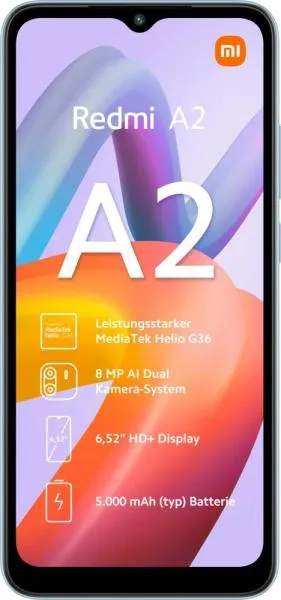

1. Specifications Comparison
| Feature | Xiaomi Redmi A2+ | Xiaomi Poco F5 Pro | Practical Impact |
|---|---|---|---|
| Design | |||
| Dimensions (mm) | 164.9 x 76.8 x 9.1 | 162.8 x 75.4 x 8.6 | Poco F5 Pro is slightly smaller and thinner. |
| Weight (g) | 192 | 204 | Negligible weight difference in daily use. |
| Build | Material not specified for either phone, limiting comparison. | ||
| Display | |||
| Size (inches) | 6.52 | 6.67 | Poco F5 Pro offers a slightly larger screen. |
| Resolution | 720 x 1600 | 1440 x 3200 | Significantly sharper and more detailed visuals on the Poco F5 Pro (HD+ vs. QHD+). |
| Type | IPS LCD | AMOLED | Poco F5 Pro's AMOLED delivers richer colors, deeper blacks, and better power efficiency. |
| Refresh Rate | Not specified | 120Hz | Poco F5 Pro will have smoother animations and scrolling. |
| HDR | No | HDR10+, Dolby Vision | Superior dynamic range and brighter highlights on the Poco F5 Pro, enhancing video and gaming experience. |
| Performance | |||
| Chipset | Mediatek Helio G36 (12 nm) | Qualcomm Snapdragon 8+ Gen 1 (4 nm) | Poco F5 Pro boasts a significantly more powerful processor, resulting in much faster performance for demanding tasks and gaming. |
| CPU | Octa-core (4x2.2 GHz Cortex-A53 & 4x1.7 GHz Cortex-A53) | Octa-core (1x3.0 GHz Cortex-X2 & 3x2.5 GHz Cortex-A710 & 4x1.80 GHz Cortex-A510) | Much faster CPU performance on the Poco F5 Pro. |
| GPU | PowerVR GE8320 | Adreno 730 | Significantly better graphics performance on the Poco F5 Pro, enabling high-end gaming and smooth multitasking. |
| RAM | 2/3 GB | 8/12 GB | Much more RAM on the Poco F5 Pro allows for seamless multitasking and prevents app closures in the background. |
| Camera | |||
| Rear Camera | 8MP + 0.3MP | 64MP + 8MP + 2MP | Higher resolution main camera and dedicated ultra-wide and macro lenses on the Poco F5 Pro offer vastly superior image quality and versatility. |
| Front Camera | 5MP | 16MP | Higher resolution selfie camera on the Poco F5 Pro. |
| Video Recording | 1080p@30fps | Up to 8K@24fps | Poco F5 Pro offers significantly higher resolution video recording capabilities. |
| Battery | |||
| Capacity | 5000 mAh | 5160 mAh | Similar battery capacities, but real-world battery life will depend on usage and optimization. |
| Fast Charging | 10W | 67W | Significantly faster charging on the Poco F5 Pro. |
| Wireless Charging | No | Optional 30W | Poco F5 Pro supports fast wireless charging, offering added convenience. |
2. Key Differences Analysis
Xiaomi Redmi A2+ Advantages:
- Lower Price: Significantly more affordable.
Xiaomi Poco F5 Pro Advantages:
- Superior Performance: Dramatically faster processor, GPU, and more RAM.
- High-Quality Display: Sharper, brighter AMOLED with 120Hz refresh rate and HDR support.
- Versatile Camera System: Higher resolution sensors, dedicated ultra-wide and macro lenses, 8K video recording.
- Faster Charging: 67W wired and 30W wireless charging.
- NFC: Enables contactless payments and other functionalities.
3. User Profiles & Recommendations
Xiaomi Redmi A2+: Budget-conscious users who prioritize basic communication and light tasks like browsing and social media. Suitable for users who are not demanding in terms of performance, camera quality, or display.
Xiaomi Poco F5 Pro: Users who demand high performance for gaming, content creation, and multitasking. Ideal for photography enthusiasts and those who value a premium display and fast charging.
4. Decision Framework
Key Questions for Buyers:
- What is your budget? The Redmi A2+ is a budget option, while the Poco F5 Pro is a premium mid-range device.
- What are your primary smartphone uses? Basic tasks vs. demanding gaming, photography, and multitasking.
- How important are features like display quality, camera performance, and fast charging?
Scenario-Based Recommendations:
- Limited Budget, Basic Needs: Redmi A2+
- Balanced Budget, Moderate Usage: Consider other mid-range options. The Redmi A2+ lacks features compared to other devices in a similar price bracket.
- Performance and Features Priority: Poco F5 Pro
My Choice: Xiaomi Poco F5 Pro
While the Redmi A2+ offers an extremely low price point, the Poco F5 Pro is the clear winner for me. The significantly improved performance, superior display, versatile camera system, and fast charging make it a much more compelling device. I prioritize a smooth and responsive user experience, high-quality visuals, and the ability to handle demanding tasks without lag. The Poco F5 Pro delivers on all these fronts. While the price difference is substantial, the value proposition of the Poco F5 Pro justifies the investment for my needs. The Redmi A2+'s extremely low specs make it a difficult recommendation even for budget users. There are likely better options available with a slightly higher budget but substantially better performance.
