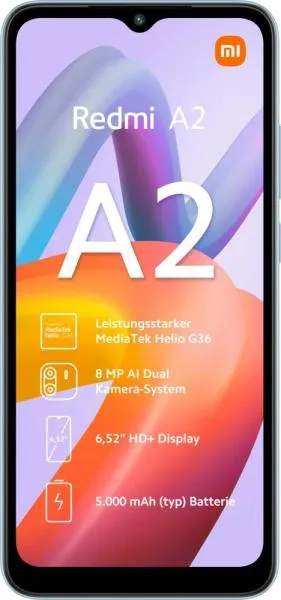

1. Specifications Comparison
| Feature | Xiaomi Redmi A2+ | vivo V30 | Practical Impact |
|---|---|---|---|
| Design | |||
| Dimensions (mm) | 164.9 x 76.8 x 9.1 | 164.4 x 75.1 x 7.5 | The vivo V30 is slightly thinner and lighter. |
| Weight (g) | 192 | 186 | The weight difference is negligible in practical use. |
| Build Materials | Not specified | Not specified | Cannot compare build quality and durability. |
| Display | |||
| Display Type | IPS LCD | AMOLED | The vivo V30's AMOLED offers superior contrast, deeper blacks, and potentially better power efficiency. |
| Display Size (inches) | 6.52 | 6.78 | The vivo V30 has a noticeably larger screen, offering a more immersive experience for media consumption. |
| Resolution | 720 x 1600 | 1260 x 2800 | The vivo V30 has a significantly sharper display with much higher pixel density (269 ppi vs 453 ppi), resulting in crisper text and images. |
| Refresh Rate | Not specified | 120Hz | The 120Hz refresh rate on the vivo V30 delivers smoother animations and scrolling compared to the Redmi A2+'s unspecified refresh rate (likely 60Hz). |
| HDR | No | HDR10+ | The vivo V30 supports HDR10+ for enhanced dynamic range in compatible content. |
| Performance | |||
| Chipset | Mediatek Helio G36 (12 nm) | Qualcomm Snapdragon 7 Gen 3 (4 nm) | The Snapdragon 7 Gen 3 in the vivo V30 is significantly more powerful and power-efficient than the Helio G36, resulting in smoother performance, better multitasking, and improved gaming capabilities. |
| CPU | Octa-core (4x2.2 GHz Cortex-A53 & 4x1.7 GHz Cortex-A53) | Octa-core (1x2.63 GHz Cortex-A715 & 3x2.4 GHz Cortex-A715 & 4x1.8 GHz Cortex-A510) | The vivo V30 possesses a more modern and powerful CPU architecture, translating to significantly faster processing speeds. |
| RAM | 2GB/3GB | 8GB | The vivo V30 has substantially more RAM, enabling smoother multitasking and preventing apps from closing in the background. |
| Storage | 32GB/64GB | 256GB | The vivo V30 offers much more storage for apps, photos, and videos. |
| Camera | |||
| Main Camera | 8MP | 50MP (OV50E) | The vivo V30's main camera boasts a much higher resolution sensor, likely resulting in significantly better image quality, especially in low light. |
| Selfie Camera | 5MP | 50MP | A significant difference in resolution favoring the vivo V30, indicating superior selfie quality. |
| Video Recording | 1080p@30fps | 4K@30fps | The vivo V30 can record video at a much higher resolution. |
| Battery | |||
| Capacity | 5000 mAh | 5000 mAh | Similar battery capacities suggest comparable battery life, but the vivo V30's more efficient processor could provide longer usage times. |
| Fast Charging | 10W | 80W | The vivo V30 supports significantly faster charging, minimizing downtime. |
2. Key Differences Analysis
Xiaomi Redmi A2+ Advantages:
- Lower Price: Significantly more affordable.
vivo V30 Advantages:
- Superior Performance: Significantly faster processor, more RAM, and smoother display.
- Better Display: Higher resolution, AMOLED technology, HDR10+, 120Hz refresh rate.
- Enhanced Camera System: Higher resolution sensors for both front and rear cameras, 4K video recording.
- Faster Charging: 80W fast charging vs 10W.
- More Storage: Offers significantly more storage space.
- NFC: Supports contactless payments and data transfer.
- More Up-to-date OS: Ships with a newer Android version and promised future updates.
3. User Profiles & Recommendations
Xiaomi Redmi A2+: Budget-conscious users who prioritize basic functionality (calling, texting, web browsing) and long battery life. Ideal for:
- First-time smartphone users: Simple and easy to use.
- Users on a tight budget: Offers essential features at a low price.
vivo V30: Users who value performance, a high-quality display, a good camera, and fast charging. Ideal for:
- Gamers: The powerful processor and high refresh rate display offer a smooth gaming experience.
- Photography enthusiasts: The high-resolution cameras and 4K video recording capabilities cater to photography needs.
- Power users: The ample RAM and storage handle multitasking with ease.
4. Decision Framework
Key Questions for Buyers:
- What is your budget? The Redmi A2+ is significantly cheaper.
- What are your primary use cases? Basic communication vs. gaming, photography, and demanding tasks.
- How important is future-proofing? The vivo V30 has a more recent OS with longer update support.
Scenario-Based Recommendations:
- Limited Budget: Redmi A2+
- Balanced Needs and Budget: Consider other mid-range options that offer a better balance of features and price than the Redmi A2+.
- Performance and Features Priority: vivo V30
My Choice: vivo V30
While the Redmi A2+ is an extremely budget-friendly option, the vivo V30 offers a vastly superior user experience in almost every aspect. The performance difference, driven by the Snapdragon 7 Gen 3 chip and ample RAM, combined with the stunning AMOLED display and much-improved camera system, makes the vivo V30 a much more compelling device. Even though the price difference is significant, the vivo V30's long-term value proposition, including future software updates and overall capabilities, justifies the higher cost for most users beyond those strictly on the tightest budget. The 80W fast charging is a significant convenience factor as well. The Redmi A2+ feels significantly compromised to achieve its extremely low price point.
