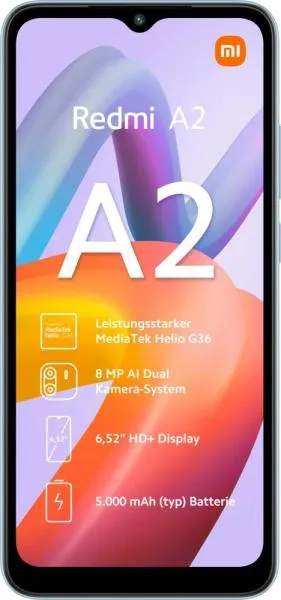

1. Specifications Comparison
| Feature | Xiaomi Redmi A2+ | Sony Xperia 10 V | Practical Impact |
|---|---|---|---|
| Design | |||
| Dimensions (mm) | 164.9 x 76.8 x 9.1 | 155 x 68 x 8.3 | Xperia 10 V is noticeably more compact and easier to handle. |
| Weight (g) | 192 | 159 | Xperia 10 V is significantly lighter, contributing to better one-handed use. |
| Build | Unspecified | Unspecified | Build quality cannot be compared due to missing information. |
| Display | |||
| Display Type | IPS LCD | OLED | Xperia 10 V's OLED offers deeper blacks, higher contrast, and potentially better power efficiency. |
| Size (inches) | 6.52 | 6.1 | Redmi A2+ offers a larger screen for media consumption, but Xperia 10 V is more pocketable. |
| Resolution | 720 x 1600 | 1080 x 2520 | Xperia 10 V has a much sharper display with higher pixel density (449 ppi vs 269 ppi), resulting in crisper text and images. |
| Refresh Rate | Unspecified | Unspecified | Refresh rate impact on smoothness cannot be compared due to missing information. |
| Performance | |||
| Chipset | Mediatek Helio G36 (12 nm) | Qualcomm Snapdragon 695 5G (6 nm) | Xperia 10 V has a significantly more powerful and efficient processor, enabling smoother multitasking and better gaming performance. |
| CPU | Octa-core (4x2.2 GHz Cortex-A53 & 4x1.7 GHz Cortex-A53) | Octa-core (2x2.2 GHz Kryo 660 Gold & 6x1.7 GHz Kryo 660 Silver) | Xperia 10 V's CPU architecture offers superior performance and efficiency. |
| RAM | 2GB/3GB | 8GB | Xperia 10 V has substantially more RAM, allowing for significantly smoother multitasking and less frequent app closures. |
| Storage | 32GB/64GB | 128GB | Xperia 10 V offers much more storage for apps, photos, and videos. |
| Camera | |||
| Rear Camera | 8MP + 0.3MP | 48MP + 8MP + 8MP | Xperia 10 V boasts a higher resolution main sensor and versatile triple camera setup, enabling superior image quality and flexibility. |
| Front Camera | 5MP | 8MP | Xperia 10 V's front camera offers higher resolution for selfies. |
| Video Recording | 1080p@30fps | 1080p@30fps | Video recording capabilities are similar on paper. |
| Battery | |||
| Capacity | 5000 mAh | 5000 mAh | Both phones have the same battery capacity, but real-world battery life will depend on software optimization and display efficiency. |
| Charging | 10W Fast Charging | Fast Charging (Unspecified Wattage) | Charging speed comparison is incomplete due to missing wattage information for the Xperia 10 V. |
| Other | microUSB 2.0, No NFC | USB Type-C 2.0, NFC | Xperia 10 V offers the more modern and versatile USB Type-C port and includes NFC for contactless payments. |
2. Key Differences Analysis
Xiaomi Redmi A2+ Advantages:
- Larger Display: Better for media consumption.
- Lower Price: Significantly more affordable.
Sony Xperia 10 V Advantages:
- Significantly Better Performance: Smoother user experience, better for gaming and demanding tasks.
- Superior Display: Sharper, more vibrant, and power-efficient OLED.
- More RAM and Storage: Enables smoother multitasking and ample space for files.
- More Versatile Camera System: Higher resolution main sensor, triple lens setup for various shooting scenarios.
- More Modern Features: USB Type-C, NFC.
- More Compact and Lightweight: Easier to handle and carry.
3. User Profiles & Recommendations
Xiaomi Redmi A2+: Budget-conscious users who prioritize a large display for basic tasks like browsing, social media, and video watching. Suitable for light users who don't demand high performance.
Sony Xperia 10 V: Users who value performance, a premium display, a versatile camera, and modern features like NFC. Ideal for users who multitask, play games, and capture photos/videos frequently.
4. Decision Framework
Key Questions for Buyers:
- What is your budget? The Redmi A2+ is significantly cheaper.
- What are your primary use cases? Basic tasks vs. demanding apps and gaming.
- Which features are most important to you? Large display vs. performance, camera quality, NFC.
Scenario-Based Recommendations:
- Limited Budget, Basic Use: Redmi A2+
- Balanced Performance and Price: Consider other mid-range options, as the price gap between these two is significant.
- Performance and Feature Focused: Xperia 10 V
My Choice: Sony Xperia 10 V
While the Redmi A2+ offers a larger display at a much lower price, the Xperia 10 V provides a significantly better overall user experience. The superior performance, OLED display, more versatile camera, greater RAM and storage, USB-C port, and NFC functionality make it a far more compelling device for the long term. Although the price difference is considerable, the Xperia 10 V's advantages in key areas justify the investment for a user who values a smooth, feature-rich experience. The compact form factor is also a major plus for me.
