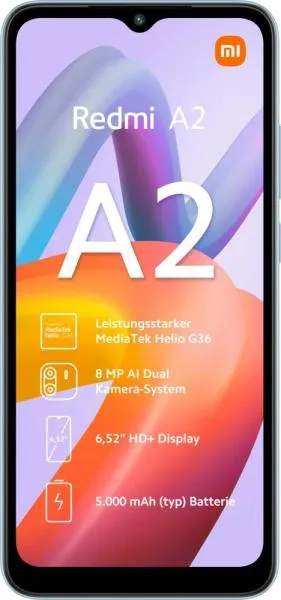

1. Specifications Comparison
| Feature | Xiaomi Redmi A2+ | Samsung Galaxy M35 | Practical Impact |
|---|---|---|---|
| Design | |||
| Dimensions (mm) | 164.9 x 76.8 x 9.1 | 162.3 x 78.6 x 9.1 | M35 slightly shorter and wider. Negligible difference in hand feel. |
| Weight (g) | 192 | 222 | A2+ noticeably lighter, reducing hand fatigue during extended use. |
| Build Material | Missing | Missing | Cannot compare build quality and durability. |
| Display | |||
| Display Type | IPS LCD | Super AMOLED | M35 offers significantly better contrast, colors, and viewing angles thanks to AMOLED. |
| Display Size (inches) | 6.52 | 6.6 | Negligible difference in screen real estate. |
| Resolution | 720 x 1600 | 1080 x 2340 | M35 boasts much sharper visuals due to higher resolution (HD+ vs. FHD+). Impacts clarity of text, images, and videos. |
| Refresh Rate | Missing | 120Hz | Higher refresh rate on M35 results in smoother scrolling and animations, enhancing overall user experience. |
| Peak Brightness (nits) | 400 (typ) | 1000 (HBM) | M35's significantly higher brightness ensures better outdoor visibility. |
| Performance | |||
| Chipset | Mediatek Helio G36 (12nm) | Exynos 1380 (5nm) | M35's 5nm chipset offers significantly better performance and power efficiency, enabling smoother multitasking and gaming. |
| CPU | Octa-core (4x2.2 GHz Cortex-A53 & 4x1.7 GHz Cortex-A53) | Octa-core (4x2.4 GHz Cortex-A78 & 4x2.0 GHz Cortex-A55) | M35 has a more powerful and modern CPU architecture, translating to significantly faster processing speeds. |
| RAM | 2GB/3GB | 8GB | M35 offers substantially more RAM, enabling significantly better multitasking and preventing app closures in the background. |
| Storage | 32GB/64GB | 256GB | M35 provides significantly more storage for apps, photos, and videos. |
| Camera | |||
| Rear Camera | 8MP Main + 0.3MP | 50MP Main + 8MP Wide + 2MP Macro | M35's more versatile camera setup with higher resolution main sensor and additional lenses provides significantly better image quality and flexibility. |
| Video Recording | 1080p@30fps | 4K@30fps, 1080p@60fps, 720p@480fps | M35 offers superior video recording capabilities with higher resolution and frame rate options, including slow-motion. |
| Battery | |||
| Capacity | 5000 mAh | 6000 mAh | M35 boasts a larger battery capacity, potentially offering longer battery life. |
| Fast Charging | 10W | 25W | M35 supports significantly faster charging, reducing downtime. |
2. Key Differences Analysis
Xiaomi Redmi A2+ Advantages:
- Lighter: Easier to hold for extended periods.
- Lower Price: Budget-friendly option.
Samsung Galaxy M35 Advantages:
- Superior Display: AMOLED technology delivers vibrant colors and deeper blacks. Higher resolution and refresh rate result in a smoother, sharper viewing experience.
- Significantly Better Performance: More powerful processor, more RAM, and greater storage capacity enable smoother multitasking, gaming, and overall responsiveness.
- More Versatile Camera System: Higher resolution sensors, additional lenses (wide-angle, macro), and superior video recording capabilities.
- Larger Battery and Faster Charging: Longer battery life and quicker recharge times.
- NFC: Enables contactless payments and other functionalities.
- 5G Connectivity: Future-proofs the device.
3. User Profiles & Recommendations
Xiaomi Redmi A2+: Suitable for budget-conscious users who prioritize basic communication and light web browsing. Ideal for users who primarily use their phone for calling, texting, and simple apps.
Samsung Galaxy M35: Suitable for users who demand a more comprehensive smartphone experience. Ideal for users who enjoy mobile gaming, photography, video recording, and consuming multimedia content. Also a good choice for users who value future-proof features like 5G.
4. Decision Framework
Key Questions for Buyers:
- What is your budget? The Redmi A2+ is a significantly cheaper option.
- What are your primary phone usage patterns? Basic communication vs. demanding tasks like gaming or photography.
- How important are display quality, performance, and camera capabilities? The M35 significantly outperforms the A2+ in these areas.
My Choice: Samsung Galaxy M35
While the Redmi A2+ offers an enticing price point for budget-conscious buyers, the Samsung Galaxy M35 is the superior choice overall. Its vastly improved performance, stunning AMOLED display, versatile camera system, and future-proof features like 5G connectivity justify the higher price. The significant differences in user experience offered by the faster processor, increased RAM, higher resolution screen, and superior camera make the M35 a much more compelling device for the majority of users. The A2+ feels like a phone that compromises heavily on performance and features to hit a very low price point, while the M35 provides a well-rounded experience. Even though the specific price difference isn't explicitly stated, the "low" vs. "medium" price range designation hints at a substantial gap, and the M35's advantages are significant enough to warrant the extra cost for most users.
