1. Specifications Comparison
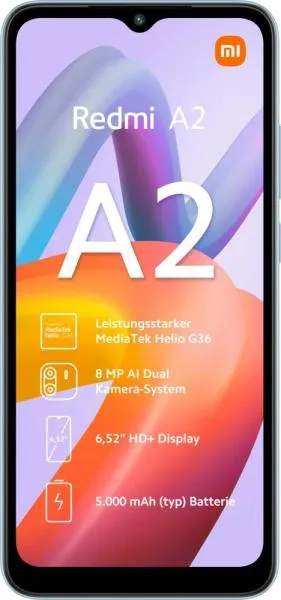
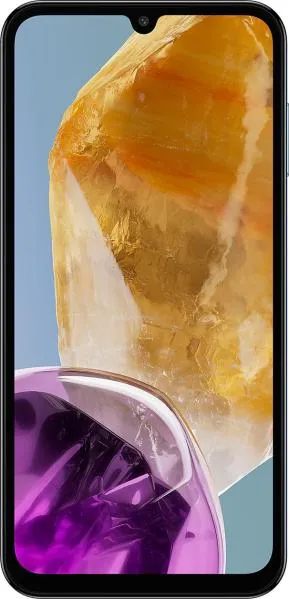
| Feature | Xiaomi Redmi A2+ | Samsung Galaxy M15 | Practical Impact |
|---|---|---|---|
| Design | |||
| Dimensions (mm) | 164.9 x 76.8 x 9.1 | 160.1 x 76.8 x 9.3 | M15 slightly shorter, similar width, slightly thicker. Negligible difference in hand feel. |
| Weight (g) | 192 | 217 | A2+ noticeably lighter, reducing hand fatigue during extended use. |
| Build Material | Unspecified | Unspecified | Durability and premium feel cannot be compared without material information. |
| Display | |||
| Display Type | IPS LCD | Super AMOLED | M15 offers significantly better contrast, deeper blacks, and more vibrant colors. A2+ likely has poorer outdoor visibility. |
| Size (inches) | 6.52 | 6.5 | Negligible size difference. |
| Resolution | 720 x 1600 | 1080 x 2340 | M15 boasts much sharper visuals due to higher resolution (HD+ vs. FHD+). Text, images, and videos will be noticeably clearer. |
| Refresh Rate | Unspecified | 90Hz | M15's 90Hz refresh rate delivers smoother scrolling and animations, resulting in a more fluid user experience. |
| Performance | |||
| Chipset | Mediatek Helio G36 (12 nm) | Mediatek Dimensity 6100+ (6 nm) | M15's 6nm chipset provides significant performance and efficiency advantages over A2+'s 12nm Helio G36. Expect faster app loading, smoother multitasking, and better battery life from the M15. |
| CPU | Octa-core (4x2.2 GHz Cortex-A53 & 4x1.7 GHz Cortex-A53) | Octa-core (2x2.2 GHz Cortex-A76 & 6x2.0 GHz Cortex-A55) | M15 has a more powerful CPU architecture with faster cores, resulting in significantly improved performance for demanding tasks and gaming. |
| RAM | 2GB/3GB | 6GB | M15 offers double or more the RAM, enabling significantly better multitasking and preventing apps from closing in the background. |
| Camera | |||
| Rear Camera | 8MP + 0.3MP | 50MP + 5MP + 2MP | M15 has a vastly superior camera system with a higher resolution primary sensor, a wide-angle lens, and a dedicated macro lens. Expect significantly better image quality and versatility. |
| Front Camera | 5MP | 13MP | M15 provides higher resolution selfies. |
| Video Recording | 1080p@30fps | 1080p@30fps with EIS | Both record at 1080p, but M15 features Electronic Image Stabilization (EIS) for smoother video footage. |
| Battery | |||
| Capacity (mAh) | 5000 | 6000 | M15 has a larger battery, potentially offering longer usage time. |
| Charging | 10W Fast Charging | 25W Fast Charging | M15 supports significantly faster charging, minimizing downtime. |
2. Key Differences Analysis
Xiaomi Redmi A2+ Advantages:
- Lighter: Easier to hold for extended periods.
- Lower Price: More budget-friendly.
Samsung Galaxy M15 Advantages:
- Superior Display: AMOLED technology with higher resolution and refresh rate provides a vastly improved visual experience.
- Significantly Better Performance: More powerful processor, GPU, and significantly more RAM enables smoother multitasking, gaming, and overall usage.
- More Versatile Camera System: Higher resolution sensors, wide-angle and macro lenses offer superior photography capabilities.
- Larger Battery and Faster Charging: Longer battery life and quicker charging times.
- NFC: Enables contactless payments and other NFC functionalities.
- More Modern Connectivity: Bluetooth 5.2, USB Type-C.
3. User Profiles & Recommendations
Xiaomi Redmi A2+: Users on an extremely tight budget who prioritize basic communication (calls, texts, light web browsing) and require a lightweight device.
Samsung Galaxy M15: Users who value a good display, smooth performance, versatile camera, long battery life, and modern features like NFC. Suitable for gaming, media consumption, photography, and everyday tasks.
4. Decision Framework
Key Questions for Buyers:
- What is your budget? The A2+ is significantly cheaper.
- What are your primary smartphone usage patterns? Basic communication vs. demanding tasks, gaming, media consumption.
- Which features are most important to you? Display quality, performance, camera, battery life.
My Choice: Samsung Galaxy M15
While the Redmi A2+ offers an extremely low price point, the Galaxy M15 provides significantly better value overall. The superior display, performance, camera, battery, and modern features like NFC and faster charging outweigh the price difference for most users. The M15 offers a much more enjoyable and versatile smartphone experience. The A2+ feels severely compromised to achieve its low price, making it suitable only for the most budget-constrained users with minimal performance needs.
