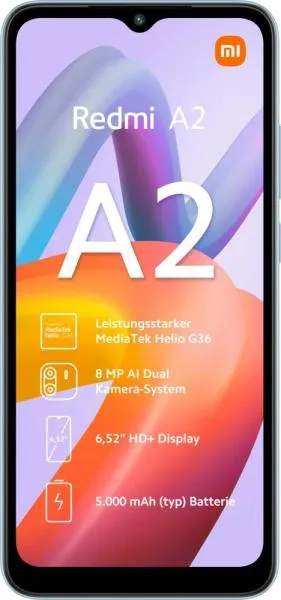

1. Specifications Comparison
| Feature | Xiaomi Redmi A2+ | Realme Note 50 | Practical Impact |
|---|---|---|---|
| Design | |||
| Dimensions (mm) | 164.9 x 76.8 x 9.1 | 167.2 x 76.7 x 8 | Realme Note 50 is slightly larger but thinner. Negligible difference in daily use. |
| Weight (g) | 192 | 186 | Realme Note 50 is slightly lighter. Negligible difference in daily use. |
| USB Type | microUSB 2.0 | USB Type-C 2.0 | Significant advantage for Realme: USB-C offers faster data transfer and more versatile charging options. |
| Display | |||
| Size (inches) | 6.52 | 6.74 | Realme Note 50 has a slightly larger screen, providing a more immersive experience for media consumption. |
| Resolution (px) | 720 x 1600 | 720 x 1600 | Same resolution, but due to larger size, the Realme Note 50 will have slightly lower pixel density (260 ppi vs 269 ppi). Difference is negligible. |
| Refresh Rate (Hz) | Not specified | 90 | Advantage for Realme: 90Hz refresh rate provides smoother scrolling and animations, leading to a more fluid user experience. |
| Display Type | IPS LCD | IPS LCD | Both are IPS LCDs. Realme boasts a higher peak brightness (560 nits vs 400 nits typical), potentially offering better visibility outdoors. |
| Performance | |||
| Chipset | Mediatek Helio G36 (12 nm) | Unisoc Tiger T612 (12 nm) | Both are entry-level chipsets. Performance differences likely minimal in basic tasks. Benchmark comparisons needed for definitive conclusions. |
| CPU | Octa-core (4x2.2 GHz Cortex-A53 & 4x1.7 GHz Cortex-A53) | Octa-core (2x1.8 GHz Cortex-A75 & 6x1.8 GHz Cortex-A55) | Realme Note 50 has a more modern CPU architecture, potentially offering better performance in demanding tasks. |
| GPU | PowerVR GE8320 | Mali-G57 | GPU performance differences are unclear without benchmark data. |
| RAM | 2GB | 4GB in the listed variant | Significant advantage for Realme: More RAM enables better multitasking and smoother performance with multiple apps open. |
| Camera | |||
| Rear Camera | 8MP + 0.3MP | 13MP + 2MP | Advantage for Realme: Higher resolution main sensor likely captures more detailed photos. The secondary B&W sensor on the Realme offers potential benefits for depth sensing. |
| Front Camera | 5MP | 5MP | Same resolution. Image quality will likely depend on software processing. |
| Video Recording | 1080p@30fps | 1080p@30fps | Both offer basic video recording capabilities. |
| Battery | |||
| Capacity (mAh) | 5000 | 5000 | Same battery capacity. Real-world battery life will depend on software optimization and usage patterns. |
| Charging | 10W Fast Charging | 33W Fast Charging | Significant Advantage for Realme: Significantly faster charging speeds. |
2. Key Differences Analysis
Realme Note 50 Advantages:
- USB-C: Modern connector with faster data transfer and charging.
- 90Hz Display: Smoother and more responsive user experience.
- More RAM: Better multitasking and overall performance.
- Better Camera: Higher resolution main sensor and potentially improved depth sensing.
- Faster Charging: Significantly reduces charging times.
Xiaomi Redmi A2+ Advantages:
- Potentially wider availability depending on the region.
- Specific advantages are difficult to pinpoint without more detailed testing and benchmarks. It might be slightly cheaper in some markets.
Trade-offs:
- The Redmi A2+ sacrifices modern features like USB-C and a higher refresh rate display for a potentially lower price point.
3. User Profiles & Recommendations
Realme Note 50: Suitable for users who prioritize a smooth user experience, faster charging, and a slightly larger display. Good for light gaming, social media, and media consumption.
Xiaomi Redmi A2+: Best suited for budget-conscious users who primarily need a basic smartphone for calling, texting, and very light internet usage. Ideal as a secondary phone or for users with minimal performance demands.
4. Decision Framework
Key Questions for Buyers:
- What is your budget? The Redmi A2+ is likely cheaper.
- What are your primary use cases? Basic tasks vs. media consumption, multitasking, etc.
- How important are features like USB-C, faster charging, and a higher refresh rate display?
Scenario-Based Recommendations:
- Tight Budget, Basic Usage: Redmi A2+
- Balanced Budget, Everyday Use: Realme Note 50
My Choice: Realme Note 50
Even though specific pricing isn't directly comparable due to different storage configurations available, the Realme Note 50 offers significant advantages in terms of user experience with its USB-C port, 90Hz display, larger RAM, better camera, and faster charging. These modern features outweigh the slightly larger size and potentially negligible price difference. The improved daily usability offered by the Realme Note 50 makes it the more compelling choice for most users. The Redmi A2+ feels outdated in comparison, especially with the microUSB port. Unless budget is extremely tight and only the most basic functionality is required, the Realme Note 50 is the better long-term investment.
