1. Specifications Comparison
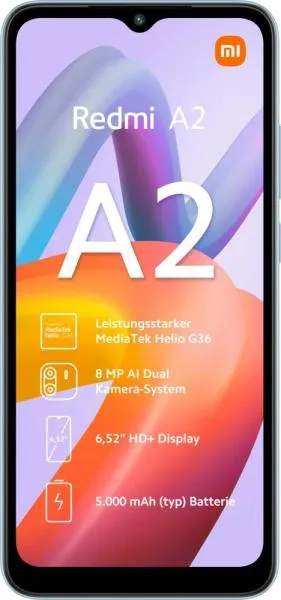
| Feature | Xiaomi Redmi A2+ | realme 8 | Practical Impact |
|---|---|---|---|
| Design | |||
| Dimensions (mm) | 164.9 x 76.8 x 9.1 | 162 x 75.1 x 8.7 | Realme 8 is slightly smaller and thinner, making it potentially more pocketable. |
| Weight (g) | 192 | 191 | Negligible weight difference. |
| Build Material | N/A | N/A | Missing information prevents comparison. |
| Display | |||
| Display Type | IPS LCD | LTPO AMOLED | Realme 8's AMOLED display offers significantly better contrast, deeper blacks, and potentially higher brightness. Its LTPO technology allows for dynamic refresh rate, saving battery. |
| Display Size (inches) | 6.52 | 6.78 | Realme 8 has a larger display, providing more immersive content consumption. |
| Resolution (px) | 720 x 1600 | 1264 x 2780 | Realme 8 boasts a much sharper display with significantly higher pixel density, resulting in crisper text and images. |
| Refresh Rate (Hz) | N/A | 120 | Realme 8's 120Hz refresh rate delivers smoother scrolling and animations, leading to a more fluid user experience. |
| Performance | |||
| Chipset | Helio G36 (12nm) | Snapdragon 7+ Gen 3 (4nm) | Realme 8's processor is significantly more powerful and power-efficient due to its advanced architecture and smaller manufacturing process, resulting in much better performance and battery life. |
| CPU | Octa-core | Octa-core | Realme 8's CPU architecture is considerably more modern and powerful, offering superior performance in demanding tasks and multitasking. |
| GPU | PowerVR GE8320 | Adreno 732 | Realme 8's GPU provides significantly better gaming and graphics performance. |
| RAM (GB) | 2 | 12 | Realme 8 has substantially more RAM, enabling smoother multitasking and preventing apps from closing in the background. |
| Camera | |||
| Rear Camera(s) | 8MP + 0.3MP | Unspecified | Insufficient information to compare camera specifications. We can infer Realme 8 likely has a more advanced camera setup based on its overall tier. |
| Front Camera | 5MP | Unspecified | Insufficient information to compare front camera specifications. |
| Battery | |||
| Capacity (mAh) | 5000 | 5500 | Realme 8 has a slightly larger battery capacity. However, real-world battery life depends on various factors including software optimization and display technology. |
2. Key Differences Analysis
- Performance: Realme 8 significantly outperforms the Redmi A2+ due to its much more powerful processor, GPU, and significantly more RAM.
- Display: Realme 8's AMOLED display with a 120Hz refresh rate offers a vastly superior visual experience compared to the Redmi A2+'s LCD.
- Future-proofing: The Realme 8, with its newer Android version and superior hardware, is likely to receive software updates for a longer period and handle future apps and games better. The Redmi A2+ may struggle with demanding tasks sooner.
3. User Profiles & Recommendations
- Redmi A2+: Budget-conscious users who prioritize basic functionality (calls, messaging, web browsing). Ideal for light users or as a secondary device.
- Realme 8: Users who value performance, a high-quality display, and future-proofing. Suitable for gaming, media consumption, multitasking, and demanding applications.
4. Decision Framework
- What is your budget? The Redmi A2+ is a budget option, while the Realme 8 is a mid-range device.
- What are your primary use cases? For basic tasks, the Redmi A2+ suffices. For demanding tasks and a premium experience, the Realme 8 is better.
- How long do you plan to keep the phone? The Realme 8 offers better long-term value due to its superior hardware and newer software.
My Choice: realme 8
While the Redmi A2+ is a budget-friendly option, the Realme 8 offers significantly better value in the long run. Its superior processor, stunning AMOLED display with a 120Hz refresh rate, larger RAM, and newer Android version provide a drastically improved user experience. Even with missing camera details, the overall package of the Realme 8 points towards a much more capable and future-proof device. While more expensive, the performance and longevity make it a worthwhile investment. The Redmi A2+ feels like a phone that would become frustratingly slow within a short period.
