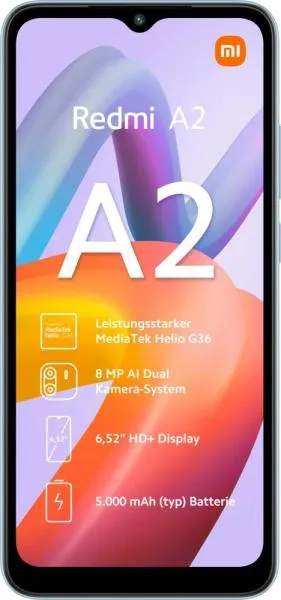

1. Specifications Comparison
| Feature | Xiaomi Redmi A2+ | Motorola Moto G85 | Practical Impact |
|---|---|---|---|
| Design | |||
| Dimensions (mm) | 164.9 x 76.8 x 9.1 | 161.9 x 73.1 x 7.6 | Moto G85 is slightly smaller and noticeably thinner. |
| Weight (g) | 192 | 171 | Moto G85 is lighter, more comfortable for extended use. |
| Build | Not specified | Not specified | Build quality cannot be compared due to lack of information. |
| Display | |||
| Display Type | IPS LCD | P-OLED | Moto G85 offers deeper blacks, richer colors, and better power efficiency. |
| Size (inches) | 6.52 | 6.67 | Moto G85 has a slightly larger screen. |
| Resolution | 720 x 1600 | 1080 x 2400 | Moto G85 has a significantly sharper display with more detail. |
| Refresh Rate | Not specified | 120Hz | Moto G85's 120Hz offers smoother animations and scrolling. |
| Peak Brightness | 400 nits (typ) | 1600 nits (peak) | Moto G85 is far more visible in direct sunlight. |
| Performance | |||
| Chipset | Mediatek Helio G36 (12 nm) | Qualcomm Snapdragon 6s Gen 3 (6 nm) | Moto G85's chip is significantly more powerful and efficient. |
| CPU | Octa-core (4x2.2 GHz Cortex-A53 & 4x1.7 GHz Cortex-A53) | Octa-core (2x2.3 GHz Cortex-A78 & 6x2.0 GHz Cortex-A55) | Moto G85 boasts a more modern and powerful CPU architecture, leading to better performance in demanding tasks and multitasking. |
| GPU | PowerVR GE8320 | Adreno 619 | Moto G85 offers better gaming and graphics performance. |
| RAM | 2GB/3GB | 8GB/12GB | Moto G85 offers significantly more RAM enabling smoother multitasking and better performance with demanding applications. |
| Camera | |||
| Rear Camera | 8MP Main, 0.3MP unspecified | 50MP Main, 8MP Wide | Moto G85 offers significantly higher resolution and versatility with a dedicated wide-angle lens. |
| Front Camera | 5MP | 32MP | Moto G85 boasts a much higher resolution selfie camera. |
| Video Recording | 1080p@30fps | 1080p@30/60fps | Moto G85 offers smoother video recording at 60fps. |
| Battery | |||
| Capacity | 5000 mAh | 5000 mAh | Similar battery capacity on both devices. |
| Charging | 10W | 30W | Moto G85 charges significantly faster. |
2. Key Differences Analysis
Xiaomi Redmi A2+ Advantages:
- Lower Price: Significantly more affordable.
Motorola Moto G85 Advantages:
- Superior Performance: Significantly faster processor, more RAM, resulting in a smoother user experience.
- Better Display: Higher resolution, OLED technology, 120Hz refresh rate for a vastly improved visual experience.
- Enhanced Camera: Higher resolution sensors, wider aperture, and wide-angle lens provide more versatile photography options.
- Faster Charging: 30W fast charging significantly reduces downtime.
- More Modern Features: NFC for contactless payments, newer Bluetooth version, under-display fingerprint sensor.
3. User Profiles & Recommendations
Xiaomi Redmi A2+: Budget-conscious users who prioritize basic functionality (calling, texting, web browsing) and long battery life. Ideal for light users or as a secondary device.
Motorola Moto G85: Users who value a smooth, responsive experience, enjoy mobile gaming or photography, and appreciate modern features like NFC.
4. Decision Framework
Key Questions:
- What is your budget? The Redmi A2+ is significantly cheaper.
- What are your primary use cases? Basic tasks vs. gaming, photography, demanding applications.
- How important are display quality and performance? The Moto G85 offers a major upgrade in these areas.
My Choice: Motorola Moto G85
While the Redmi A2+ offers an incredibly low price point, the Moto G85 provides a significantly better overall user experience. The superior performance, display, camera, and faster charging justify the higher price for most users. The Redmi A2+ caters to a very specific niche of extremely budget-conscious buyers who prioritize basic functionality above all else. For anyone who values performance, visual quality, and modern conveniences, the Moto G85 is the clear winner. The longer software support lifespan due to a more recent release date further solidifies the Moto G85 as a better long-term investment.
