1. Specifications Comparison
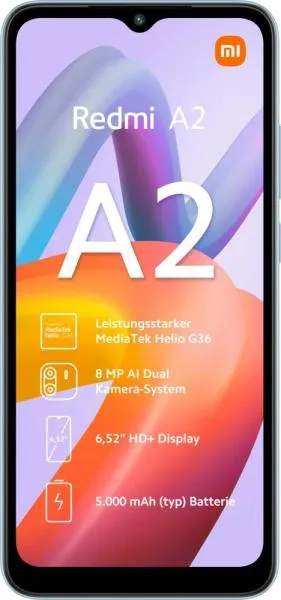
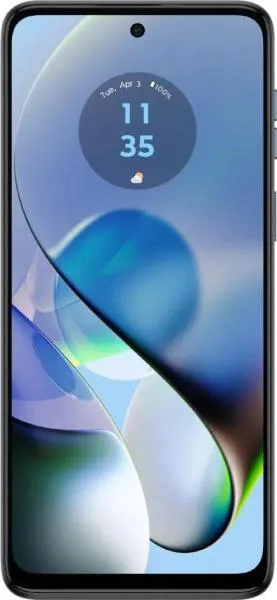
| Feature | Xiaomi Redmi A2+ | Motorola Moto G54 | Practical Impact |
|---|---|---|---|
| Design | |||
| Dimensions (mm) | 164.9 x 76.8 x 9.1 | 161.6 x 73.8 x 8.0 | Moto G54 is slightly smaller and thinner. |
| Weight (g) | 192 | 177 | Moto G54 is noticeably lighter, improving one-handed use. |
| Build | Unspecified | Unspecified | Build quality and materials cannot be compared due to missing information. |
| Display | |||
| Display Type | IPS LCD | IPS LCD | Both offer good color reproduction but may lack deep blacks of OLED. |
| Size (inches) | 6.52 | 6.5 | Negligible size difference. |
| Resolution | 720 x 1600 | 1080 x 2400 | Moto G54 has a significantly sharper display, resulting in clearer text and images. |
| Refresh Rate | Unspecified | 120Hz | Moto G54's 120Hz provides smoother scrolling and animations. |
| Performance | |||
| Chipset | Mediatek Helio G36 (12nm) | Mediatek Dimensity 7020 (6nm) | Moto G54's more advanced and efficient chipset will deliver significantly better performance and potentially longer battery life. |
| CPU | Octa-core (4x2.2 GHz Cortex-A53 & 4x1.7 GHz Cortex-A53) | Octa-core (2x2.2 GHz Cortex-A78 & 6x2.0 GHz Cortex-A55) | Moto G54 boasts more powerful cores for demanding tasks and multitasking. |
| RAM | 2/3GB | 8GB | Moto G54 offers substantially more RAM, enabling smoother multitasking and preventing app closures in the background. |
| Storage | 32/64GB | 256GB | Moto G54 provides significantly more storage for apps, photos, and videos. |
| Camera | |||
| Main Camera | 8MP | 50MP | Moto G54's higher resolution main camera should capture more detailed photos. |
| Front Camera | 5MP | 16MP | Moto G54's front camera should produce significantly better selfies. |
| Video Recording | 1080p@30fps | 1080p@30/60fps | Moto G54 offers more video recording options, including 60fps for smoother footage. |
| Battery | |||
| Capacity | 5000 mAh | 5000 mAh | Similar battery capacities suggest comparable battery life, though real-world usage may vary due to chipset efficiency. |
| Fast Charging | 10W | 15W | Moto G54 supports faster charging. |
| Other | |||
| NFC | No | Yes | Moto G54 allows for contactless payments and data transfer. |
| OS | Android 12 | Android 13 | Moto G54 runs a newer Android version with potential performance and feature improvements. |
2. Key Differences Analysis
Xiaomi Redmi A2+ Advantages:
- Lower Price: Offers a significantly lower entry point for budget-conscious buyers.
Motorola Moto G54 Advantages:
- Superior Performance: Significantly faster processor, more RAM, and larger storage.
- Better Display: Sharper resolution and higher refresh rate for a smoother and more visually appealing experience.
- Enhanced Camera: Higher resolution main and selfie cameras for improved photo and video quality.
- Faster Charging: Reduces downtime with quicker charging speeds.
- NFC: Enables contactless payments and other convenient features.
- Newer OS: Offers the latest Android features and security updates.
Trade-offs:
- The Redmi A2+'s lower price comes at the cost of significantly reduced performance, display quality, and camera capabilities.
3. User Profiles & Recommendations
Xiaomi Redmi A2+:
- Ideal User: Users with extremely tight budgets who prioritize basic communication (calls, texts, light web browsing) over performance or advanced features.
- Use Cases: Basic phone calls, text messaging, casual social media browsing.
Motorola Moto G54:
- Ideal User: Users seeking a well-rounded mid-range phone with good performance, display, camera, and battery life.
- Use Cases: Gaming, multimedia consumption, photography, social media, multitasking, mobile payments.
4. Decision Framework
Key Questions for Buyers:
- What is your budget? The Redmi A2+ is significantly cheaper.
- What are your primary phone usage needs? Basic communication vs. demanding tasks and multimedia.
- How important are features like a high-quality display, camera, and NFC? The Moto G54 excels in these areas.
Scenario-Based Recommendations:
- Tight Budget, Basic Needs: Redmi A2+
- Balanced Performance and Features: Moto G54
My Choice: Motorola Moto G54
While the Redmi A2+ offers an extremely low price point, the Moto G54 provides significantly better value for the money. The vastly improved performance, sharper display, better camera system, NFC functionality, and newer Android version make it a much more versatile and enjoyable device to use in the long run. Even though the price is higher, the Moto G54's overall user experience would be significantly superior for most users. The performance difference alone would be a major factor, as the Dimensity 7020 provides a smoother and more responsive experience compared to the Helio G36. Furthermore, the higher refresh rate screen and larger storage capacity greatly enhance usability in everyday tasks.
