1. Specifications Comparison
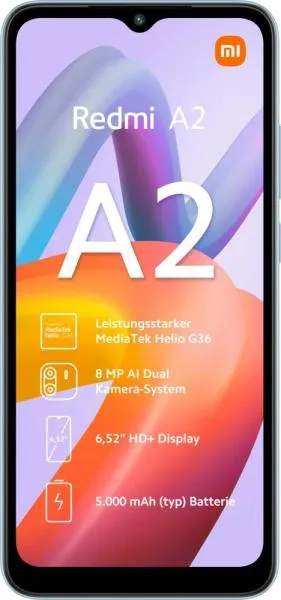
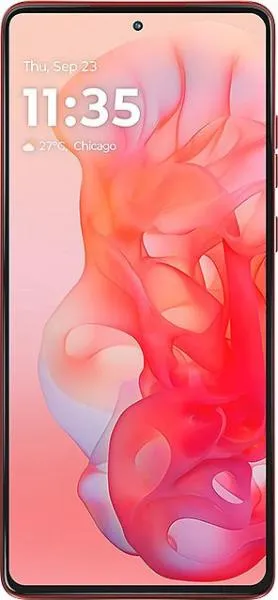
| Feature | Xiaomi Redmi A2+ | Motorola Moto G Stylus 5G (2024) | Practical Impact |
|---|---|---|---|
| Design | |||
| Dimensions (mm) | 164.9 x 76.8 x 9.1 | 162.6 x 74.8 x 8.3 | Moto G Stylus is slightly smaller and thinner. |
| Weight (g) | 192 | 190 | Negligible weight difference. |
| Build | Not specified | Not specified | Build quality cannot be compared due to lack of information. |
| Display | |||
| Display Type | IPS LCD | P-OLED | Moto G Stylus offers deeper blacks, more vibrant colors, and better power efficiency. |
| Size (inches) | 6.52 | 6.7 | Moto G Stylus has a slightly larger display. |
| Resolution | 720 x 1600 | 1080 x 2400 | Moto G Stylus offers significantly sharper visuals. |
| Refresh Rate | Not specified | 120Hz | Moto G Stylus provides smoother scrolling and animations. Redmi A2+ refresh rate is unknown. |
| Peak Brightness | 400 nits (typ) | 1200 nits (peak) | Moto G Stylus is much brighter and more visible outdoors. |
| Performance | |||
| Chipset | Mediatek Helio G36 (12 nm) | Qualcomm Snapdragon 6 Gen 1 (4 nm) | Moto G Stylus offers significantly better CPU and GPU performance, leading to faster app loading, smoother multitasking, and better gaming capabilities. |
| CPU | Octa-core (4x2.2 GHz Cortex-A53 & 4x1.7 GHz Cortex-A53) | Octa-core (4x2.2 GHz Cortex-A78 & 4x1.8 GHz Cortex-A55) | Moto G Stylus uses more powerful core architecture resulting in a noticeable performance difference. |
| RAM | 2GB/3GB | 8GB | Moto G Stylus offers much more RAM for seamless multitasking. |
| Storage | 32GB/64GB | 256GB | Moto G Stylus provides significantly more storage for apps, photos, and videos. |
| Camera | |||
| Rear Camera | 8MP + 0.3MP | 50MP + 13MP | Moto G Stylus has a significantly higher resolution main camera and a dedicated wide-angle lens, enabling better image quality and versatility. |
| Front Camera | 5MP | 32MP | Moto G Stylus boasts a much higher resolution front camera for better selfies. |
| Video Recording | 1080p@30fps | 4K@30fps | Moto G Stylus supports higher resolution video recording. |
| Battery | |||
| Capacity | 5000 mAh | 5000 mAh | Similar battery capacity on both phones. |
| Fast Charging | 10W | 30W | Moto G Stylus charges significantly faster. |
| Other | |||
| OS | Android 12 | Android 14 | Moto G Stylus runs a newer Android version with more features and security updates. |
| NFC | No | Yes | Moto G Stylus supports contactless payments and data transfer. |
| Stylus | No | Yes | Moto G Stylus offers stylus functionality for note-taking and drawing. |
| 5G | No | Yes | Moto G Stylus supports faster 5G cellular data speeds where available. |
2. Key Differences Analysis
Xiaomi Redmi A2+ Advantages:
- Lower Price: Significantly more affordable.
Motorola Moto G Stylus 5G (2024) Advantages:
- Superior Performance: Significantly faster processor, more RAM, and ample storage.
- Better Display: Higher resolution, refresh rate, brighter P-OLED panel.
- Enhanced Camera System: Higher resolution sensors, wider aperture, 4K video recording, OIS.
- Newer Software: Android 14 with longer software support.
- 5G Connectivity: Supports faster data speeds.
- Stylus Support: Integrated stylus for note-taking and drawing.
- NFC: Enables contactless payments.
- Faster Charging: 30W fast charging.
3. User Profiles & Recommendations
Xiaomi Redmi A2+: Budget-conscious users who prioritize basic functionality for calling, texting, and light web browsing. Ideal for users who need a secondary phone or a device for simple tasks.
Motorola Moto G Stylus 5G (2024): Users who value performance, a high-quality display, a versatile camera, and the latest features. Suitable for gaming, content consumption, multitasking, and creative tasks with the stylus.
4. Decision Framework
Key Questions:
- What is your budget? The Redmi A2+ is significantly cheaper.
- What are your primary use cases? Basic communication vs. demanding tasks like gaming or content creation.
- How important are features like 5G, a stylus, and NFC?
My Choice: Motorola Moto G Stylus 5G (2024)
While the Redmi A2+ offers an extremely budget-friendly option, the Moto G Stylus 5G (2024) provides a significantly better overall user experience. The performance difference is substantial, the display is vastly superior, and the camera system is far more capable. The addition of 5G, a stylus, NFC, and faster charging further solidifies its value proposition. Even with the higher price, the Moto G Stylus 5G represents a better long-term investment due to its superior hardware, newer software, and consequently longer lifespan. The Redmi A2+ would only be a sensible choice for extremely budget-constrained users who only need a phone for the most basic functions.
