1. Specifications Comparison
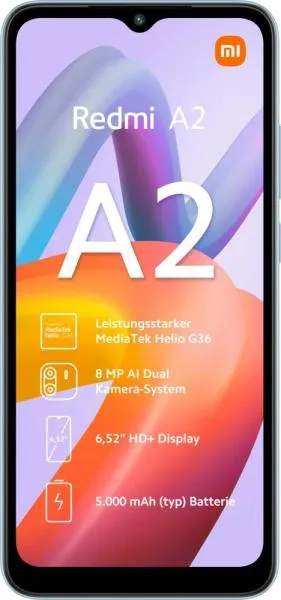
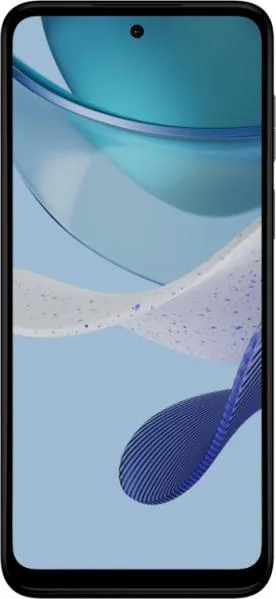
| Feature | Xiaomi Redmi A2+ | Motorola Moto G (2023) | Practical Impact |
|---|---|---|---|
| Design | |||
| Dimensions (mm) | 164.9 x 76.8 x 9.1 | 164 x 75 x 8.4 | Moto G is slightly thinner and lighter. Negligible difference in daily use. |
| Weight (g) | 192 | 189 | Negligible difference in daily use. |
| Display | |||
| Size (inches) | 6.52 | 6.5 | Virtually identical screen sizes. |
| Resolution (px) | 720 x 1600 | 720 x 1600 | Same resolution; sharpness will be similar. |
| Type | IPS LCD | IPS LCD | Similar display technology; expect comparable color accuracy and viewing angles. |
| Refresh Rate (Hz) | Not specified | 120 | Significant advantage for Moto G: Smoother animations and scrolling. |
| Performance | |||
| Chipset | Mediatek Helio G36 (12 nm) | Qualcomm Snapdragon 480+ 5G (8 nm) | Advantage Moto G: More powerful and efficient processor, enabling better multitasking and potentially longer battery life. |
| CPU | Octa-core (4x2.2 GHz Cortex-A53 & 4x1.7 GHz Cortex-A53) | Octa-core (2x2.2 GHz Kryo 460 & 6x1.8 GHz Kryo 460) | Advantage Moto G: More powerful CPU architecture, leading to faster app loading and smoother performance. |
| GPU | PowerVR GE8320 | Adreno 619 | Advantage Moto G: Significantly better GPU for improved gaming and graphics-intensive tasks. |
| RAM (GB) | 2/3 | 4 | Advantage Moto G: More RAM enables better multitasking and smoother performance with multiple apps open. |
| Storage (GB) | 32/64 | 128 | Advantage Moto G: Significantly more storage for apps, photos, and videos. |
| Camera | |||
| Rear Camera (MP) | 8 MP + 0.3 MP | 48 MP + 2 MP | Advantage Moto G: Higher resolution main camera likely to capture more detailed photos. Dedicated macro lens on Moto G potentially offers better close-up shots than the Redmi A2+'s secondary 0.3MP lens, although the low resolution of the latter raises concerns about its usefulness. |
| Front Camera (MP) | 5 MP | 8 MP | Advantage Moto G: Higher resolution selfie camera. |
| Battery | |||
| Capacity (mAh) | 5000 | 5000 | Same battery capacity, but actual battery life depends on other factors like processor efficiency and display refresh rate. |
| Fast Charging (W) | 10 | 15 | Advantage Moto G: Faster charging speeds. |
| Connectivity | |||
| 5G | No | Yes | Advantage Moto G: Access to faster 5G networks where available. |
| USB | microUSB 2.0 | USB Type-C 2.0 | Advantage Moto G: USB-C offers faster data transfer and more versatile connectivity. |
| NFC | No | No | Neither phone has NFC, limiting contactless payment options. |
2. Key Differences Analysis
Xiaomi Redmi A2+ Advantages:
- Lower Price: Positioned in the "low price" range, offering a more budget-friendly option.
Motorola Moto G (2023) Advantages:
- Significantly Better Performance: The Snapdragon 480+ 5G, coupled with more RAM, provides a substantially smoother and faster user experience.
- Higher Refresh Rate Display: 120Hz refresh rate ensures smoother scrolling and animations.
- Improved Camera System: Higher resolution main and selfie cameras likely produce better quality photos and videos. Dedicated macro lens may offer better close-ups.
- 5G Connectivity: Future-proofs the device with access to faster networks.
- USB-C Port: Modern and versatile port for charging and data transfer.
3. User Profiles & Recommendations
Xiaomi Redmi A2+: Suitable for users on a very tight budget who prioritize basic communication (calls, texts, light web browsing) and don't engage in demanding tasks or mobile gaming.
Motorola Moto G (2023): Best suited for users who want a smooth and responsive everyday experience, with better gaming capabilities, improved camera quality, and access to 5G. A good option for budget-conscious users who aren't willing to compromise significantly on performance.
4. Decision Framework
Key Questions for Buyers:
- What is your budget? The Redmi A2+ is significantly cheaper.
- What are your primary phone usage patterns? For basic use, the Redmi A2+ might suffice. For heavier use, including gaming or multitasking, the Moto G (2023) is recommended.
- Is 5G connectivity important to you? The Moto G (2023) offers 5G access.
My Choice: Motorola Moto G (2023)
While the Redmi A2+ offers an extremely budget-friendly option, the Moto G (2023)'s superior performance, 120Hz display, better camera system, 5G connectivity, and USB-C port make it a significantly better value proposition in the long run. The performance difference alone would drastically impact daily usability, making the Moto G a more enjoyable and frustration-free device to use. The higher refresh rate screen contributes to a much smoother experience, and 5G future-proofs the device. Even with the price difference, the Moto G (2023) offers a significantly better overall user experience. The added benefit of more internal storage addresses a crucial limitation often found in budget phones.
