
1. Specifications Comparison
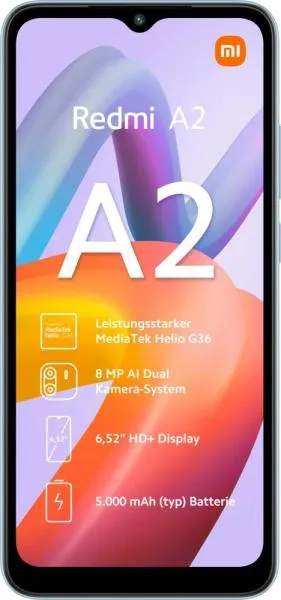
| Feature | Xiaomi Redmi A2+ | Google Pixel 9 Pro | Practical Impact |
|---|---|---|---|
| Design | |||
| Dimensions (mm) | 164.9 x 76.8 x 9.1 | 152.8 x 72 x 8.5 | Pixel 9 Pro is noticeably smaller and thinner, making it more pocketable and comfortable for one-handed use. |
| Weight (g) | 192 | 199 | Negligible weight difference. |
| Build Materials | Not specified | Not specified | Cannot compare build quality and durability without further information. |
| Display | |||
| Display Type | IPS LCD | LTPO OLED | Pixel 9 Pro offers significantly better contrast, deeper blacks, and potentially higher brightness with its OLED technology. LTPO enables dynamic refresh rate adjustment for power saving. |
| Display Size (inches) | 6.52 | 6.3 | Redmi A2+ offers slightly larger screen real estate for media consumption, but Pixel 9 Pro's smaller size aids one-handed use. |
| Resolution | 720 x 1600 | 1280 x 2856 | Pixel 9 Pro boasts much higher resolution, resulting in sharper text and images. Significantly higher pixel density (495 vs 269 ppi) leads to a vastly improved visual experience. |
| Refresh Rate (Hz) | Not specified | 120 | Pixel 9 Pro's 120Hz refresh rate delivers smoother scrolling and animations, resulting in a more fluid user experience. |
| HDR | No | HDR10+ | Pixel 9 Pro supports HDR10+ for enhanced dynamic range in compatible content, offering richer visuals. |
| Performance | |||
| Chipset | Mediatek Helio G36 (12 nm) | Google Tensor G4 (4 nm) | Tensor G4 is a significantly more powerful and efficient chip, enabling superior performance in demanding tasks and gaming. The smaller 4nm process improves battery life. |
| CPU | Octa-core (4x2.2 GHz Cortex-A53 & 4x1.7 GHz Cortex-A53) | Octa-core (1x3.1 GHz Cortex-X4 & 3x2.6 GHz Cortex-A720 & 4x1.92 GHz Cortex-A520) | Pixel 9 Pro has a vastly more powerful CPU architecture, leading to significantly faster processing speeds and smoother multitasking. |
| RAM | 2GB | 16GB | Massive difference in RAM. Pixel 9 Pro can handle significantly more demanding applications and multitasking without performance slowdowns. 2GB is extremely limiting in modern usage.Note: 3GB/4GB variants of the A2+ exist but weren't included in the provided data. | ||
| Camera | |||
| Rear Camera | 8MP Main, 0.3MP Depth | 50MP Main, 48MP Wide, 48MP Telephoto | Pixel 9 Pro offers a dramatically superior camera system with higher resolution, multiple lenses for versatility (wide-angle and telephoto), and advanced features. |
| Video Recording | 1080p@30fps | Up to 8K@30fps | Pixel 9 Pro offers significantly higher resolution video recording capabilities. |
| Battery | |||
| Capacity (mAh) | 5000 | 4700 | Redmi A2+ has a slightly larger battery capacity, but real-world battery life depends on numerous factors, including software optimization and display efficiency. The Pixel 9 Pro's more efficient chip likely offsets the smaller battery. |
| Fast Charging | 10W | 27W | Pixel 9 Pro supports significantly faster charging. |
2. Key Differences Analysis
Xiaomi Redmi A2+ Advantages:
- Potentially longer battery life due to the larger battery capacity, though this is dependent on real-world usage.
- Lower price point making it accessible to budget-conscious buyers.
- Slightly Larger Screen: Offers marginally more screen real estate for viewing content.
Google Pixel 9 Pro Advantages:
- Significantly superior performance due to the much more powerful processor and significantly more RAM.
- Much better display with OLED technology, higher resolution, and a faster refresh rate.
- Vastly improved camera system with higher resolution sensors, multiple lenses, and advanced features.
- Faster charging allowing for quicker top-ups.
- More modern OS with longer support ensuring software updates and security patches for years to come. NFC for mobile payments.
Trade-offs:
- Redmi A2+: Sacrifices performance, display quality, and camera capabilities for affordability.
- Pixel 9 Pro: Significantly more expensive.
3. User Profiles & Recommendations
Xiaomi Redmi A2+: Ideal for users on a very tight budget who prioritize basic communication (calls, texts, light web browsing) and long battery life.
Google Pixel 9 Pro: Suitable for users who demand top-tier performance, a premium display, an excellent camera system, and the latest software features. Ideal for power users, gamers, photography enthusiasts, and those who value a smooth and responsive user experience.
4. Decision Framework
Key Questions for Buyers:
- What is your budget? The Redmi A2+ is a budget device, while the Pixel 9 Pro is a premium flagship.
- What are your primary smartphone uses? Basic communication vs. demanding tasks, gaming, photography.
- How important are display quality, performance, and camera capabilities?
Scenario-Based Recommendations:
- Limited budget, basic usage: Redmi A2+
- Balanced needs and budget: Consider mid-range alternatives not listed here.
- Demand performance, premium features: Pixel 9 Pro
My Choice: Google Pixel 9 Pro
While the Redmi A2+ offers incredible value for its low price, the Pixel 9 Pro is the clear winner for me. The significantly improved performance, superior display, versatile camera system, and the promise of long-term software updates are crucial factors. I prioritize a smooth and responsive user experience, high-quality photos and videos, and the ability to run demanding applications without lag. While the price difference is substantial, the Pixel 9 Pro offers a far superior overall package that justifies the investment for my needs. The modern connectivity options (5G, WiFi 7, Bluetooth 5.3) further solidify its future-proof nature.
