1. Specifications Comparison
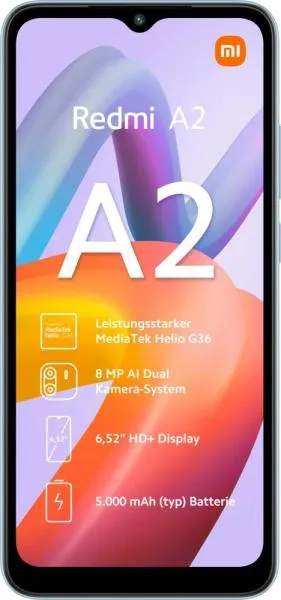
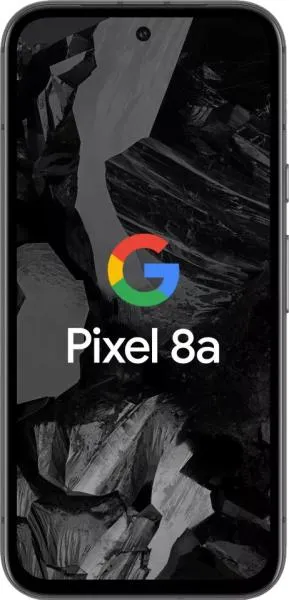
| Feature | Xiaomi Redmi A2+ | Google Pixel 8a | Practical Impact |
|---|---|---|---|
| Design | |||
| Dimensions (mm) | 164.9 x 76.8 x 9.1 | 152.1 x 72.7 x 8.9 | Pixel 8a is noticeably smaller and more pocketable. |
| Weight (g) | 192 | 188 | Negligible weight difference. |
| Build | Unspecified | Unspecified | Build quality and materials cannot be compared due to missing information. |
| Display | |||
| Display Type | IPS LCD | OLED | Pixel 8a offers deeper blacks, more vibrant colors, and better power efficiency. |
| Display Size (inches) | 6.52 | 6.1 | Redmi A2+ has a larger screen for media consumption, Pixel 8a is more one-hand friendly. |
| Resolution | 720 x 1600 | 1080 x 2400 | Pixel 8a has a significantly sharper display with higher pixel density (430 vs 269 ppi). |
| Refresh Rate | Unspecified | 120Hz | Pixel 8a will offer smoother scrolling and animations. |
| Peak Brightness | 400 nits (typ) | 2000 nits (peak) | Pixel 8a will be far more visible in direct sunlight. |
| Performance | |||
| Chipset | Mediatek Helio G36 (12 nm) | Google Tensor G3 (4 nm) | Pixel 8a boasts a significantly more powerful and efficient processor. Expect much faster performance and better AI capabilities. |
| CPU | Octa-core (4x2.2 GHz Cortex-A53 & 4x1.7 GHz Cortex-A53) | Nona-core (1x3.0 GHz Cortex-X3 & 4x2.45 GHz Cortex-A715 & 4x2.15 GHz Cortex-A510) | Pixel 8a's CPU architecture is far superior, offering significant performance gains in demanding tasks and multitasking. |
| RAM | 2GB/3GB | 8GB | Pixel 8a offers vastly superior multitasking capabilities and smoother performance with more RAM. |
| Storage | 32GB/64GB | 256GB | Pixel 8a provides much more storage for apps, photos, and videos. |
| OS | Android 12 | Android 14 | Pixel 8a runs a newer Android version with longer software support and newer features. |
| Camera | |||
| Rear Camera | 8MP Main, 0.3MP unspecified | 64MP Main (Sony IMX787), 13MP Wide Angle + Macro | Pixel 8a offers vastly superior camera hardware and software processing, resulting in significantly better image quality. |
| Front Camera | 5MP | 13MP | Pixel 8a's selfie camera offers higher resolution. |
| Video Recording | 1080p@30fps | Up to 4K@60fps with OIS | Pixel 8a offers higher resolution and frame rate video recording with optical image stabilization. |
| Battery | |||
| Capacity | 5000 mAh | 4492 mAh/ 4500mAh (conflicting data) | While Redmi A2+ has a slightly larger battery capacity, Pixel 8a's superior power efficiency could result in comparable or better battery life. |
| Fast Charging | 10W | 18W | Pixel 8a supports faster charging. |
2. Key Differences Analysis
Xiaomi Redmi A2+ Advantages:
- Larger Display: Better for media consumption.
- Potentially Longer Battery Life: Higher capacity battery, but real-world usage depends on optimization.
Google Pixel 8a Advantages:
- Significantly Faster Performance: More powerful processor, more RAM.
- Superior Camera System: Higher resolution sensors, better image processing, OIS.
- Higher Quality Display: OLED technology with higher resolution, refresh rate, and brightness.
- Newer Software with Longer Support: Latest Android version with guaranteed updates.
- 5G Connectivity: Future-proof network access.
3. User Profiles & Recommendations
Xiaomi Redmi A2+: Budget-conscious users who prioritize basic communication and light media consumption.
Google Pixel 8a: Users who value performance, camera quality, a premium display, and long-term software support. Suitable for demanding tasks, gaming, photography, and videography.
4. Decision Framework
Key Questions for Buyers:
- What is your budget? Redmi A2+ is significantly cheaper.
- What are your primary use cases? Basic tasks vs. demanding apps, gaming, photography.
- How important are long-term software updates and future-proofing? Pixel 8a offers a longer support window and 5G.
My Choice: Google Pixel 8a
While the Redmi A2+ offers a larger display and potentially longer battery life, the Pixel 8a's significant advantages in performance, camera quality, display technology, software support, and connectivity make it a far superior device overall. The price difference is substantial, but the Pixel 8a provides a vastly improved user experience that justifies the higher cost for most users beyond those with extremely tight budget constraints. The Tensor G3 chip, coupled with the superior camera system and OLED display, make the Pixel 8a a compelling choice for a modern smartphone experience.
