1. Specifications Comparison
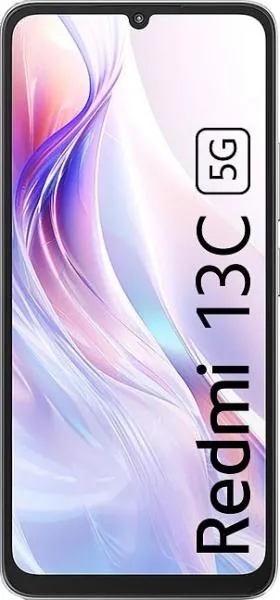
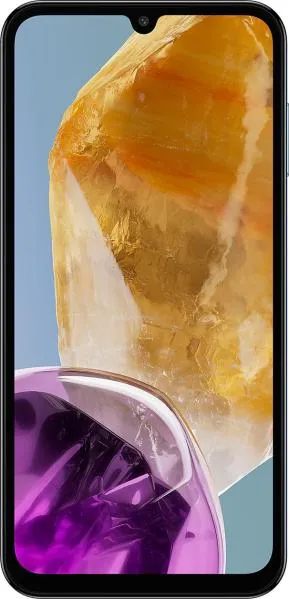
| Feature | Category | Xiaomi Redmi 13C 5G | Samsung Galaxy M15 | Practical Impact |
|---|---|---|---|---|
| Dimensions | Design | 168 x 78 x 8.1 mm | 160.1 x 76.8 x 9.3 mm | The Redmi is slightly taller and wider, but thinner than the Galaxy. The Galaxy might feel slightly bulkier in hand. |
| Weight | Design | 192g | 217g | The Redmi is noticeably lighter, making it more comfortable for extended use. |
| Display Type | Display | IPS LCD, 90Hz | Super AMOLED, 90Hz | The Galaxy's AMOLED display offers richer colors, deeper blacks, and better power efficiency. The Redmi's LCD might appear washed out in comparison. |
| Display Size | Display | 6.74" | 6.5" | The Redmi offers a slightly larger screen for media consumption. |
| Resolution | Display | 720x1600 (HD+) | 1080x2340 (FHD+) | The Galaxy has a significantly sharper display, resulting in clearer text and images. |
| Brightness (HBM) | Display | 600 nits | 800 nits | The Galaxy's display will be more visible in direct sunlight. |
| Chipset | Performance | Mediatek Dimensity 6100+ (6 nm) | Mediatek Dimensity 6100+ (6 nm) | Both phones offer identical performance, as they use the same chipset. |
| CPU | Performance | Octa-core (2x2.2 GHz Cortex-A76 & 6x2.0 GHz Cortex-A55) | Octa-core (2x2.2 GHz Cortex-A76 & 6x2.0 GHz Cortex-A55) | Identical CPU performance is expected. |
| GPU | Performance | Mali-G57 MC2 | Mali-G57 MC2 | Identical GPU performance is expected for gaming and graphics-intensive tasks. |
| RAM | Performance | 6GB | 6GB | Both phones offer the same amount of RAM for multitasking. |
| Storage | Performance | 128GB | 128GB | Both phones offer the same internal storage capacity. |
| Battery Capacity | Battery | 5000 mAh | 6000 mAh | The Galaxy offers a larger battery, potentially leading to significantly longer battery life. |
| OS | Software | Android 13 | Android 14 | The Galaxy ships with a newer version of Android, offering potential feature and security advantages. |
| NFC | Connectivity | No | Yes | The Galaxy supports NFC for contactless payments and other functionalities. The Redmi's lack of NFC is a significant disadvantage for many users. |
| Video Recording | Camera | 1080p@30fps | 1080p@30fps (EIS) | Both record at the same resolution and frame rate. The Galaxy features Electronic Image Stabilization (EIS) for smoother video footage. |
2. Key Differences Analysis
Xiaomi Redmi 13C 5G Advantages:
- Lighter and Thinner: More comfortable for one-handed use and extended periods.
- Larger Display: More immersive experience for media consumption.
Samsung Galaxy M15 Advantages:
- AMOLED Display: Superior color accuracy, contrast, and power efficiency.
- Higher Resolution: Sharper and more detailed visuals.
- Brighter Display: Better visibility outdoors.
- Larger Battery: Longer usage time between charges.
- Newer Android Version: Access to latest features and security updates.
- NFC: Enables contactless payments and other convenient features.
- Video Stabilization (EIS): Smoother video recording.
Trade-offs:
- The Redmi sacrifices display quality, battery life, and key features like NFC for a lighter and slightly larger display.
- The Galaxy is heavier and slightly thicker but offers a significantly better overall user experience.
3. User Profiles & Recommendations
Xiaomi Redmi 13C 5G: Budget-conscious users prioritizing a large display and lightweight design who are not concerned about higher resolution, AMOLED technology, or NFC. Best for basic tasks like calling, texting, and web browsing.
Samsung Galaxy M15: Users who prioritize overall experience, including display quality, battery life, camera features, and NFC functionality. Suitable for a wider range of tasks, including media consumption, mobile gaming, and mobile payments.
4. Decision Framework
Key Questions for Buyers:
- What is your budget? Both are mid-range but slight price differences might exist.
- How important is display quality and battery life?
- Do you need NFC for contactless payments?
Scenario-Based Recommendations:
- Limited Budget, Basic Use: Redmi 13C 5G
- Balanced Needs, Value for Money: Samsung Galaxy M15
My Choice: Samsung Galaxy M15
While the Redmi 13C 5G is lighter, the Galaxy M15's superior AMOLED display, longer battery life, NFC functionality, newer Android version, and video stabilization make it a significantly better overall package. The slightly higher weight is a minor trade-off for these substantial advantages. In the mid-range market, the Galaxy M15 offers better value and a more future-proof device. The lack of NFC on the Redmi is a significant drawback in today's mobile landscape.
