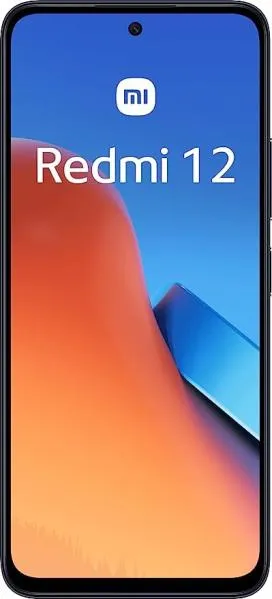

1. Specifications Comparison
| Feature | Xiaomi Redmi 12 | vivo X100 | Practical Impact |
|---|---|---|---|
| Design | |||
| Dimensions (mm) | 168.6 x 76.3 x 8.2 | 164.1 x 75.2 x 8.5 | Redmi 12 is slightly taller and wider, X100 slightly thicker. Negligible difference in everyday use. |
| Weight (g) | 198.5 | 202 | Virtually identical weight, won't be noticeable. |
| Build | Unspecified | Unspecified | Build quality and materials unknown, impacting durability and premium feel. |
| Display | |||
| Size (inches) | 6.79 | 6.78 | Negligible size difference. |
| Resolution | 1080 x 2460 | 1260 x 2800 | X100 has a sharper display with higher pixel density, resulting in clearer text and images. |
| Type | IPS LCD | LTPO AMOLED | X100's AMOLED offers deeper blacks, vibrant colors, and potentially better power efficiency due to individual pixel illumination. LTPO allows for dynamic refresh rate adjustment further saving battery. |
| Refresh Rate | 90Hz | 120Hz | X100 offers smoother scrolling and animations thanks to the higher refresh rate. |
| Peak Brightness | 550 nits | 3000 nits | X100 significantly brighter, ensuring better visibility outdoors, especially in direct sunlight. |
| Performance | |||
| Chipset | Mediatek Helio G88 (12nm) | Mediatek Dimensity 9300 (4nm) | X100 has a vastly superior processor built on a smaller node, resulting in significantly faster performance, better power efficiency, and less heat generation. |
| CPU | Octa-core (2x2.0 GHz Cortex-A75 & 6x1.8 GHz Cortex-A55) | Octa-core (1x3.25 GHz Cortex-X4 & 3x2.85 GHz Cortex-X4 & 4x2.0 GHz Cortex-A720) | X100 utilizes more powerful CPU cores, offering a substantial performance advantage in demanding tasks and multitasking. |
| GPU | Mali-G52 MC2 | Immortalis-G720 MC12 | X100 boasts a significantly more powerful GPU, resulting in superior gaming performance and smoother graphics rendering. |
| RAM | 4/8 GB | 12/16 GB | X100 offers substantially more RAM, enabling better multitasking and smoother performance with demanding applications. |
| Camera | |||
| Main Camera | 50MP | 50MP | While both have the same resolution, the X100 uses a larger sensor (Sony IMX920) with a wider aperture (f/1.57), likely capturing more light and detail, especially in low light. |
| Ultrawide | 8MP | 50MP | X100 has a much higher resolution ultrawide, capturing significantly more detail and offering a better overall experience. |
| Telephoto | None | 64MP with OIS | X100 offers optical zoom with image stabilization, enabling clear zoomed shots not possible on the Redmi 12. |
| Video | 1080p@30fps | Unspecified | Redmi 12's video capabilities are limited. X100's capabilities are unknown, preventing comparison. |
| Battery | |||
| Capacity | 5000 mAh | 5000 mAh | Similar battery capacity, but real-world battery life will depend on the software optimization and the more efficient display and processor on the X100. |
2. Key Differences Analysis
Xiaomi Redmi 12 Advantages:
- Potentially Lower Price: Likely more affordable than the vivo X100.
vivo X100 Advantages:
- Significantly Better Performance: The Dimensity 9300 and larger RAM provide a much smoother and faster user experience.
- Superior Display: AMOLED with higher resolution, refresh rate, and brightness offers a more vibrant and enjoyable viewing experience.
- More Versatile Camera System: Includes a high-resolution ultrawide and a telephoto lens with OIS for superior photography capabilities.
3. User Profiles & Recommendations
Redmi 12: Budget-conscious users who prioritize basic functionality over top-tier performance or camera quality. Suitable for everyday tasks like browsing, social media, and light gaming.
vivo X100: Users who demand high performance, a premium display, and a versatile camera system. Ideal for mobile gaming, content creation, and photography enthusiasts.
4. Decision Framework
Key Questions for Buyers:
- What is your budget? The Redmi 12 is a budget option, while the X100 is a higher-end device.
- What are your performance needs? For demanding tasks and gaming, the X100 is significantly better.
- How important is camera quality? The X100 offers a vastly superior camera system.
My Choice: vivo X100
While the price difference is significant, the vivo X100 offers a substantial leap in performance, display quality, and camera versatility. The Dimensity 9300, coupled with the ample RAM and superior GPU, ensures a future-proof device capable of handling demanding tasks and games with ease. The brilliant AMOLED display and the versatile camera system further solidify its position as a superior device. For me, the long-term benefits of a smoother, faster, and more enjoyable user experience outweigh the higher initial cost. The Redmi 12 is a solid budget option, but the X100 provides a significantly better overall user experience.
