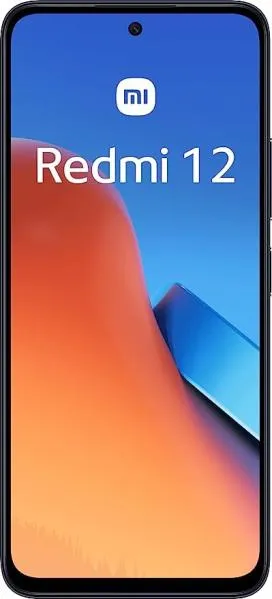
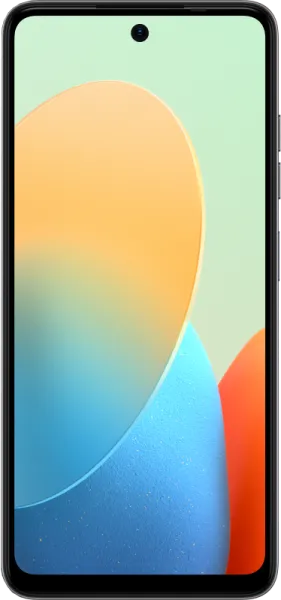
1. Specifications Comparison
| Feature | Xiaomi Redmi 12 | Tecno Spark Go 2024 | Practical Impact |
|---|---|---|---|
| Design | |||
| Dimensions (mm) | 168.6 x 76.3 x 8.2 | 163.7 x 75.6 x 8.6 | Redmi 12 is slightly larger and thinner. Spark Go might feel slightly more compact in hand. |
| Weight (g) | 198.5 | 0 (Missing data) | Cannot compare weight without Spark Go's weight. |
| Display | |||
| Size (inches) | 6.79 | 6.6 | Redmi 12 has a noticeably larger screen, better for media consumption. |
| Resolution | 1080 x 2460 | 720 x 1612 | Redmi 12 offers significantly sharper visuals due to much higher resolution. |
| Display Type | IPS LCD, 90Hz | IPS LCD, 90Hz | Both have smooth refresh rates, but Redmi 12's higher resolution will make animations and scrolling appear smoother overall. |
| PPI | 396 | 267 | Redmi 12's higher pixel density results in crisper text and images. Spark Go's display will appear pixelated in comparison. |
| Performance | |||
| Chipset | Mediatek Helio G88 (12nm) | Unisoc T606 (12nm) | Both are entry-level chipsets, but Helio G88 generally offers slightly better performance in benchmarks. Real-world difference might be minimal for basic tasks. |
| CPU | Octa-core (2x2.0 GHz Cortex-A75 & 6x1.8 GHz Cortex-A55) | Octa-core (2x1.6 GHz Cortex-A75 & 6x1.6 GHz Cortex-A55) | Redmi 12 has faster prime cores, potentially leading to slightly quicker app loading and multitasking. |
| GPU | Mali-G52 MC2 | Mali-G57 MP1 | While G57 is a newer generation, the specific implementation and clock speeds matter. Performance differences likely minor for casual gaming. |
| RAM | 4GB/8GB | 3GB/4GB | Redmi 12 offers configurations with more RAM, enabling better multitasking and smoother performance with multiple apps open. |
| Camera | |||
| Main Camera | 50MP | 13MP | Redmi 12 boasts a much higher resolution main sensor, potentially capturing more detail. Image quality depends on factors beyond resolution. |
| Other Cameras | 8MP ultrawide, 2MP macro, 8MP selfie | 0.1MP (unknown purpose), 8MP selfie | Redmi 12 offers an ultrawide lens for broader shots, absent in Spark Go. The 0.1MP sensor on Spark Go is unclear in its functionality and unlikely to be useful. |
| Battery | |||
| Capacity | 5000mAh | 5000mAh | Similar battery capacities suggest comparable battery life, though actual usage varies based on other factors. |
| Other | |||
| NFC | Yes | No | Redmi 12 allows for contactless payments and data transfer, which is not possible with Spark Go. |
| Price Range | Medium | Medium | Pricing overlaps, suggesting a direct competition in value. |
2. Key Differences Analysis
Xiaomi Redmi 12 Advantages:
- Superior Display: Sharper, larger, and overall better viewing experience.
- Slightly Better Performance: Faster CPU cores and potentially better GPU performance.
- More RAM: Smoother multitasking.
- Higher Resolution Main Camera: Potentially more detailed photos.
- Ultrawide Camera: Adds versatility for landscape and group photos.
- NFC: Enables contactless payments.
Tecno Spark Go 2024 Advantages:
- Potentially more compact design (depending on weight).
- Potentially lower price for specific configurations.
Trade-offs:
- Redmi 12: Might be slightly larger for some users.
- Spark Go 2024: Significantly lower resolution display, less powerful chipset, lacks NFC.
3. User Profiles & Recommendations
Redmi 12: Users who prioritize display quality, performance, camera versatility, and features like NFC. Suitable for media consumption, gaming, photography, and mobile payments.
Spark Go 2024: Budget-conscious users who primarily need a basic smartphone for calling, texting, and simple tasks. Less demanding users who prioritize affordability over performance and features.
4. Decision Framework
Key Questions:
- What is your budget? Determine the maximum you are willing to spend.
- What are your primary smartphone usage patterns? (e.g., social media, gaming, photography).
- Which features are essential for you? (e.g., large screen, good camera, NFC).
Scenario-based Recommendations:
- Limited Budget, Basic Usage: Spark Go 2024 might suffice.
- Balanced Budget, Versatile Usage: Redmi 12 offers much better value due to its superior features.
- Prioritize Display and Performance: Redmi 12 is the clear choice.
My Choice: Xiaomi Redmi 12
Reasoning:
The Redmi 12 offers a significantly better display, slightly better performance, more RAM, a more versatile camera system, and NFC for a comparable price. The Spark Go 2024's only potential advantages are a slightly smaller size (unconfirmed due to missing weight) and potentially lower price for specific memory configurations. However, the compromises in display, performance, and features are too significant to justify choosing the Spark Go 2024 unless the budget is extremely tight and smartphone usage is very basic. The Redmi 12 provides a much more well-rounded and future-proof experience.
