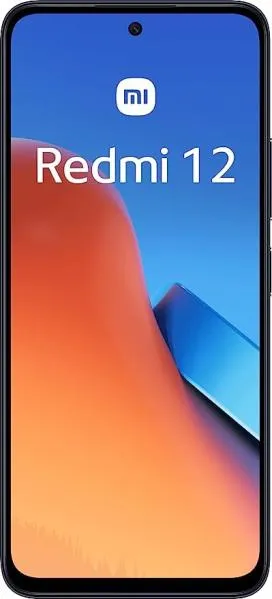
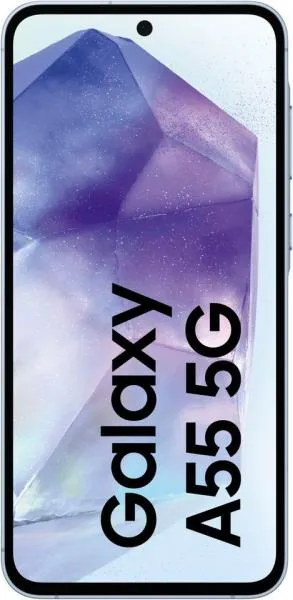
1. Specifications Comparison
| Feature | Xiaomi Redmi 12 | Samsung Galaxy A55 | Practical Impact |
|---|---|---|---|
| Design | |||
| Dimensions (mm) | 168.6 x 76.3 x 8.2 | 161.1 x 77.4 x 8.2 | Redmi 12 is taller and slightly narrower. Negligible difference in thickness. |
| Weight (g) | 198.5 | 213 | Redmi 12 is noticeably lighter, improving one-handed use. |
| Fingerprint Sensor | Side-mounted | Under-display | Personal preference; under-display is often considered more modern. |
| Display | |||
| Display Type | IPS LCD | Super AMOLED | AMOLED offers richer colors, deeper blacks, and better power efficiency in dark mode. |
| Display Size (inches) | 6.79 | 6.6 | Redmi 12 has a slightly larger display, offering more screen real estate. |
| Refresh Rate (Hz) | 90 | 120 | A55's 120Hz display will feel smoother for scrolling and gaming. |
| Peak Brightness (nits) | 550 | 1000 (HBM) | A55 will be significantly more visible in direct sunlight. |
| HDR | No | HDR10+ | A55 supports HDR content, resulting in better dynamic range and more vibrant visuals in compatible media. |
| Performance | |||
| Chipset | Mediatek Helio G88 (12nm) | Exynos 1480 (4nm) | A55's 4nm Exynos chip offers significantly better performance and power efficiency. |
| CPU | Octa-core (2x2.0 GHz Cortex-A75 & 6x1.8 GHz Cortex-A55) | Octa-core (4x2.75 GHz Cortex-A78 & 4x2.0 GHz Cortex-A55) | A55 has more powerful CPU cores (Cortex-A78 vs A75) leading to faster processing and multitasking. |
| GPU | Mali-G52 MC2 | Xclipse 530 | A55's GPU is more capable, providing smoother gaming and graphics performance. |
| RAM (GB) | 4/8 | 8/12 | More RAM in A55 (especially 12GB option) enables better multitasking and app performance. |
| OS | Android 13 | Android 14 | A55 comes with a newer Android version and longer OS update support (up to Android 18). |
| Camera | |||
| Main Camera (MP) | 50 | 50 | Similar resolution, but A55 has a larger sensor (1/1.56" vs 1/2.76") and OIS, enabling better low-light photography and video stabilization. |
| Ultrawide (MP) | 8 | 13 | A55 offers a higher resolution ultrawide camera. |
| Selfie Camera (MP) | 8 | 32 | A55 boasts a significantly higher resolution selfie camera. |
| Video Recording | 1080p@30fps | 4K@30fps | A55 can record in higher resolution (4K). EIS is available on both, but A55 might offer better stabilization due to OIS. |
| Battery | |||
| Capacity (mAh) | 5000 | 5000 | Similar battery capacity. However, A55's more efficient processor and AMOLED display likely result in better battery life. |
2. Key Differences Analysis
Xiaomi Redmi 12 Advantages:
- Lower Price: Significantly more affordable.
- Lighter Weight: More comfortable for extended use.
- Slightly Larger Display: More screen real estate for media consumption.
Samsung Galaxy A55 Advantages:
- Superior Performance: Much faster and more responsive due to a more powerful chipset and more RAM.
- Better Display: AMOLED technology delivers richer colors, deeper blacks and higher brightness. Smoother 120Hz refresh rate.
- Enhanced Camera System: Larger sensor, OIS, higher resolution ultrawide and selfie cameras, 4K video recording.
- Longer Software Support: Will receive more OS and security updates.
- 5G Connectivity: Offers faster cellular data speeds in areas with 5G coverage.
3. User Profiles & Recommendations
Xiaomi Redmi 12: Budget-conscious users who prioritize basic functionality, a large display, and all-day battery life. Suitable for light tasks like web browsing, social media, and casual gaming.
Samsung Galaxy A55: Users who value performance, a high-quality display, a versatile camera system, and longer software support. Ideal for demanding tasks, mobile gaming, photography enthusiasts, and those who want a future-proof device.
4. Decision Framework
Key Questions for Buyers:
- What is your budget? Redmi 12 offers excellent value for its price, while A55 commands a premium.
- What are your primary use cases? For basic tasks, Redmi 12 suffices. For demanding tasks and gaming, A55 is necessary.
- How important are camera quality and display quality to you? A55 significantly outperforms Redmi 12 in these areas.
My Choice: Samsung Galaxy A55
While the Redmi 12 offers impressive value for its price, the Samsung Galaxy A55 is the superior device overall. The performance difference is substantial, and the A55's AMOLED display, better camera system, longer software support, and 5G connectivity make it a much more compelling choice for a long-term investment. The price difference is justified by the significant upgrades in key areas that impact daily use. The smoother 120Hz refresh rate and brighter display further enhance the user experience. While I acknowledge the Redmi 12's affordability, I prioritize performance, camera quality, and display quality in a smartphone, making the A55 the clear winner for me.
