1. Specifications Comparison
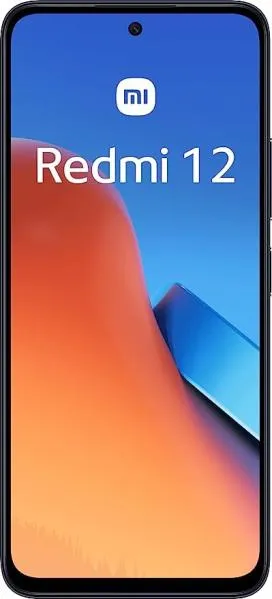
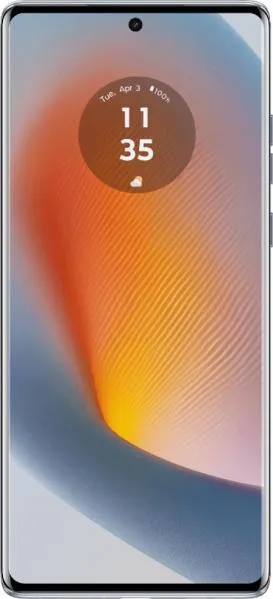
| Feature | Xiaomi Redmi 12 | Motorola Edge 50 Fusion | Practical Impact |
|---|---|---|---|
| Design | |||
| Dimensions (mm) | 168.6 x 76.3 x 8.2 | 161.9 x 73.1 x 7.9 | Redmi 12 is slightly larger and thicker. Fusion might feel more compact in hand. |
| Weight (g) | 198.5 | 174.9 | Fusion is noticeably lighter, reducing hand fatigue during extended use. |
| Build Material | Not specified | Not specified | Cannot compare build quality and durability without material information. |
| Display | |||
| Display Type | IPS LCD | P-OLED | Fusion's P-OLED offers deeper blacks, higher contrast, and potentially better power efficiency. Redmi's IPS LCD might be brighter outdoors. |
| Display Size (inches) | 6.79 | 6.7 | Negligible size difference in real-world usage. |
| Resolution | 1080 x 2460 | 1080 x 2400 | Virtually identical pixel density; sharpness will be comparable. |
| Refresh Rate (Hz) | 90 | 120/144 | Fusion's higher refresh rate provides smoother scrolling and animations, enhancing perceived performance and responsiveness. |
| Peak Brightness (nits) | 550 | 1600 | Fusion's significantly higher peak brightness ensures better visibility in direct sunlight. |
| Performance | |||
| Chipset | Mediatek Helio G88 (12nm) | Qualcomm Snapdragon 7s Gen 2 (4nm) | Fusion's newer and more powerful chipset with a smaller process node translates to significantly better performance, efficiency, and thermal management. |
| CPU | Octa-core (2x2.0 GHz Cortex-A75 & 6x1.8 GHz Cortex-A55) | Octa-core (4x2.4 GHz Cortex-A78 & 4x1.95 GHz Cortex-A55) | Fusion's CPU boasts faster cores and higher clock speeds, resulting in smoother multitasking and faster app loading. |
| GPU | Mali-G52 MC2 | Adreno 710 | Fusion's Adreno 710 GPU provides a substantial improvement in gaming performance and graphics rendering compared to the Redmi 12's GPU. |
| RAM | 4GB/8GB | 8GB/12GB | Fusion offers more RAM in its base configuration, enabling better multitasking and preventing app closures in the background. |
| Camera | |||
| Main Camera (MP) | 50 | 50 | Megapixel count is similar, but sensor quality and other factors will determine actual image quality. Redmi uses a Samsung sensor, Fusion a Sony sensor. |
| Ultrawide (MP) | 8 | 13 | Fusion offers a higher resolution ultrawide camera for capturing wider scenes. |
| Macro (MP) | 2 | Combined with ultrawide | Dedicated macro on Redmi might offer slightly better close-up shots, but Fusion's combined approach is more common now. |
| Selfie Camera (MP) | 8 | 32 | Fusion has a much higher resolution selfie camera, ideal for video calls and high-quality self-portraits. |
| Video Recording | 1080p@30fps | Up to 4K@30fps | Fusion supports higher resolution video recording with Electronic Image Stabilization (EIS). |
| Battery | |||
| Capacity (mAh) | 5000 | 5000 | Similar battery capacities, but real-world battery life will depend on software optimization and hardware efficiency. Fusion's more efficient chip likely gives it an edge. |
2. Key Differences Analysis
Motorola Edge 50 Fusion Advantages:
- Significantly better performance: The Snapdragon 7s Gen 2, superior CPU/GPU, and more RAM provide a much smoother and faster user experience.
- Higher quality display: The P-OLED with a 120/144Hz refresh rate and higher peak brightness delivers vibrant colors, deeper blacks, and smoother visuals.
- More capable camera system: Higher resolution ultrawide and selfie cameras, along with 4K video recording and OIS, offer greater versatility.
- More up-to-date software: Launches with Android 14 and is promised updates to Android 17.
Xiaomi Redmi 12 Advantages:
- Potentially lower price: Typically priced lower than the Fusion.
- Possibly better battery life in some scenarios: While both have 5000mAh batteries, the less demanding hardware of the Redmi 12 might lead to longer battery life for basic tasks.
3. User Profiles & Recommendations
Xiaomi Redmi 12: Budget-conscious users who prioritize basic functionality: calling, texting, web browsing, social media. Not recommended for demanding tasks like gaming or heavy multitasking.
Motorola Edge 50 Fusion: Users who value performance, a high-quality display, and a versatile camera system. Suitable for gaming, content creation, and demanding multitasking.
4. Decision Framework
Key Questions for Buyers:
- What is your budget? The Redmi 12 is significantly cheaper.
- What are your primary smartphone uses? For basic tasks, the Redmi 12 suffices. For demanding tasks, the Fusion is necessary.
- How important is display quality and performance? The Fusion offers a substantial upgrade in both areas.
My Choice: Motorola Edge 50 Fusion
While the Redmi 12 offers a lower price point, the Motorola Edge 50 Fusion is the superior device in almost every aspect. The performance difference alone makes it a much better long-term investment. The improved display, camera system, longer software support, and the relatively small weight difference solidify the Fusion as the clear winner for me. While price is a factor, the significantly enhanced user experience offered by the Fusion justifies the higher cost for most users beyond those with the most restrictive budgets. The Fusion's more future-proof hardware ensures a smoother and more enjoyable user experience for years to come.
