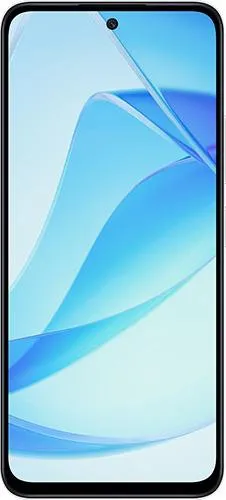
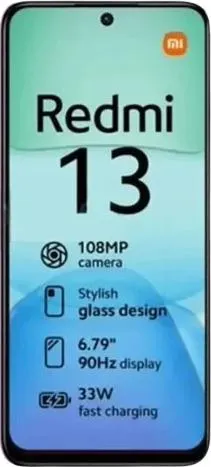
1. Specifications Comparison
| Feature | Xiaomi Redmi 12 5G | Xiaomi Redmi 13 | Practical Impact |
|---|---|---|---|
| Design | |||
| Dimensions | 168.6 x 76.3 x 8.2 mm | 168.6 x 76.3 x 8.3 mm | Virtually identical dimensions; negligible difference in thickness. |
| Weight | 199g | 205g | Redmi 13 is slightly heavier, but the difference is unlikely to be noticeable in daily use. |
| Colors | Moonstone Silver, Jade Black, Pastel Blue | Midnight Black, Pink, Ocean Blue, Sandy Gold | Primarily a matter of personal preference. Redmi 13 offers a wider variety of color options. |
| Display | |||
| Size | 6.79" | 6.79" | Identical screen size. |
| Type | IPS LCD, 90Hz, 550 nits | IPS LCD, 90Hz, 550 nits (HBM) | Both offer the same display technology and refresh rate. HBM (High Brightness Mode) on the Redmi 13 may offer slightly better visibility in direct sunlight, though specific HBM performance details are missing. |
| Resolution | 1080 x 2460 | 1080 x 2460 | Identical resolution, resulting in similar sharpness. |
| Performance | |||
| Chipset | Qualcomm Snapdragon 4 Gen 2 (4 nm) | Mediatek Helio G91 Ultra (12 nm) | Snapdragon 4 Gen 2, built on a smaller node (4nm vs 12nm), is likely to be more power-efficient. Performance differences may exist but require benchmark comparisons to quantify. |
| CPU | Octa-core (2x2.2 GHz Cortex-A78 & 6x1.95 GHz Cortex-A55) | Octa-core (2x2.0 GHz Cortex-A75 & 6x1.8 GHz Cortex-A55) | Redmi 12 5G likely has a performance advantage with faster clock speeds and newer Cortex-A78 cores. |
| GPU | Adreno 613 | Mali-G52 MC2 | Adreno 613 generally offers better gaming performance compared to the Mali-G52 MC2. |
| RAM/Storage | 128GB/6GB RAM | 256GB/8GB RAM | Redmi 13 offers significantly more storage and RAM, beneficial for multitasking and storing large files. |
| Other | |||
| Battery | 5000 mAh | 5030 mAh | Negligible difference in battery capacity. Real-world battery life will depend more on chipset efficiency and software optimization. |
| OS | Android 13 | Android 14 | Redmi 13 ships with a newer Android version, offering potential features and security updates. Redmi 12 will likely receive an update to Android 14. |
| NFC | No | Yes | Redmi 13 supports NFC for contactless payments and other functionalities. This is a significant advantage for users who rely on these features. |
2. Key Differences Analysis
Redmi 12 5G Advantages:
- Likely superior performance and power efficiency: Due to the more advanced and efficient Snapdragon 4 Gen 2 chipset.
Redmi 13 Advantages:
- More RAM and storage: Offers double the storage and more RAM for smoother multitasking.
- NFC: Supports NFC for contactless payments.
- Newer Android version: Ships with Android 14.
Trade-offs:
- Redmi 12 5G sacrifices NFC and higher RAM/storage for potentially better performance and efficiency.
- Redmi 13 might have slightly lower performance but offers more storage, RAM, and NFC functionality.
3. User Profiles & Recommendations
Redmi 12 5G: Suitable for users who prioritize performance and battery life for tasks like gaming and media consumption, and who don't require NFC.
Redmi 13: Ideal for users who prioritize ample storage, multitasking capabilities, NFC functionality, and the latest Android features. Suitable for users who value convenience and up-to-date software over peak gaming performance.
4. Decision Framework
Key Questions:
- Is NFC a must-have feature?
- Do you prioritize performance for demanding tasks like gaming, or is general usability and storage more important?
- What is your budget? (Considering the Redmi 13 is positioned as a "low price" device while the Redmi 12 5G is "medium price").
Scenario-based Recommendations:
- Gamer on a budget: Redmi 12 5G.
- User who needs NFC for contactless payments and ample storage: Redmi 13.
- User who prioritizes the latest software and features: Redmi 13.
My Choice: Redmi 13
While the Redmi 12 5G might offer a slight performance edge, the Redmi 13's combination of NFC, larger RAM and storage, newer Android OS, and lower price point makes it a more compelling overall package for me. I heavily rely on NFC for daily transactions, and the extra storage and RAM provide a more future-proof device. The slight performance difference likely won't be noticeable in my typical usage, which focuses on productivity, web browsing, and media consumption. The lower price of the Redmi 13 further solidifies its value proposition.
