1. Specifications Comparison
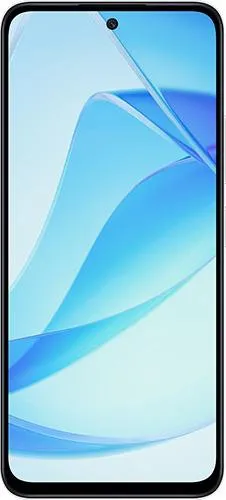
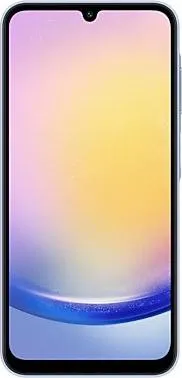
| Feature | Xiaomi Redmi 12 5G | Samsung Galaxy A25 | Practical Impact |
|---|---|---|---|
| Design | |||
| Dimensions | 168.6 x 76.3 x 8.2 mm | 161 x 76.5 x 8.3 mm | Galaxy A25 is slightly shorter and narrower, potentially improving one-handed usability. Depth is nearly identical. |
| Weight | 199 g | 197 g | Negligible weight difference. |
| Build Materials | Not specified | Not specified | Cannot compare build quality and durability without material information. |
| Display | |||
| Display Type | IPS LCD, 90Hz | Super AMOLED, 120Hz | A25's Super AMOLED offers richer colors, deeper blacks, and potentially better power efficiency. 120Hz provides smoother animations. |
| Size | 6.79" | 6.5" | Redmi 12 offers a larger screen for media consumption, while A25's smaller size might be preferable for one-handed use. |
| Resolution | 1080 x 2460 | 1080 x 2340 | Similar pixel density (~396 ppi). Redmi 12's taller aspect ratio provides more vertical screen real estate. |
| Brightness | 550 nits | 1000 nits (HBM) | A25's significantly higher brightness ensures better outdoor visibility. |
| Performance | |||
| Chipset | Snapdragon 4 Gen 2 | Exynos 1280 | Exynos 1280 generally offers better performance in benchmarks, translating to smoother multitasking and potentially better gaming. |
| CPU | Octa-core (2x2.2 GHz Cortex-A78 & 6x1.95 GHz Cortex-A55) | Octa-core (2x2.4 GHz Cortex-A78 & 6x2.0 GHz Cortex-A55) | A25's slightly faster CPU clock speeds might offer marginal performance improvements in demanding tasks. |
| GPU | Adreno 613 | Mali-G68 | Mali-G68 generally provides better graphics performance, benefiting gaming and graphically intensive applications. |
| RAM | 6GB | 8GB | A25's larger RAM enables smoother multitasking and reduces app reloading. |
| Storage | 128GB | 256GB | A25 doubles the storage capacity, allowing for more apps, photos, and videos. |
| Other | |||
| Battery | 5000 mAh | 5000 mAh | Similar battery capacities. Real-world battery life depends on usage patterns and software optimization. |
| OS | Android 13 | Android 14 | A25 launches with a newer Android version, potentially offering longer software support and newer features. |
| NFC | No | Yes | A25 supports contactless payments and data transfer via NFC. |
| Video Recording | 1080p@30fps | 4K@30fps (EIS), 1080p@30fps (EIS) | A25 offers superior video recording capabilities with 4K resolution and Electronic Image Stabilization (EIS) for smoother footage. |
2. Key Differences Analysis
Xiaomi Redmi 12 5G Advantages:
- Larger Display: Better for media consumption.
Samsung Galaxy A25 Advantages:
- Superior Display: AMOLED technology, higher refresh rate (120Hz), and much higher brightness.
- Better Performance: More powerful chipset, CPU, and GPU, along with more RAM.
- More Storage: Double the storage capacity.
- Newer OS: Longer software updates and features.
- NFC: Enables contactless payments.
- Better Video Recording: 4K resolution and EIS.
Trade-offs:
- Redmi 12's larger display comes at the cost of slightly larger dimensions.
- A25's superior features likely come at a higher price point within the "medium price" range.
3. User Profiles & Recommendations
Redmi 12 5G: Budget-conscious users prioritizing a large display for media consumption.
Galaxy A25: Users who value a premium display, smooth performance, longer software support, and features like NFC and high-quality video recording. Suitable for mobile gaming, photography enthusiasts, and those who rely on contactless payments.
4. Decision Framework
Key Questions for Buyers:
- What is your budget? While both are "medium price," the A25 likely sits at the higher end of that range.
- What are your primary use cases? Media consumption, gaming, photography, everyday tasks?
- Which features are most important to you? Display quality, performance, battery life, camera features, NFC?
Scenario-Based Recommendations:
- Limited Budget, Primarily Media Consumption: Redmi 12 5G
- Balanced Budget, All-Around Performance: Galaxy A25
- Gamer or Power User: Galaxy A25
My Choice: Samsung Galaxy A25
While the Redmi 12 5G offers a larger display, the Galaxy A25's advantages in crucial areas like display quality, performance, features (NFC, 4K video recording), and software support make it a more compelling overall package for me. The smoother 120Hz AMOLED display, more powerful processor, larger RAM and storage, and longer software update commitment outweigh the slightly smaller screen size. I value a responsive and future-proof device, and the A25 better aligns with my needs. The inclusion of NFC for contactless payments is also a significant factor in my decision.
