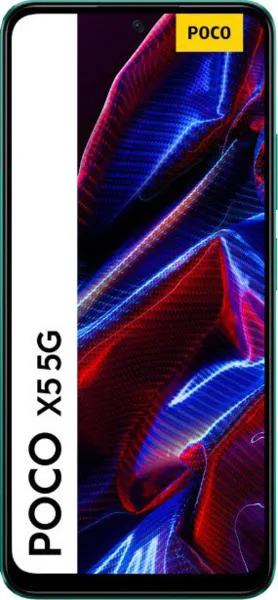

1. Specifications Comparison
| Feature | Xiaomi Poco X5 | Honor 200 Pro | Practical Impact |
|---|---|---|---|
| Design | |||
| Dimensions (mm) | 165.9 x 76.2 x 8 | 163.3 x 75.2 x 8.2 | Poco X5 is slightly taller and wider, Honor 200 Pro slightly thicker. Negligible difference in hand feel. |
| Weight (g) | 189 | 199 | Poco X5 is slightly lighter, but the difference (10g) is minimal. |
| Build | Not specified | Not specified | Build quality cannot be compared without further information. |
| Display | |||
| Display Type | Super AMOLED | OLED | Both offer excellent contrast and vibrant colors. Subjective preference may apply. |
| Display Size (inches) | 6.67 | 6.78 | Honor 200 Pro offers a slightly larger display for more immersive content consumption. |
| Resolution | 1080 x 2400 | 1224 x 2700 | Honor 200 Pro has a sharper display with higher pixel density (437 ppi vs 395 ppi), resulting in crisper text and images. |
| Refresh Rate (Hz) | 120 | 120 | Both offer smooth scrolling and animations. |
| Peak Brightness (nits) | 1200 | 4000 | Honor 200 Pro offers significantly higher peak brightness, ensuring better visibility in direct sunlight. |
| Performance | |||
| Chipset | Snapdragon 695 5G (6 nm) | Snapdragon 8s Gen 3 (4 nm) | Honor 200 Pro boasts a significantly more powerful processor, leading to much faster performance in demanding tasks and gaming. |
| CPU | Octa-core (2x2.2 GHz Kryo 660 Gold & 6x1.7 GHz Kryo 660 Silver) | Octa-core (1x3.0 GHz Cortex-X4 & 4x2.8 GHz Cortex-A720 & 3x2.0 GHz Cortex-A520) | Honor's CPU architecture provides a substantial performance advantage. |
| GPU | Adreno 619 | Adreno 735 | Honor 200 Pro's GPU is considerably more powerful, enabling smoother gaming and faster graphics rendering. |
| RAM | 6 GB | 12 GB | Honor 200 Pro has double the RAM, allowing for better multitasking and smoother performance with multiple apps open. |
| Camera | |||
| Main Camera (MP) | 48 | 50 | While megapixels aren't everything, the Honor likely captures more detail. More significant is the larger sensor size (1/1.3") on the Honor. |
| Ultrawide (MP) | 8 | 12 | Honor offers a higher resolution ultrawide, capturing more detail in wider shots. |
| Telephoto | No | 50 MP with OIS | Honor 200 Pro offers optical zoom capabilities with image stabilization, missing on the Poco X5. This allows for clear zoomed-in shots. |
| Video | 1080p@30fps | 4K@30fps with OIS, EIS | Honor 200 Pro offers significantly better video recording capabilities with higher resolution and stabilization. |
| Battery | |||
| Capacity (mAh) | 5000 | 5200 | Honor offers a slightly larger battery capacity. |
| Fast Charging (W) | 33 | 100 | Honor 200 Pro supports significantly faster charging, minimizing downtime. |
2. Key Differences Analysis
Xiaomi Poco X5 Advantages:
- Potentially Lower Price: Likely more affordable given the mid-range specs.
Honor 200 Pro Advantages:
- Significantly Superior Performance: The Snapdragon 8s Gen 3 and 12GB RAM provide a vastly improved user experience for demanding tasks, gaming, and multitasking.
- Better Display: Brighter, sharper, and slightly larger display.
- More Versatile Camera System: Offers optical zoom with stabilization and higher resolution ultrawide.
- Faster Charging: 100W fast charging significantly reduces charging time.
- More Recent OS: Launched with a newer Android version (14 vs 12), potentially offering more features and longer software support.
3. User Profiles & Recommendations
Xiaomi Poco X5: Budget-conscious users who prioritize basic smartphone functionality (calling, texting, social media) and light gaming.
Honor 200 Pro: Users who demand high performance for gaming, demanding applications, and content creation. Also suitable for users who prioritize a high-quality display and camera system.
4. Decision Framework
Key Questions for Buyers:
- What is your budget? The Poco X5 will likely be significantly more affordable.
- What are your primary smartphone usage patterns? For basic tasks, the Poco X5 might suffice. For demanding tasks and gaming, the Honor 200 Pro is far superior.
- How important are camera quality and display quality to you? The Honor 200 Pro significantly outperforms the Poco X5 in both areas.
My Choice: Honor 200 Pro
While the price difference is significant, the Honor 200 Pro offers a substantial upgrade in performance, display, camera, and charging speed. The Snapdragon 8s Gen 3, coupled with 12GB of RAM, ensures a future-proof device capable of handling demanding tasks for years to come. The brighter, sharper display and versatile camera system further enhance the user experience. For me, these advantages outweigh the price premium, especially considering the longevity offered by the powerful hardware. The Poco X5 is a decent budget option, but the Honor offers a premium experience that justifies the higher cost in the long run.
