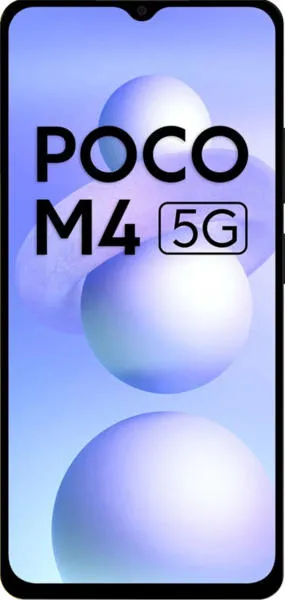

Let's dive into a comparative analysis of the Xiaomi Poco M4 5G and the Samsung Galaxy A14 5G, dissecting their specifications and translating them into real-world implications for you.
1. Specifications Breakdown
| Feature | Xiaomi Poco M4 5G | Samsung Galaxy A14 5G | Real-World Implications |
|---|---|---|---|
| Design | |||
| Dimensions (mm) | 164 x 76.1 x 8.9 | 167.7 x 78 x 9.1 | A14 slightly larger, might feel less compact in hand. |
| Weight (g) | 200 | 202 | Negligible difference in weight. |
| Display | |||
| Size (inches) | 6.58 | 6.6 | Virtually identical screen real estate. |
| Resolution (px) | 1080 x 2408 | 1080 x 2408 | Same sharpness and detail level. |
| Refresh Rate (Hz) | 90 | 90 | Both offer smooth scrolling and animations. |
| Type | IPS LCD | PLS LCD | PLS LCD generally offers slightly better color accuracy and viewing angles than standard IPS. |
| Performance | |||
| Chipset | Dimensity 700 | Exynos 1330 | Exynos 1330 built on a smaller node (5nm vs 7nm), suggesting better power efficiency and potentially performance. |
| CPU | Octa-core (2x2.2 GHz Cortex-A76 & 6x2.0 GHz Cortex-A55) | Octa-core (2x2.4 GHz Cortex-A78 & 6x2.0 GHz Cortex-A55) | A14 boasts faster prime cores (Cortex-A78 vs A76) for more demanding tasks. |
| GPU | Mali-G57 MC2 | Mali-G68 MP2 | A14 likely has a more powerful GPU, beneficial for gaming and graphics-intensive apps. |
| RAM | 4/6GB | 4/6/8GB | A14 offers an 8GB RAM option for enhanced multitasking. |
| OS | Android 12 | Android 13 | A14 ships with a newer Android version, potentially offering more features and longer software support. |
| Camera | |||
| Main Camera (MP) | 50 | 50 | Same resolution, image quality will depend on sensor and processing. |
| Selfie Camera(MP) | 5 | 13 | A14 has a significantly higher resolution selfie camera. |
| Battery | |||
| Capacity (mAh) | 5000 | 5000 | Identical battery capacity, actual battery life depends on usage and optimization. |
2. Key Insights
- Performance: The Samsung Galaxy A14 5G, with its more efficient Exynos 1330 chipset and faster CPU cores, holds a clear advantage in performance. This translates to smoother multitasking, faster app loading, and potentially better gaming experiences.
- Software: The A14's Android 13 advantage ensures a more up-to-date software experience with potentially longer-term support compared to the Poco M4 5G's Android 12.
- Camera: Both phones boast a 50MP main camera, but real-world performance will depend on factors beyond resolution. The A14 pulls ahead with it's higher resolution selfie camera, offering significantly better detail for self-portraits and video calls.
- Display: While both phones have similar displays in terms of size and resolution, the A14's PLS LCD technology might offer subtly better colors and viewing angles.
- Battery Life: With identical battery capacities, real-world battery life will hinge on software optimization and individual usage patterns. However, the A14's more efficient chipset could potentially deliver longer usage times.
3. User Profiles and Recommendations
- Xiaomi Poco M4 5G: Best suited for budget-conscious users who prioritize basic functionality and decent performance. It's a good option for casual users who primarily use their phones for social media, browsing, and light gaming.
- Samsung Galaxy A14 5G: Ideal for users who desire a well-rounded experience with smoother performance, a newer operating system, and a slightly better display. It caters to those who engage in more demanding tasks, like mobile gaming or content creation.
4. Buying Decision Framework
- What's your budget? The Poco M4 5G is generally more affordable.
- How important is performance? For demanding tasks and gaming, the A14 is the clear winner.
- How long do you plan to keep your phone? The A14's newer Android version might offer longer software updates.
My Choice: Samsung Galaxy A14 5G
While the Poco M4 5G offers solid value, I'd choose the Samsung Galaxy A14 5G. The performance gains from the Exynos 1330, coupled with the newer Android version and potentially longer software support, make it a more compelling long-term investment. The improved selfie camera and potential for better battery life further solidify its advantage for me. The slightly higher price is justifiable for the noticeable upgrades in key areas. Ultimately, the A14 offers a more future-proof and well-rounded experience.
